Discovering the Dynamics of Social Circles and How Relationships are Prioritized
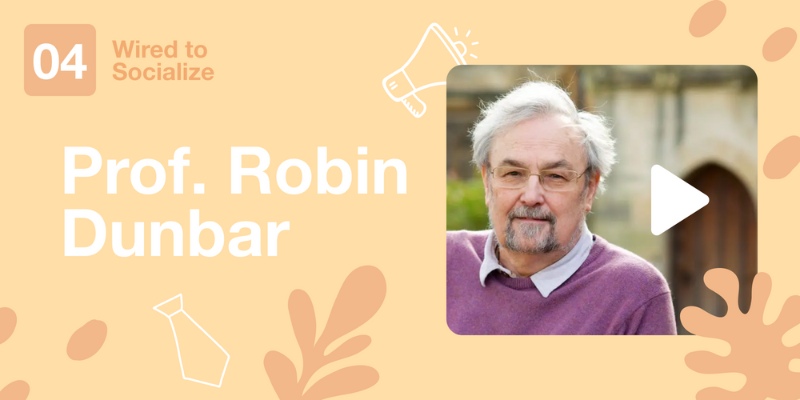
In the 4th installment of the series “Wired to Socialize,” hosted by Covve CEO Yiannis Gavrielides and featuring evolutionary psychologist Robin Dunbar, the focus is on understanding the structure and limitations of human social networks. 

Central to this discussion is Dunbar’s number, which posits a limit of about 150 people in an individual’s social circle.

The Concept of Dunbar’s Number

  • Dunbar’s number represents layers of relationships, each varying in closeness and importance
  • The innermost circle includes about five people, signifying deep emotional attachments
  • Time spent and invested in relationships decreases the further out a relationship is from the core group of five close contacts

This number does not represent a uniform group of relationships. Like ripples in a pond with oneself at the center, these relationships form layers of varying closeness and importance. The innermost circle, consisting of around five people, comprises those with whom one shares a deep emotional attachment. This inner circle demands significant time investment, and lack of regular contact can lead to a relationship drifting to a more distant layer.

Regular contact is crucial in maintaining these social bonds. For the core support group, it’s advised to meet once a week. The next layer, the sympathy group or social friends, should ideally gather once a month. These are the individuals you’d invite to personal gatherings or activities.

Dunbar’s number encapsulates the concept of meaningful relationships, characterized by trust, reciprocity, and shared history. The outermost layer, encompassing 100-150 people, includes extended family and others requiring minimal effort or time investment, with annual contact being sufficient. The 150 people form a group invited to significant life events such as weddings, bar mitzvahs, or funerals.

Beyond the 150, relationships become more transactional, covering acquaintances like colleagues or familiar faces at a coffee shop. These individuals are not typically involved in personal life events.

Expanding to Larger Social Layers

  • A 1,500-person layer represents tribal connections, sharing cultural elements like language, music, humor, clothes, and more
  • This layer fosters a sense of community trust despite the lack of personal acquaintances
  • It historically provided crucial support in times of disaster or conflict

Beyond the tribe, the network extends to individuals whose faces are recognizable but with whom one has no personal connection. These are people who are just one degree away from being considered total strangers, as there is no personal connection, but a familiar face. With these relationships, trust is the most fickle.

The intricate layers of human social networks, as explored in “Wired to Socialize,” reveal much about our interpersonal dynamics and the limits of our social capacities. Understanding Dunbar’s number and the structure of our social circles not only enlightens us about our relationships but also guides us in nurturing and prioritizing them effectively. 

Whether it’s the close bonds in our inner circle or the broader connections that form our social and tribal layers, each has its significance and requires a different level of attention and effort.

Observe the Ripples of Your Network

We invite you to reflect on your own social network. Consider the different layers of relationships in your life and how you maintain these connections. Are there areas where you could invest more time or effort? Remember, the quality of our relationships profoundly impacts our personal and social well-being. 

Take a moment to reach out to someone in your inner circle, plan a gathering with your social friends, or even acknowledge an acquaintance. By actively engaging with and understanding the dynamics of your social circles, you can enrich your relationships and foster a more connected, supportive community.

Watch the full episode here and gain further clarity on who your closest contacts are, and how frequently you would want to contact them.


Continue reading…

Keeping Connections Alive with Dr. Vaneeta Sandhu’s Emoji Exercise

Genuine human connections can sometimes feel sparse when instant gratification and access to the world through the internet is constantly within our reach. The Covve workshop, titled “Healthy Habits of Connection,” aimed to mitigate this by sharing innovative ways to foster and maintain connections. Among the illuminating voices at the workshop was Dr. Vaneeta Sandhu, whose unique approach highlights the intertwined nature of emotion and connection.

Dr. Vaneeta Sandhu – Emotion and Connection

As the Head of Emotional Fitness at Coa, Dr. Vaneeta Sandhu holds a unique vantage point. A licensed psychologist, she works extensively with companies to proactively hone their mental health skills. Through live, therapist-led classes and on-demand learning modules, Coa assists individuals and professionals in navigating a plethora of challenges, from stress management to leadership effectiveness and resilience building.

Reflecting on her vast experience, Dr. Sandhu shared a poignant observation: “What I have seen personally, working as a psychologist for over 10 years, is that the most potent stress-relieving factor for individuals is connecting with others. Even having just one person who affirms their worth, values them, and inspires them can make a world of difference.” This connection, as Dr. Sandhu explained, can lead to improved performance, better interpersonal behaviors, and even enhanced parenting skills.

The Emotional Push-Up – A Unique Connection Exercise

Dubbing her exercise as an “emotional push-up,” Dr. Sandhu’s approach was both unique and playful. The primary goal? Reconnecting with someone after a period of disconnection, be it days or even years. She tasked the attendees with reaching out to a contact they hadn’t communicated with in at least three days.

The twist? Using only 4-5 emojis to convey their message. This not only added an element of playfulness but also a touch of mystery, as the recipient would then try to decode the emoji message. Through this playful template, Dr. Sandhu aimed to encourage more lighthearted and frequent reconnections.

To ensure that this wasn’t just a one-off exercise, she recommended attendees set aside a specific time regularly to send out at least one such emoji-laden message to a dormant contact, thus forming a habit.

Dr. Vaneeta Sandhu’s contribution to the Covve workshop was a gentle reminder that human connections don’t always need to be profound or intense; sometimes, a playful nudge can be just as impactful. As we strive to maintain connections in a world filled with notifications and digital noise, her “emotional push-up” stands as a testament to the power of playfulness, creativity, and genuine intent in building and nurturing relationships.

Explore the entire session and adopt Dr. Vaneeta Sandhu’s engaging emotional exercises for staying connected.

Continue reading…

Gratitude as the Gateway – Kevin Monroe’s Approach to Deepening Connections

Today’s world is increasingly digitally connected, but human connection seems to be dwindling. This was the premise of the Covve workshop titled “Healthy Habits of Connection,” a gathering that sought to address and bridge this widening gap. Enter Kevin Monroe, the World’s Gratitude Coach at the Grateful App, who shared insights on how gratitude can form the cornerstone of authentic connections.

Kevin Monroe: Gratitude and Authentic Connection

Kevin’s journey into the world of connections was guided by his father. From a young age, he was exposed to environments that fostered human connections, laying the foundation for his current mission. This underlying philosophy is beautifully encapsulated in a phrase shared by Barbara Sable of the Kellogg Foundation: “Relationships are primary, everything else is derivative.” It’s a reminder that, at the heart of every endeavor, relationship is the core from which everything else springs.

A Bridge Between Connection and Gratitude

Kevin’s workshop activity was both innovative and simple, merging his twin worlds of gratitude and connection. His focus was on LinkedIn’s voice note feature, which limits recordings to 60 seconds. This brevity forces individuals to be concise and meaningful, making every second count.

From this concept, Kevin introduced TAG: Thankful, Appreciate, Grateful. This trifecta accentuates gratitude and authenticity. Sending a TAG is not just about expressing thanks; it’s about forming a genuine bond with the receiver. As Kevin emphasized, “There’s something about gratitude that when we share it with others, it builds authentic connection.”

In line with the workshop’s hands-on approach, Kevin went on to exemplify his concept by sending a TAG, illustrating the profound impact such a brief, heartfelt message can have. He encouraged participants to set aside time every week to send out their own TAGs, fostering connections through gratitude.

Feedback from participants was overwhelmingly positive. Many shared the profound emotional impact that TAG had on them. The words “fulfilling,” “heartwarming,” and “emotional” were frequently echoed, underscoring the power of this simple yet profound exercise.

Kevin Monroe’s contribution to the Covve workshop was a testament to the transformative power of gratitude in forging and deepening human connections. While technological advancements may offer numerous ways to connect, it is genuine gestures like TAG that resonate deeply and remind us of the essence of human connection. As we navigate an increasingly digital age, it’s worth noting that sometimes, the most profound connections come from simple, heartfelt gestures.

Watch the full workshop and put Kevin Monroe’s healthy habit of connection into practice.

Continue reading…

The Dance of Vulnerability – Unlocking Authentic Connections with Jessie Jacob

The modern age has brought us unparalleled conveniences, lightning-fast information, and seemingly boundless connection points, yet many individuals find themselves feeling more isolated than ever. As U.S. Surgeon General Dr. Vivek Murthy stated, “Our epidemic of loneliness and isolation has been an underappreciated public health crisis that has harmed individual and societal health.” 

But amid this landscape, the power of human relationships shines brightly as a beacon of hope, offering healing and well-being. Among the luminaries working to harness this power is Jessie Jacob from Culture Amp, who recently shared her insights at a workshop set up by Covve titled, “Healthy Habits of Connection”.

Jessie Jacob and the Power of Connection

Jessie Jacob is not just a representative of Culture Amp; she leads their global ‘culture first’ community. At its heart, Culture Amp is an employee experience platform, creating software that facilitates enhanced communication between employers and their teams. Their overarching mission? To create a better world of work, a mission deeply resonated by Jessie. One of the vital components in this mission is fostering a genuine sense of belonging in workplaces.

The Learning Model and its Impact

One fascinating aspect of this workshop was its unique learning model, dubbed “I do, we do, you do.” In this model, panelists like Jessie first set an example by demonstrating a particular habit or tool. Then, another panelist gives it a try, attempting to emulate or adapt the habit to their style. Finally, attendees are encouraged to give it a shot. This approach ensures that the learning process is not passive; it’s active, engaging, and personal.

Diving into the Dance of Vulnerability

Jessie’s chosen activity, both powerful and simple, is termed “if you really knew me, you would know that.” This exercise is all about cultivating the courage to be vulnerable, a trait often misunderstood as a weakness but, in this context, is a powerful tool for forging connections, fostering belonging, and achieving acceptance. Jessie didn’t just describe the activity; she led by example, sharing intimate details about her background, her passions, the challenges she has overcome, and her accomplishments.

The impact of this vulnerability exercise on the participants was palpable. As they began to open up, a domino effect ensued. When one person showcased their vulnerabilities, it emboldened others to do the same. This process, as Jessie aptly termed, became a “dance of vulnerability.”

The Covve workshop, “Healthy Habits of Connection,” was more than just an event. It was a testament to the power of vulnerability, openness, and genuine connection. Jessie Jacob’s contribution, with her insightful activity, showcased that while technology has its place in fostering connections, the real depth of a connection comes when individuals open their hearts and share their stories. 

As we look to build healthier habits of connection in an increasingly isolated world, the lesson is clear: true connection lies in the dance of vulnerability.

Access the complete workshop and integrate Jessie Jacob’s practices of vulnerability for deeper connections into your habits.

Continue reading…

Meeting the Right, New People With Mo Bunnell’s Systemic Approach


Cultivating and nurturing relationships has become paramount in today’s constantly evolving business landscape. At Covve, we’re dedicated to empowering you to grow your network in meaningful, sustainable ways. Our series, in collaboration with Mo Bunnell, unveils strategies to refine your relationship building skills for business growth and development. In this fourth edition, we delve into Mo’s methodology, emphasizing the role of systematic approaches in networking when looking to meet the right, new people.


The Power of Systems in Networking

Networking has evolved beyond mere face-to-face encounters. Mo Bunnell, an authority in the field, underscores the power of consistency in building robust relationships. He advocates for systems over sporadic connections or impulsive networking sprints. Bunnell’s “if this, then that” and calendar frameworks propose networking as a sequence of calculated actions.

Drawing insights from his distinguished book, The Snowball System, and his insightful free course, Winning the Relationship Advantage, Bunnell presents eight robust methods to fortify your networking system:

  1. Referrals: After every successful collaboration, make it routine to ask, “Who do you know that would benefit from knowing us?”. This simple question, when posed consistently, can unlock a cascade of introductions. Integrating this into a weekly calendar system can yield a consistent stream of potential contacts.
  2. Forums: Forums or in-person events are hubs of interaction. Regular participation, when systematically scheduled in your calendar, ensures you remain active in circles that matter, fostering organic opportunities to meet like-minded professionals.
  3. Webinars: Webinars bridge the gap between learning and networking. By attending or hosting webinars and marking them in your calendar, you not only gain knowledge but also expose yourself to a diverse audience, widening your networking scope.
  4. Email Lists: A well-curated email list, like Mo’s, becomes a conduit for sustained engagement. It provides a platform to share insights, updates, and value, keeping your network informed and engaged.
  5. Value Groups: These are specialized groups with a shared goal of addressing complex issues. Whether it’s a small brainstorming team or a large consortium, value groups offer a unique environment to connect with individuals driven by common objectives.
  6. Annually Recurring Events: Such events become networking landmarks. Consistent attendance fosters a sense of community and camaraderie, deepening connections as you encounter familiar faces year after year.
  7. Speaking Engagements: Taking the stage as a speaker not only positions you as an expert but also makes you a networking magnet. Attendees, intrigued by your insights, are more likely to approach and connect with you.
  8. Podcasts: Launching or being a part of a niche podcast offers dual benefits. It helps establish authority in a domain and also provides opportunities to invite and connect with industry experts, thereby constantly expanding your network.

Echoing Mo’s reminder, “Sporadic doesn’t work, sprints are ok, systems are where it’s at.” At Covve, we champion this systematic approach. It ensures that in the networking arena, you’re not just encountering more individuals but genuinely connecting with the right people.

Discover the nuances of systematic networking with Mo Bunnell in the series’ fourth installment. Embark on this transformative networking journey with Covve and networking mavens guiding your path.

Continue reading…

7,500+ Connections Made With Covve at Reflect Festival 2023

Finding success when attending a festival or event is not just about the information absorbed, but also by growing our networks and discovering new relationships that contribute to our personal and professional lives. This context set the stage for a powerful collaboration between Reflect Festival and Covve for the second consecutive year of collaboration. This partnership is all about sparking incentive and granting access to attendees and participants to forge impactful relationships.

At the Reflect Festival 2023, attendees navigated through a sea of potential collaborators, mentors, and innovators. The capability to form and nurture such relationships is not merely beneficial; it is utterly vital. Profound connections can be challenging to cultivate, but they translate to more than mere interaction. They seed future collaborations, fuel collective innovation, and weave a network that could flourish into tangible opportunities and shared successes.

Covve’s CEO, Yiannis Gavrielides spoke at the TechIsland Summit, a part of Reflect Festival, and touched on technology’s impact on relationship building. While there are technological methods and tools that can facilitate more efficient and impactful networking practices, there are some technologies such as artificial intelligence (AI) which exist in a morally gray area such as AI bots that spur on romantic interactions with users.

It is within this intricate nexus that Covve emerged, not just as a facilitator but as a catalyst, ensuring connections formed weren’t ephemeral but instead long-lasting and impactful. Covve emphasizes that through purposeful innovation, technology can enhance human relationships and pave the way for collaborative future endeavors.

NFC-Driven Networking: A Confluence of Technology and Human Interaction

Simplicity and efficacy were at the core of Covve’s strategy. Deploying NFC badges that registered a unique connection with a simple tap, attendees were offered an effortless yet memorable method to build their network. The goal was to amplify attendees’ networking opportunities by simplifying it and creating efficient connection methods.

  • How it was achieved: Each attendee was given an NFC badge at registration that linked to their contact information. Deploying NFC badges that registered a unique connection with a simple tap, attendees were offered an effortless yet memorable method to build their network. A tap equals a connection, each one a potential thread in a future collaborative web.
  • How it was elevated: Engagement soared with incentives: 20 connections yielded a 3-month Covve Pro subscription, 30 won a contactless Covve Business Card, and the zenith of connections awarded one networker a €3,000 Bang & Olufsen Speaker from Asbis.

Elevating Networking: Quantifiable Triumph in Robust Connections

The outcome was electrifying: 7,500+ connections from representatives of 603 companies and 33 nations. A triumphant threefold increase from the previous year.

  • Key Metrics: The surge peaked between 12:00-13:00 on Thursday, highlighting attendees’ drive to connect during Reflect Festival’s last day.
  • The Connector: Stylianos Sofokleous, embodying the spirit of connection, navigated to the top.

Synergizing Prowess: The Covve-Reflect Partnership

Uniting with Reflect, Cyprus’ premier tech & business festival, Covve seamlessly merged technology with intrinsic human desire to connect. The goal was to ensure interactions were both numerically and qualitatively amplified, propelling attendees not only towards new connections but towards potentially everlasting relationships.

Covve’s efforts in establishing a platform and method of connection for the attendees and participants was a resounding success. The NFC badge morphed into more than a tech tool; it became an icebreaker, a conversational starter, and an innovative networking enabler, showcasing Covve’s role in transforming interactions into meaningful, tangible connections.

Covve’s strategic innovation at Reflect Festival 2023 enhanced the networking experience; transforming ephemeral interactions into potential seeds of lasting relationships and future collaborations. In a world often mired in transient digital interactions, Covve underscored that with intentionality and innovative solutions, technology can be harnessed to deepen human connections, laying a robust foundation for collective future endeavors.

Take a look at how Covve may contribute to your networking efforts, enhancing your relationship building practices.

Continue reading…

Robin Dunbar: The Impact of In-person Interactions in a Hybrid Work Environment

Wired to Socialize: The Science of Networking: Episode 3

The podcast “Wired to Socialize,” featuring insights from Professor Robin Dunbar and Covve CEO, Yiannis Gavrielides, delves into the human necessity for connection and its intricate nature. In their third episode, the duo addresses the emerging hybrid work environment. While championed for flexibility and efficiency, it’s evident that such work setups can hinder the essential nurturing of workplace relationships.

Connecting in a Hybrid Workplace

In a world where global mobility has become the norm, professionals frequently find themselves in new environments and cultures. Yet, irrespective of age or experience, the challenge remains consistent – battling loneliness. This feeling was notably amplified for many who, during lockdowns, had to substitute office camaraderie with digital interfaces. 

Although effective for connecting with family and friends, online meeting platforms falter in the workplace. The natural ebb and flow of conversations, especially in larger groups, is lost in the digital realm, underscoring the irreplaceable value of face-to-face communication.

A Snapshot of the Value of In-person Connection

Professor Dunbar brings forth a captivating perspective on the evolution of bonding within the primate world. Monkeys and apes, our evolutionary relatives, rely on the tactile act of social grooming – particularly a slow, methodical stroke – to establish connections. This intimate gesture, tailored for dyadic interactions, has its roots in a unique neural system. 

While humans have found alternatives to physical touch for releasing endorphins – from laughing and singing to communal meals and storytelling – these activities all serve the same purpose. They instill feelings of warmth, trust, and coziness, solidifying bonds between individuals.

In hybrid work environments, however, colleagues may not see each other frequently enough to nurture lasting relationships. For newcomers in a company, digital platforms pose a unique challenge. The depth and richness of in-person interactions are unparalleled, as emphasized by the ‘raw feel’ theory. This concept suggests that genuine, lasting connections are best-fostered face-to-face, a sentiment many philosophers and psychologists echo. 

Purposeful Casual Interactions Over Endless Online Meetings

In this sense, the hybrid work environment, though progressive, is not devoid of flaws. Its structure inherently favors those in higher-paying roles, granting them the flexibility that their counterparts in lower-paying positions might lack. This imbalance not only hampers opportunities for social interactions but can also cultivate feelings of resentment.

Beyond scheduled meetings and work agendas, the importance of casual interactions cannot be overstated. Be it a spontaneous conversation by the water cooler or a brief chat at a colleague’s desk, these moments often hold more weight than formal gatherings. Microsoft’s research offers a telling insight: while online meetings surged, email exchanges with casual acquaintances dwindled. The latter, though seemingly insignificant, play a crucial role in fostering a sense of community.

The third episode of “Wired to Socialize” on hybrid work environments unravels a crucial aspect of modern work culture. While the merits of flexibility and efficiency are undeniable, they come at the cost of genuine human connection. As the world navigates this balance, employers and organizations must remain attuned to the human need for interaction, crafting opportunities that prioritize genuine bonds over mere digital exchanges.

Continue reading…

How to Migrate from ABBYY to Covve

Ending a product’s life is not a rare or sparse occurrence, however it is always shocking to the industry. In the card reading software market, one leading provider recently announced that it will discontinue support, new subscriptions, and in-app purchases for its FineReader PDF for Mobile and Business Card Reader for Android users, Text Grabber for both iOS and Android. 

The software company also noted that the Business Card Reader for iOS no longer supports syncing for scanned business cards, limiting its use and support for Apple users. If you haven’t guessed it, ABBYY, the multinational software company specializing in optical character recognition (OCR), has discontinued support for its business card scanner app as of August 17th.

The ABBYY card scanner app for Android users was officially removed from the Google Play store as of the 18th of September, leaving users seeking alternatives. It is crucial to persist in networking endeavors. Adapting to new software and networking practices necessitates the selection of an alternative card scanner app to maintain established habits and workflows. 

Why Move From ABBYY to Covve?

In finding a suitable alternative to the discontinued ABBYY card scanner software, professionals can turn to existing comparisons and studies to find one that suits their needs. Capacitor Partners, a prominent firm specializing in digital transformation and product management, conducted a study in 2022 to evaluate cutting-edge card scanner apps on the market.

The research involved a comparison of features and functionalities among five card scanner apps, including ABBYY, BizConnect, CamCard, and Covve. While Covve’s card scanner demonstrated superior efficiency, effectiveness, and user-friendliness, the other alternatives remain viable choices for individuals seeking networking solutions that align with their specific requirements.

The study highlighted that Covve offers a free trial of its card scanner and provides the option to purchase for expanded functionality within the application. Notable distinctions include Covve’s ability to scan business cards with greater accuracy and speed, as opposed to other providers.

Furthermore, Covve offers quicker scan processing times and seamless integration with a broader suite of Covve tools, encompassing personal CRM and digital business card applications.

In settling with Covve, we have prepared a simple process to migrate your contacts from ABBYY to Covve, where you can also integrate your contacts with Covve’s personal CRM for a more holistic, habit-building experience.

Migrating to Covve Personal CRM from ABBYY

The following steps include downloading the Covve personal CRM app, and an opportunity to reflect on your existing network. In ensuring that all contacts are successfully migrated and their information is found in the respective fields, you can take the time to assess your network and discover dormant relationships which may need to be rekindled. For that, Covve offers extensive workshops and masterclasses with experts from various sectors and backgrounds, offering their insights into how to build lasting relationships.

Let’s go through a simple process of migrating contacts from ABBYY to Covve:

  1. In ABBYY, look for an export or backup option. It may allow you to export your contacts and notes in a standardized format, such as CSV files or plain text such as HTML for notes
  2. Import the data into your phone’s contacts using Google or iCloud
  3. Install and create an account with Covve’s personal CRM tool
  4. Contacts will be readily available within Covve
  5. Continue scanning using Covve’s personal CRM

It is important to note that images of the cards will not be exported, and some information exported from ABBYY may be lost in the process.

As stated above, it is imperative to continue managing and nurturing relationships to maintain both personal and career success in this vastly inter-connected world. ABBYY’s discontinued software does not mean the end of your networking efforts. It is a new beginning. In the process of migrating contacts and their information to Covve, support is promptly available throughout to ensure a smooth and effective transition.

Contact Covve directly through our website, or find the help you may need in our FAQ’s. We would be delighted for you to continue your networking journey with us.

Continue reading…

Best Features in a Personal CRM for Networking in 2023

Personal Contact Relationship Management (CRM) tools have become indispensable assets for professionals across various fields. These platforms streamline contact management, nurture connections, and ultimately foster successful networking objectives. 

In an era where meaningful relationships are vital for personal and professional growth, choosing the right personal CRM is paramount. What makes personal CRMs so impactful and versatile? From free personal CRMs, to open-source CRMs and bespoke digital solutions, there are a plethora of options to select from. Let’s explore what features professionals look for in a personal CRM, and how Covve helps professionals make the most of relationship building.

What is a Personal CRM?

Personal CRMs for networking are specialized tools designed to help individuals maintain, enhance, and leverage their professional and personal relationships. These platforms empower users to organize contacts, track interactions, and set reminders to foster more meaningful connections.

They are a suite of tools consolidated into a single platform for easier and more efficient contact management. Professionals, freelancers, contractors, CXOs, and even students are constantly encouraged to create new connections and give great emphasis to the quality of their networks to help facilitate the creation of opportunities to learn, grow, and make an impact. 

Storing contact information aside, pCRMs remind people to reach out to their contacts and can provide prompts to help make reconnecting easier and less awkward.

The significance of personal CRMs for networking is underscored by some compelling statistics. For example,  Forbes insights highlight that 80 percent of job openings are filled through networking, emphasizing the pivotal role connections play in career advancement. In this sense, ensuring access to the right set of tools is what may set someone apart, allowing them to maintain relationships and contact with their precious network.

CEO and Founder of Bunnell Idea Group, Mo Bunnell, in partnership with Covve, highlights that “a great deal might make your year, but a great relationship can make your entire career.” Managing a compelling network requires more than outdated, tediously set up spreadsheets. They require bespoke tools to alleviate people from the responsibility of remembering, and to create time for constructive, creative, and critical thinking.

What People Look for in the Best Personal CRM for Networking

Before diving deeper into why Covve App is the top choice for personal CRM in 2023, let’s first understand what individuals seek in a personal CRM. These are key factors that discerning users prioritize when selecting the right tool for managing their professional and personal connections:

  1. Ease of Use: A user-friendly interface is paramount. People want a personal CRM that doesn’t require a steep learning curve. It should be intuitive and easy to navigate, ensuring that users can quickly harness its power without feeling overwhelmed.
  2. Contact Organization: Effective contact management is the core function of a personal CRM. Users want a tool that allows them to sync and categorize contacts, add notes, set reminders, and easily search for specific individuals and groups within their network.
  3. Automation: Time-saving features like automatic contact updates and data synchronization with other apps (e.g., email and calendar) are highly valued. Automation reduces manual data entry and ensures that contact information remains up-to-date.
  4. Integration: Compatibility with other tools and platforms is crucial. People want their personal CRM to seamlessly integrate with their email, calendar, social media, and other communication tools to create a holistic networking solution.
  5. Security: Data security is non-negotiable. Users want assurance that their contact information and interactions are safeguarded from unauthorized access or breaches.
  6. Customization: Flexibility is key. Users want the ability to tailor their personal CRM to their specific needs, whether that means custom fields, tags, or personalized reminders.
  7. Support and Training: Users expect access to customer support and training resources. Having a responsive support team and readily available tutorials can make the user experience smoother.
  8. Affordability: Cost-effectiveness is always a consideration. Users want value for their money, whether that means a free basic version or a reasonably priced premium subscription with robust features.

Introducing Covve

Covve’s bespoke personal CRM stands out as a leading relationship building tool in 2023. What sets Covve apart is its user-friendly UI, making it easy to take notes, categorize, and tag contacts for greater organization.

Covve also boasts an AI-powered feature that offers the latest news in specific contacts’ industries to help break the ice so that users never lose touch with their precious contacts. The innovative pCRM app recently launched additional AI-powered features which help users draft emails and personalized messages, creating more time to build meaningful connections.

To make relationship building processes and methods clearer for users, Covve features its own educational arm with contributions from various, globally renowned industry experts and thought leaders. Leading evolutionary psychologist Professor Robin Dunbar, career strategist and coach Doug Lester, and business growth expert Mo Bunnell delve into their extensive knowledge and practices, sharing them through insightful masterclasses.

Covve – Trusted by Industry Leaders

Covve’s personal CRM has garnered acclaim from professionals across various industries. Doug Lester expresses his preference for Covve due to how the app nudges people to connect, as well as its easy-to-navigate note-taking feature. He states, “I recommend Covve to the people I coach because it’s the most effective personal CRM option that I’ve found after 10 years of looking, and it’s always getting better.”

Eric De Santis, turnaround and restructuring professional, echoes Doug’s sentiments. He commends Covve’s ability to provide actionable insights and give those slight yet impactful reminders. This, he attests, has significantly improved his networking efforts and, in turn, his career prospects, expressing that, “I use Covve, which is kind of my own personal way of maintaining my relationships, both professionally and personally, because it gives me an opportunity to help build those new relationships, as well as keep nurturing the current ones.”

Shannen Stewart, founder of Heels & Handshakes, emphasizes how Covve has been a game-changer in her journey. Stewart appreciates Covve’s ability to help her stay on top of her network through reminders, and the tool’s versatility in storing and organizing contacts. “I love utilizing the app because it’s a one-stop shop. If I meet a contact I can use my app, take a picture of their business card and add them to my contacts,” Shannen expresses.

In a world where networking is synonymous with success, finding the best personal CRM for you is a critical step. Covve App emerges among the best personal CRMs for networking in 2023, thanks to its AI integration, versatile features, and its endorsement by prominent professionals like Doug Lester, Chris De Falco, Professor Robin Dunbar and more. 

If you’re looking to take your networking efforts to the next level, Covve is the tool that can help you achieve your goals with efficiency and effectiveness.

Continue reading…

Should You Use an Open-source CRM?

Managing relationships has increasingly become a top priority for businesses and individuals across sectors. Excel spreadsheets and minimal systems no longer serve the multi-faceted needs of people to stay engaged with their contacts.

That is where personal CRMs come in to make note-taking, scheduling, and contact organization easier and more efficient. However, some find personal CRMs somewhat restrictive, and look for alternatives that allow them to shape their software in a manner that, more specifically, suits their organization and their needs. 

That is precisely what open-source CRMs do. Their codes are publicly available and can be configured by users and shared within organizations. For these reasons, they are considered to be more flexible, customizable, and somewhat more affordable. Alternatively, professionals use personal CRMs such as Covve that are specially designed tools that make relationship building more efficient and more effective. People also use free personal CRMs such as leveraging Excel or Microsoft Outlook to create their own yet minimally functional personal CRM. 

Let’s take a look at some of the leading open-source CRMs and personal CRMs currently creating buzz according to the likes of Forbes, CRM.org, and Indeed, and Medevel, a leading technology blog led by medical doctors who also code.

Leading Open-source CRMs

SuiteCRM: Research indicates that the current reigning open-source CRM is SuiteCRM as it excels in assisting in sales, service, and marketing. As a robust open-source CRM, it includes sales automation, marketing campaigns, and extensive support management. It features an easy-to-navigate user interface and can easily be integrated with other tools. Most importantly, it enables teams to develop tailored workflows and customized, real-time dashboards.

One drawback observed from various sources is that SuiteCRM lacks support, leaving queries to be answered by community support.

Odoo CRM: Coming in a close second is Odoo CRM. It is more along the lines of a business management platform which hosts its own CRM module and boasts 10,000 applications to connect with right off the bat. As its CRM is modular, it enables teams to select their preferred features, taking customization options to new heights. It is a top choice among small to medium sized businesses. One of its greatest advantages is that the CRM is free.

Despite its extensive features and integrations, its complexity in setting up requires experienced developers. Akin to SuiteCRMs challenge, it lacks appropriate support, making it challenging to resolve specific issues and bugs. 

OroCRM: Oro is primarily a B2B ecommerce platform since 2012, with OroCRM as one of its core products. This makes it the ideal CRM for ecommerce platforms and retail businesses. Its core highlight is its reporting engine, making it easy to track everything related to sales and customer habits. It offers various integrations with a multitude of third-party tools, including eBay, Amazon, Mailchimp, and more. Its performance-centric dashboard allows teams to better monitor what works, and what doesn’t.

However, just as the previously mentioned open-source CRMs, it lacks the much needed support from Oro, leaving the community to do the heavy lifting when problems arise. Additionally, OroCRM does not have a mobile app, making accessing the platform more difficult and limited.

Open-source CRMs are incredible tools for businesses of all sizes. They allow teams to optimize and personalize their dashboards, the way data is stored, and how it is displayed. Their extensive flexibility and cost-effectiveness make them an attractive tool for businesses to better keep tabs on their performance and customers, just as they choose to.

However, the lack of support, necessary software development knowledge, and, as seen in Synopsys’ 2023 Open Source Security and Risk Analysis report, open-source code bases are more prone to cyberattacks. Combining this risk factor with a lack of support from the various open-source tools could make any organization second-guess these tools. Despite concerns regarding open-source codes, organizations ensure to encrypt and protect code bases from cyberthreats using advanced systems.

Open-source Personal CRMs

Aside from CRMs for businesses, there are open-source personal CRMs for individuals to use, too. According to Medevel, there are 11 open-source personal CRMs to look out for that may fit various personal networking needs.

Monica: Starting with Monica, the leading open-source personal CRM, users gain access to their own contact, events, and relations tool. They can store, organize, and enable note-taking features for contacts and interactions. Monica places great emphasis on taking on the responsibility for remembering important details about contacts. Written with PHP, beginners and novices in programming may find it easier to set up their ideal personal CRM compared to other, more complicated languages.

Personal Management System: The Personal Management System app is more of a one-stop-shop for an individual’s needs. From monitoring and executing payments and bills, to managing passwords, contacts, multimedia, tasks, and even shopping lists. It features a user-friendly dashboard and is compatible with many browsers including Google Chrome and Firefox. It does come without a warranty, however, raising alarms regarding their liability.

Keep in Touch: A minimal open-source personal CRM designed to perform basic contact and interaction details, simplifying contact management processes using the preferred Python framework – Django, and supports Trello cards integration as well. The only trouble is that the developer who built Keep in Touch has not updated it since 2021 and users rely on the community to resolve issues they face.

Try Bespoke Personal CRMs

While open-source CRMs offer personalization and are cost-effective, they are often lacking in powerful features found in bespoke personal CRMs like Covve. Here at Covve, our personal CRM app offers all of the contact storing, organization and management features, as well as advanced and user-friendly note-taking and tagging tools. Users can personalize the way their contacts are organized based on their location, occupation, hobbies, interests, and more, granting users greater personalization options.

Covve also ensures the utmost protection of users’ data, offers tracking tools to analyze how well users’ relationship building habits and practices are performing for them. Our personal CRM app also includes reminders that gently nudge users to reach out to contacts to maintain lasting relationships. 

In case a user may feel uncomfortable with follow-ups and reconnecting, Covve also boasts an AI assistant that helps draft emails and messages, and even suggests prompts using the latest news to reach out based on a particular contacts’ interests and occupation.

Open-source personal CRMs are great for individuals with minimal networking needs and for those who prefer personalization over extensive features and tools. However, the more advanced your network becomes, and the faster it expands, the more important it is to have a versatile and reliable tool to serve those needs.

Continue reading…