Beyond Screen: Decoding Workplace Preferences and the Role of Face-to-Face Communication

by Vasileios Bletsogiannis, Data Analyst at Covve

Working from home has taken the world by storm since the start of the COVID-19 pandemic in 2020. What once was deemed as a necessity to deal with the adversity of the global crisis, teleworking shook the status quo of the future of working conditions and employment. 

Teleworking refers to the practice of working from a location other than the traditional workspace, often facilitated by technology and digital communication tools. 

Deloitte conducted a survey in 2022 showcasing that over 80 percent of global organizations allow some level of remote work. According to Forbes, as of 2023, 12.7 percent of full-time employees work from home, while 28.2 percent rotate between the office and teleworking. 

For a better understanding of remote work’s impact, Covve conducted a survey to delve into people’s various work preferences in Cyprus and Greece. Cyprus’s below-average remote work adoption makes it an important case to study in comparison to Greece’s closer-to-EU average- adoption rate. A core reason for varying work preferences leans towards the quality and frequency of interactions with colleagues, helping or reducing productivity, stress, and a sense of belonging. 

Remote Work’s Impact Around the World 

Findings indicate that Northern and Central Europeans are most likely in embracing the new working conditions with remote work. 

The BBC shared that, in 2022, the demand for remote jobs had skyrocketed by almost 800 percent in two years. A 2021 IFOP study for the French think-tank, Fondation Jean-Jaurès, found that 51 percent of Germans, 50 percent of Italians, 42 percent of Britons, and 36 percent of Spaniards preferred working remotely.  

There are few European countries, however, that are outliers in adopting remote work. According to the Ifop study, French businesses are most reluctant to adopt remote work, as well as in Cyprus. 

Cyprus seems to be a particular case that has resisted adjusting to new working conditions. In 2020, only 4.5 percent of professionals worked remotely, increasing to 6.7 percent in 2021. In comparison, Eurostat findings display that the EU average reached 13.5 percent.  

Teleworking provides several advantages such as flexible hours and reducing operational costs. Studies, including a previous research conducted by Covve, show an increase in productivity due to working from home. 

However, difficulties in time management, maintaining a healthy work-life balance, and less effective social interaction and communication in the workplace have proven to be common. According to Microsoft’s 2022 Work Trend Index, 43 percent of leaders agree that remote work undermines relationship-building.  

Could this be why employees in Cyprus seem to favor working in the office?  

Covve’s Study and Findings 

Due to the lack of research on this demographic, Covve conducted a quantitative study on the Greek and Cypriot workforce. Our hypothesis was founded on the premise that Cypriot employees prefer office settings due to frequent face-to-face interactions. 

The study was conducted throughout June 2023 as a short online survey. To test our hypotheses on remote work, the individuals who participated were employed in office jobs in Cyprus and Greece. They were familiar with working remotely from their personal experiences. The survey sample included professionals of various ages and backgrounds:

  • 82 percent of the participants were aged between 25 and 44 years old 
  • 18 percent were aged between 45 and 55 years old  

The participants worked across different industries including, but not limited to, technology & IT, marketing, finance, healthcare, and media. 

Regarding Cypriot employees, our survey showcased that: 

  • 47.4 percent prefer working from home 
  • 24.1 percent prefer working from the office 
  • 28.4 percent stated an indifference between the two options 

Our findings among Greek employees indicated: 

  • 60.4 percent prefer working from home 
  • 18.8 percent prefer working from the office 
  • 20.8 percent stated an indifference between the two options 

Interestingly, Greek and Cypriot professionals differed in their perspectives on the value of communicating with coworkers and its impact on work performance. 

79.2 percent of Greek employees remained neutral. Only 13.5 percent agreed with this ideology and the remaining 7.3 percent disagreed.  

On the other hand, Cypriot employees had notably different answers. Only 51.3 percent stayed neutral, 35.3 percent agreed, and 13.4 percent disagreed. 

When asked about the value of face-to-face interaction in the workplace and its impact on work performance, most of the Greek employees responded neutrally with 80.6 percent being neutral, 14.6 percent agreed, and 4.6 percent disagreed.  

Meanwhile, responses from Cypriot employees showed that 48.8 percent responded neutrally, and 7.3 percent disagreed. Most importantly, the remaining 43.9 percent agreed, indicating a difference in work culture.

Discussion and Implications

Despite employees in Cyprus displaying a preference for remote work, they seem to value face-to-face interactions significantly and consider it important for their success, productivity, and work satisfaction. 

These findings are congruent with previous research that highlights communication playing a critical role in the workspace. In esteemed anthropologist and evolutionary psychologist Robin Dunbar’s research, he emphasizes that successful businesses need to build workplace communities of meaningful relationships through in-person interactions during or after work. 

In 2023, the Economist and Euronews stated that employees are returning to the office as per employer preference, corporate needs, and the advantages of office work. With the re-emergence of office work, companies should seize this opportunity to start establishing bonds between colleagues through social events or other means to create such communities.

A hybrid work model can cater to the various preferences among employers and workforce allowing for flexibility, balancing in-person interaction and communication. Working conditions, as in many elements in life, do not have to be binary. There is room to adjust to an organization’s needs, as well as those of its workforce.

Continue reading…

Staying Connected: The Science & Strategy Behind Effective Follow-ups

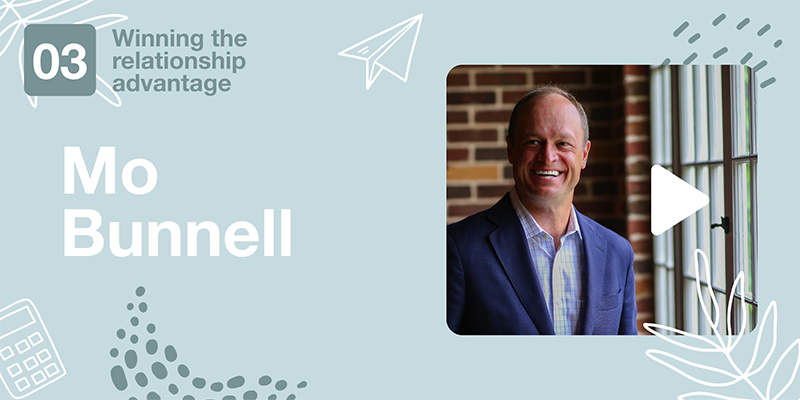
In the third episode of their insightful partnership, Mo Bunnell, the renowned business growth expert, delves into the crucial aspect of follow-up. This episode builds upon the learnings from previous installments, emphasizing the significance of implementing systematic approaches to maintain and nurture professional relationships.

Before delving into the art of follow-up, Covve’s partnership with Mo Bunnell recalls the valuable lessons from earlier episodes. These lessons taught us how to connect both virtually and physically, setting the stage for the next phase of relationship-building mastery.

The Science of Connectedness

The first part of the discussion delves into the science behind building lasting connections. It is all about creating a sense of connection by simply being likable. A concept that holds true since 1876, known as the “mere exposure effect,” suggests that exposure to something or someone over time increases our liking for them. This phenomenon forms the foundation for building relationships.

Connections Wane Quickly

Collaborating with researcher Marissa King, viewers learn of an eye-opening statistic: 80% of the feeling of connectedness between two individuals fades away after just three months since their last interaction. This underscores the importance of systematic follow-ups in maintaining relationships, as the saying goes, “out of sight, out of mind.”

Creating a System for Effective Follow-Ups

In this video, viewers explore three key factors to enhance their follow-up strategy:

  1. Prioritized Contact List: Begin by documenting a list of your most important relationships. Who are the key contacts you want to stay in touch with, and how frequently should you engage with them? Our minds are notoriously inefficient at managing these processes, so consider using tools like Covve to keep track of and prioritize your contacts effectively.
  2. Asset List: Develop an asset list that highlights your shared interests, be it board games, barbecuing, gardening, whisky, sports, or any other topics, hobbies, or passions. Use this list to create and share valuable content such as articles, videos, books, or blog posts that resonate with your contacts.
  3. Time Management: Schedule dedicated time in your calendar for reconnecting and staying top of mind with your contacts. Be proactive in your outreach efforts and stick to your scheduled system.

Simplicity is Key

Bringing the three factors together, it is critical to remember to keep your communication simple. In an age where most people read emails and messages on their phones, concise and clear messages are more likely to receive prompt replies. Challenge yourself to convey your message effectively with brevity.

Mo Bunnell’s insights, coupled with Covve’s expertise, provide a roadmap for effective relationship-building in the modern business landscape. Remember, relationships are the cornerstone of success, and by implementing systematic approaches and staying top of mind, you can harness the power of connections to drive business growth.

For more valuable insights, visit winningtherelationshipadvantage.com and continue your journey toward building stronger, more profitable relationships in your professional life. Keep an eye on Covve’s insights to never miss the best relationship-building practices, tools, tips, and guides.

Continue reading…

Need a Reason to Ping Someone When You’re Networking?

Doug Lester - Need a Reason to Ping Someone When You’re Networking?

Developing a professional network of trusted contacts who you can reach out to for help with a job search or career guidance is a great milestone to achieve. The next relationship-building skill to learn and gain confidence in is maintaining relationships and keeping yourself top of mind. 

In this relationship-building masterclass, career strategist and executive coach Doug Lester shares insights into how to recontact and reconnect with people in your professional network. He shares that many of the business professionals he has worked with have asked, “What do you say when you’re reaching out a second, or even a third time, but you don’t have a specific ask?”

Leveraging his background as an executive recruiter and his current role as a career mentor, Doug introduces a simple yet effective technique for seamless re-engagement — using a pretense. 

The Power of a Pretense

If you’re searching for a job and want to reengage a contact, coming up with an opening line can be difficult. What can you say that won’t seem mercenary or too self-centered? 

As a recruiter, Doug needed to recontact people in his network all the time. He learned to note meaningful details about his networking contacts’ work and lives. He would then open his outreach by sharing relevant news, industry insights, or even personal anecdotes tailored to his contacts’ interests. Doug clarifies that, “In the end, what you end up sharing, it isn’t overly important. But what is important is that something other than your job search or career advancement prompted the outreach.”

It helps keep you from seeming pushy, needy, or even desperate. While the person you are reaching out to may be aware of the pretext for your outreach, the important piece of the initial interaction in reconnecting is showing an interest in them personally. Doug highlights that this method can be made even easier when using a personal contact relationship management (pCRM) tool. 

Harnessing Personal CRMs for Enhanced Networking

Implementing pCRM tools in relationship-building strategies can help create a path for more meaningful and impactful relationships. In his masterclass, Doug highlights Covve’s personalized CRM feature that empowers users to curate a custom news feed for each contact. This dynamic resource serves as a wellspring of relevant content, helping to nurture relationships through meaningful conversation starters.

While Covve’s AI-driven text generation streamlines message creation, Doug underscores the importance of personalization. The AI feature in Covve assists in helping users find news related to a specific contact’s interests and structure initial message drafts. 

This helps make finding just the right pretense for each contact that much easier, making every reengagement less stressful and more personal. Still, Doug encourages further personalization of message drafts generated through Covve to give them an authentic touch.

Doug shines a light on Covve’s advanced features—including the customizable news feed and AI text generation—which together revolutionize networking cultivation. These tools help alleviate apprehension and make networking a more intuitive and natural part of our lives.

Finding just the right pretense using Covve, its news feed, and AI-generated text, means you will never be at a loss for what to say when you want to stay top of mind and are reconnecting with contacts in your network.

Watch Doug’s full video here to level up your relationship-building capacity.

Continue reading…

Crafting Connections – The Transformative Power of Intention in Building Relationships

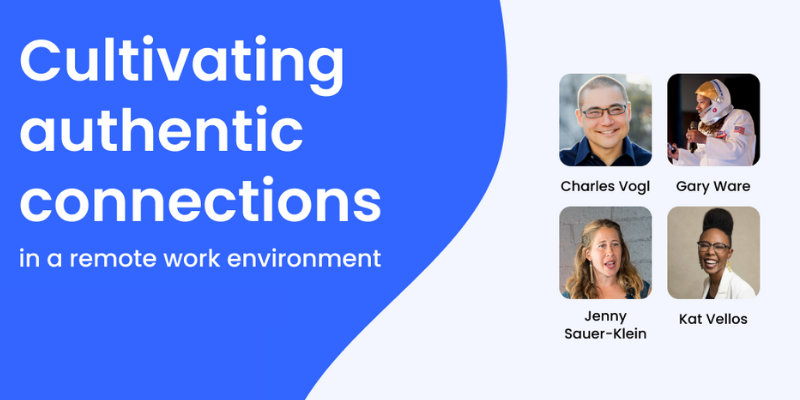
Cultivating Authentic Connections in a remote work environment - Covve workshop

Allowing our horizons in life to grow goes beyond simply showing up at work and completing tasks. We often learn more about our industry, company, and colleagues by interacting with the people at our workplace.

Our offices, physical or virtual, offer us opportunities to forge relationships, expand our networks, and gain a better understanding of ourselves and those around us. Cultivating these relationships and learning from them is about aligning your thoughts and actions with the intent to cultivate relationships.

Yet, in remote work environments, it can be easy to feel detached from a team, almost as if they are superheroes who only appear when they are needed, as opposed to maintaining an important element that makes us feel human, which is connection.

Covve’s workshop on cultivating authentic relationships in a remote work environment, facilitated by Hansen Hunt, emphasized the value of intention. Carrying the intention to cultivate relationships creates pathways to connecting with our colleagues. The four panelists, Gary Ware, Charles Vogel, Kat Vellos, and Jenny Sauer-Klein touched on instances where intention is of utmost importance to building connections in a remote work environment.

One way we can apply intention to connect with colleagues is to focus on discovering commonalities. Gary Ware, founder and CEO of Breakthrough Play discussed that by engaging with colleagues with the aim of finding common interests and passions, we are likely to start building relationships with our colleagues. 

He expressed that “if we dig hard enough, we will find that we are more alike than we are different, and that’s something that takes intention.” This is especially true in a remote work setting, where colleagues don’t interact as intuitively and freely at the office.

The four panelists gave an example through an exercise in finding as many commonalities as they could in three minutes, showing the power of intention. They discovered that they shared eight common elements, from which coast they reside in in the US, to their beliefs in pickles. Engaging with colleagues in this way signals to them you are open and willing to learn more about them, creating an environment that makes them feel safe and that they belong.

Creating opportunities for genuine connections requires going beyond watercooler small talk at the office, or the usual exchange of “good mornings” in the virtual team channel. By intentionally setting the stage for intimate conversations, you develop greater trust and rapport with connections. 

Jenny shared that whether it’s through small virtual gatherings or dedicating time during meetings for personal check-ins, deliberately carving out space for open dialogue allows for deeper connections to form.

When it comes to cultivating deeper connections, Kat Vellos, one of the four thought leaders and founder of weshouldgettogether.com, expressed that “the thing to remember with the way that we use questions with intention and with purpose is to acknowledge that they are a doorway to connection.” Asking questions shows curiosity, and care. However, it is crucial to bear in mind that when aligned with intention and purpose, questions can create the foundations of a lasting relationship.

Intentionality lies at the core of cultivating authentic connections in a remote work environment. It requires a conscious decision to prioritize vulnerability, empathy, and active participation. By intentionally seeking out commonalities and creating spaces for meaningful conversations, we can transcend the physical barriers of remote work and create a network of genuine relationships.

Continue reading…

Switching to Digital Business Cards: Exploring the Environmental Benefits

The character of Patrick Bateman certainly made traditional paper-based business cards hip and a must. Investing in impressive, high-quality paper business cards with contact details engraved in an eye-soothing font is a thing of the past, however. Traditional paper-based cards have long been the go-to in professional settings, but they come with a hidden cost: the toll they take on the environment. 

This is where modern digital business cards, or e-cards, come in. Not only do they help solve the impact of traditional cards on the environment, but they offer a modern solution to our modern needs. In fact, they are continuing to rise in demand and popularity, as Market Research Future indicates that the global digital business card market is expected to record an exponential compound annual growth rate of 11% from 2021 through to 2027, reaching $243 million.

One simple yet essential digital feature of today’s world is digitizing a contact’s traditional paper-based business card. Not only are you doing the environment a favor, but you are also enabling yourself to be more organized. No more rummaging through bags and desks to find a contact’s business card. As a first step to digitizing your contacts, you can scan their business cards and instantly integrate them into your address book on any device. Check out Covve’s business card scanner app to begin modernizing your networking efforts.

Sustainability

One of the most obvious advantages of digital business cards lies in their ability to reduce paper consumption. Traditional cards require a constant supply of paper, leading to the depletion of precious natural resources, including trees. 

Some time ago, when we would add traditional business cards to our collection, we would consider that 42% of globally harvested wood is used for paper, contributing to deforestation. By embracing digital alternatives, we can curb the demand for paper and contribute to the preservation of our forests.

In addition to conserving trees and reducing deforestation, digital business cards offer another significant advantage – they are reusable and easily shareable. With just the click of a button, a digital card can be sent to multiple contacts simultaneously. This makes it clear that digital and contactless cards are the best eco-friendly business cards as they reduce waste and offer a longer product lifespan as opposed to paper cards.

Customizable

More importantly, when your role changes or you move to another company, you can simply update your contact details instead of having to print new cards. This means that digital business cards are also cost-effective in the long term. Buy it once, and have it forever.

Gone are the days of printing and distributing stacks of physical cards, resulting in waste generation and strain on landfills. By embracing digital alternatives, we can significantly reduce waste and contribute to a cleaner environment.

Beyond their environmental benefits, digital business cards offer opportunities for creativity and innovation. They allow for interactive features, such as clickable links to websites or social media profiles, videos, and dynamic content. All of your content can be personalized on your digital business card, fitting the theme of an event, or showcasing your brand. You have more control over the information shared, and how it is displayed.

Digital business cards can also be paired with a physical, contactless counterpart. They are typically made of polyvinyl chloride (PVC), but can also come in metal and bamboo alternatives, making them the best eco-friendly business cards. What makes them so great is that people with contactless cards do not need to give their cards out. They simply exchange information with a tap of their card on a handheld device.

Covve offers bespoke digital and contactless business card customization that can be adjusted to both professional and personal networking needs and branding. In a 2023 case study on digital business card providers conducted by Capacitor Partners, Covve’s ecard solution is ranked first in design, as well as overall, establishing Covve’s ecard as a leading choice to elevate your networking game.

Accessibility

These features not only enhance networking capabilities but also reduce the need for additional printed materials. Embracing digital business cards is not just a step towards sustainability; it’s a step towards the digital transformation happening worldwide. 

You can share your e-card with a QR code shared through virtually any platform, or wow your next meeting participants with a scannable QR code placed in your background. You may also include it in your email signature, ensuring that your contacts are kept up to speed with your details. 

The environmental benefits of switching to digital business cards cannot be overstated. They are more sustainable, cost-effective, creative, interactive, accessible, and modern. Digital business cards are a significant step towards adjusting to the digital landscape of business and social life. These factors tie in to why digital and contactless cards make for the best eco-friendly business cards.

Continue reading…

The math behind building better relationships

Welcome back to Covve and Mo Bunnell’s series on effective networking geared toward business growth. The second episode of the series focuses on understanding how to improve the chances of connecting with someone and how some simple methods of communicating with them enables a deeper connection. Mo’s experience as an actuary came in clutch as he continues to apply three key concepts to increasing the statistical probability of finding commonality with a contact.

While it’s natural for people to have unique perspectives and experiences, actively seeking commonality can foster understanding, empathy, and stronger relationships. One of the most effective ways of getting to know people better is to ask them questions tailored to their passions and beliefs. The more the questions are aligned with people’s interests, the more likely you are to unearth how they feel, think, and interact with the world around them, enabling you to find commonalities.

Whether you are engaging in a heated debate, navigating a new workplace, or simply trying to connect with someone from a different background, there are several key ways to enhance your chances of finding common ground. Mo lays them out as “dead time” and “alive time”, engaging questions, and following up with a simple phrase in mind, “tell me more”.

Take advantage of dead time. Dead time could be when you are waiting for people to join a virtual meeting or a dinner. You can use that time to ask questions to contacts to get to know them better. For example, you could ask them small questions to discover their passions, beliefs, and interests. This turns “dead time” into “alive time”. In this way, you are engaging with a contact, and deepening the connection.

Make the most of these questions by asking them about something that correlates with your contact’s expertise, something personal, or their thoughts on light matters such as Mark Zuckerberg’s potential upcoming brawl with Elon Musk. Mo highlights a study that accentuates the value of asking questions that beckon them to share their own perspective, or self-disclosing information (SDI), which can get people excited about a conversation.

Mo emphasizes that the true turning point of a connection, after diving into an engaging conversation, is to identify what excites them and ask follow-up questions on that matter. That is where the real spark ignites. Keep the phrase “tell me more” in mind to maintain an engaging conversation. An easy way to do this is to keep the famous “Summer Nights” song from the movie Grease in mind.

Ultimately, following these three principles will help you better understand what your contacts need, what they are passionate about, and what their priorities are.

Watch the full episode here for Mo’s expert breakdown of the three principles. Follow the series with Covve and Mo Bunnell to elevate your networking habits. Make the process and journey easier for you with expert advice.

Continue reading…

A Comprehensive Guide to Organizing Your Network with a Personal CRM

In today’s hyper-connected world, maintaining strong professional relationships is crucial for personal and career success. Building and nurturing a robust network requires effective organization and management. That’s where a Personal Customer Relationship Management (pCRM) system comes in. In this comprehensive guide, we will explore how to leverage a Personal CRM to organize your network effectively.

A pCRM is a specialized tool designed to help individuals manage their contacts, interactions, and relationships in a centralized and structured manner. Unlike traditional CRMs used by businesses, pCRMs cater specifically to individuals and their personal networks.

Using a pCRM offers several benefits. First and foremost, it helps you stay organized by providing a central hub for all your contacts, notes, and interactions. By having all your network data in one place, you can easily access and update information as needed. A pCRM allows you to track and maintain regular contact with your connections, ensuring that no valuable relationships fall through the cracks.

Before diving into organizing your network, it’s crucial to choose the right personal CRM that aligns with your needs and preferences. Consider factors such as user interface, features, integrations, and pricing options. Covve delivers its promise to help build healthy networking habits for everyone, no matter their age and career stage. You can download Covve’s pCRM app and trial it for free across Windows and iOS platforms to get your networking efforts back on track.

Setting up Your Personal CRM

Once you’ve selected the ideal pCRM tool, it’s time to set it up to effectively manage your network. Start by importing your existing contact list, including both personal and professional connections. Ensure that all relevant details, such as names, email addresses, phone numbers, and social media profiles, are accurately entered.

Segmenting Your Network

An essential step in organizing your network is segmenting it into categories or groups. By categorizing your contacts based on shared characteristics or interests, you can tailor your interactions and communications accordingly. Consider creating groups such as colleagues, industry peers, mentors, or potential clients. This segmentation enables you to efficiently prioritize and engage with specific subsets of your network.

Adding Context and Notes 

To foster meaningful relationships, it’s crucial to remember essential details about your contacts. A pCRM allows you to add context and notes to individual profiles. Use this feature to record important conversations, shared interests, or key facts about each person. By referring to these notes before reconnecting or engaging in conversations, you can personalize your interactions and demonstrate genuine interest.

Doug Lester, a leading business coach, and career strategist to executives in global leading firms and prestigious university alumni, suggests that using the right system and tools for networking make all the difference. He prefers Covve for its ease of use and the tools it offers to make an impact on your precious relationships, such as its note-taking feature, helping you stay informed on your contacts and interactions.

As soon as you start your networking journey with Covve’s pCRM, following a quick and seamless setup that integrates with your address books, you can begin making notes on your various contacts to make that next point of contact all the more meaningful.

Scheduling and Tracking Interactions

Maintaining regular contact with your network is vital. Leverage the scheduling and tracking features of your pCRM to set reminders for reaching out to specific contacts. Schedule periodic check-ins, meetings, or follow-ups to ensure that your relationships remain active. Additionally, track your interactions to monitor the frequency and quality of your engagements, helping you identify potential areas for improvement.

Here at Covve, we want to help you build more effective networking habits. Scheduling and tracking your interactions is one of the most profound habits to have when networking. This is especially true when looking to gain a referral for another role, or to reignite past relationships. 

The key is to build a reputation as a person who can forge and maintain reciprocal relationships, rather than transactional ones. Doug Lester explains that tracking interactions and capturing important information from those interactions holds powerful value. Leverage Covve’s bespoke technology today to stay on track with your relationships, and schedule those important interactions to remind your contacts that they are important to you.

Leveraging Tags and Custom Fields

Tags and custom fields are powerful tools within a pCRM that can further enhance your organization’s efforts. Use tags to label contacts based on shared characteristics, skills, or interests. This allows you to filter and search your network more efficiently. Custom fields enable you to add additional data points specific to your needs. For instance, you might include fields for preferred communication channels or personal milestones like birthdays or anniversaries.

Follow-up and Stay Informed

Building a strong network requires consistency and persistence. Regularly update your pCRM by adding new contacts and keeping existing information up to date. Dedicate time each week to nurture your relationships through meaningful interactions, such as sending personalized messages or sharing relevant resources. By consistently investing in your network, you’ll create a foundation for long-term professional growth.

Organizing your network with a pCRM is a game-changer for anyone seeking to build and maintain meaningful relationships. By using this comprehensive guide to leverage a pCRM effectively, you can streamline your networking efforts, enhance your productivity, and unlock new opportunities for personal and professional development.

Start your free trial with Covve today, and transform your relationships from transactional, to warm and long-lasting.

Continue reading…

Mac or PC – Learn How You Can Organize Your Calendar and Contacts

How to Organise Your Calendar and Contacts on a Mac and on PC

While we have the technological means to manage various tasks in our lives, we may overlook some simple and unique features that help us be more efficient and effective. Leveraging technology in today’s highly digitized world is critical to nurturing and maintaining your network. We have created a list of useful app integrations and tips to use them effectively to help you expand your networking capacity.

There is no need to implement them all at once, but rather, take your time in adjusting to these new tools and methods to find ones that work best for you. However, you can truly optimize your calendar and contacts by consolidating all of the necessary information onto a single platform, such as Covve’s personal CRM tool, found in both the Google Play Store and the Apple Store.

Calendar Organization: 

Mac:

  1. Utilize the Calendar App: Mac offers a built-in Calendar app that seamlessly integrates with other applications and devices.
  2. Create Multiple Calendars: Set up separate calendars for personal, work, and networking activities, enabling you to maintain a clear overview.
  3. Color Code and Categorize: Assign different colors and categories to your events and appointments, making it easier to identify networking opportunities at a glance.
  4. Set Reminders and Alerts: Ensure you never miss an important networking event by setting up reminders and alerts within the Calendar app. Forgetting to reach out to our contacts for special occasions can be a common occurrence. However, with the right tools and systems, the process of remembering can be automated for you, giving you a nudge to retain and build long-lasting relationships. Have a look at how Covve’s pCRM can help you build better networking habits and stay top-of-mind.

PC:

  • Microsoft Outlook: Outlook is a powerful tool for managing your calendar and contacts on a PC, offering features that enhance your networking endeavors.
  • Create Folders: Organize your events by creating folders based on different aspects of your networking activities, such as industry events, professional meetings, or social gatherings.
  • Utilize Categories and Labels: Assigning categories and labels to your events helps you quickly identify networking-related engagements and manage your time effectively.
  • Sync Across Devices: Ensure seamless access to your calendar by syncing it across multiple devices, enabling you to easily update contact information and stay connected and organized wherever you go.


Contacts Organization 

Mac:

  1. Contacts App: The built-in Contacts app on a Mac is a robust tool for managing your networking contacts efficiently.
  2. Create Groups: Categorize your contacts into groups, such as colleagues, industry professionals, or potential collaborators, to streamline communication and maximize networking opportunities.
  3. Add Relevant Information: Include detailed notes, preferences, and reminders for each contact to personalize your interactions and maintain meaningful connections. For a specially designed tool that enables detailed note-taking, download Covve’s pCRM and start your free trial today to take your contact organization to new heights.
  4. Integration with Email: Mac’s Contacts app seamlessly integrates with the Mail app, enabling you to easily send emails to your networking contacts directly.

PC:

  1. Microsoft Outlook: Outlook’s integrated People app allows you to manage and organize your contacts effortlessly.
  2. Categorize and Tag: Assign categories and tags to your contacts based on networking relevance, enabling you to filter and search for specific individuals efficiently.
  3. Use Contact Notes: Maintain detailed notes about your networking contacts, including past conversations, shared interests, or upcoming events, to facilitate more personalized and engaging interactions. Notes on your contacts can help you rise to the occasion in a pivotal situation. Enhance your contact notes and organization by downloading Covve’s pCRM, a specialized tool tailored for comprehensive relationship building.
  4. Import and Export: Take advantage of Outlook’s ability to import and export contacts, allowing you to synchronize your networking contacts across various platforms and devices.

Effectively organizing your calendar and contacts is essential for successful networking. Whether you are using a Mac or PC, the built-in tools and applications offer powerful features to streamline your networking efforts. 

By implementing the outlined strategies, you can stay organized, and manage your time effectively, helping you make meaningful connections that contribute to your personal and professional growth. Optimize your networking potential and unlock new opportunities on your journey to success.

Continue reading…

How to Manage Your Personal Relationships

Our lives today are filled with moving parts in a rapidly advancing and evolving world that we may sometimes forget that our cousin’s birthday is coming up and we do not make time to get them an appropriate gift. Or maybe you forget that your wedding anniversary is around the corner and you end up empty-handed and potentially leave your partner dismayed. 

Whether it’s nurturing family bonds or maintaining friendships, managing personal relationships requires time, effort, and effective communication. Some of which we do not have enough of. This is where personal contact relationship management (pCRM) comes into play. 

Borrowing from the realm of business, pCRM offers valuable tools and strategies that can significantly improve our ability to manage and strengthen our personal connections. The key difference is that rather than focusing on leveraging connections to hit sales quotas, pCRMs are focused on building lasting connections. At Covve, we help people build habits to enable a lifelong journey of nurturing valuable relationships.

PCRMs refer to the application of customer relationship management (CRM) principles to personal relationships. While CRM is commonly used in business settings to enhance customer interactions, pCRM extends these concepts to the realm of personal connections. It involves employing strategies and tools to better understand, engage, and nurture our relationships.

Building Strong Foundations

Like any successful endeavor, effective personal relationship management starts with understanding people’s needs and priorities. Take the time to reflect on what you value most in your relationships and identify areas that need attention.

Just as CRM systems organize customer data, pCRM utilizes contact management tools to streamline personal information. Digital platforms, such as address books, contact management apps, or even spreadsheet software, can help centralize contact details and keep them readily accessible.

Strengthening Communication

Communication is the lifeblood of any relationship. Develop active listening skills by being fully present and attentive during conversations. Doug Lester, career strategist, and executive coach to Fortune 100 company leaders and executives, stresses the impact of listening out for personal details about people’s lives they share in conversations with us. Show genuine interest, ask clarifying questions, and validate the speaker’s feelings to foster deeper connections.

Combine your active listening with habitual note-taking, a key feature of Covve’s pCRM that you can leverage to give more depth to your meaningful relationships.

Consistency is key in maintaining strong personal connections. Utilize pCRM tools, such as reminders and calendars, to schedule regular check-ins with loved ones. Whether it’s a phone call, video chat, or a simple message, these gestures demonstrate your commitment and dedication to the relationship.

Managing Expectations

Often, misunderstandings and conflicts arise from unmet expectations. Clearly express your needs, boundaries, and expectations to ensure mutual understanding. Encourage loved ones to share their expectations as well, fostering open dialogue.

Disagreements are inevitable in any relationship. Personal CRMs can help navigate these challenges by emphasizing active problem-solving. With pCRMs such as Covve, you are able to take notes and set reminders for special occasions or dates that are meaningful to your contacts, enabling you to be up-to-date and stay relevant.

Balancing Quality and Quantity

In our busy lives, finding time for personal relationships can be a challenge. Prioritize quality time by dedicating specific slots in your schedule solely for connecting with loved ones. Unplug from distractions and focus on being fully present during these moments.

Remember, maintaining healthy personal relationships requires nurturing oneself as well. Prioritize self-care and ensure that you have the energy and emotional well-being to invest in your connections.

PCRMs offer a valuable framework for individuals seeking to enhance both their personal and professional relationships. By adopting principles and strategies commonly used in business CRM systems, individuals can effectively manage their personal connections, cultivate stronger bonds, and ultimately lead more fulfilling lives. 

By actively listening, maintaining open communication, managing expectations, and nurturing connections through meaningful gestures, pCRM empowers individuals to build lasting and meaningful relationships with their loved ones. So, let pCRM be your guiding light in navigating the realm of personal relationships, enriching your life with deeper connections and lasting happiness.

Continue reading…

Networking Insights from an Investment Banking Professional – A discussion with Chris DeFalco

Chris DeFalco - Covve Interview

In the fast-paced world of investment banking, cultivating meaningful relationships is the linchpin of success. For Chris DeFalco, an investment banker at Oppenheimer and Co, this cultivation has become second nature. Specializing in raising capital for small-cap technology and consumer businesses, Chris dives into the immense value of connections.

Our team recently had the opportunity to learn how Chris approaches networking. He shared the importance of maintaining and deepening connections, not only in his professional life but with family and friends as well. From business development to family gatherings, every interaction is an opportunity to build and strengthen relationships.

In the world of investments, it is critical to keep in mind that numbers do not mean much without the value they create for people. Understanding what people want and need is a skill that is forged in the consistent efforts of cultivating lasting relationships.

Chris shares that in the professional sphere, networking is not just a means to an end. It is an opportunity to learn, grow, and add value. Similarly, on a personal level, robust networks of family and friends are invaluable and serve as the bedrock of support systems.

To make the most of every interaction, professionals require systems to make the process more fluid. Similarly, Chris felt the need for a tool that could assist him in this endeavor. That’s when he discovered Covve.

Covve stood out to Chris as a game-changer. Rather than insisting on aggressive outreach, he favored our application for providing proactive prompts, gently nudging DeFalco to stay engaged with his network. This approach resonated with his own relationship-centric perspective, enabling him to keep his interactions authentic and meaningful.

With group messaging, tagging, and note-taking capabilities, Covve seamlessly integrated into his daily life and workflow. Whether it was months since his last conversation with a contact, he could effortlessly pick up where they left off, making interactions feel more personal. He could move beyond a generic “happy birthday” or “congratulations,” infusing every communication with a personal touch.

Learn how a personal CRM such as Covve empowered Chris to bring intentionality into his networking efforts and focus on the quality of relationships. Ultimately, his experiences illuminate that in investment banking, as in life, it’s about making meaningful connections and adding value to others’ lives.

Continue reading…