Robin Dunbar on the Reasons Entertainment is Fundamental in Building Relationships
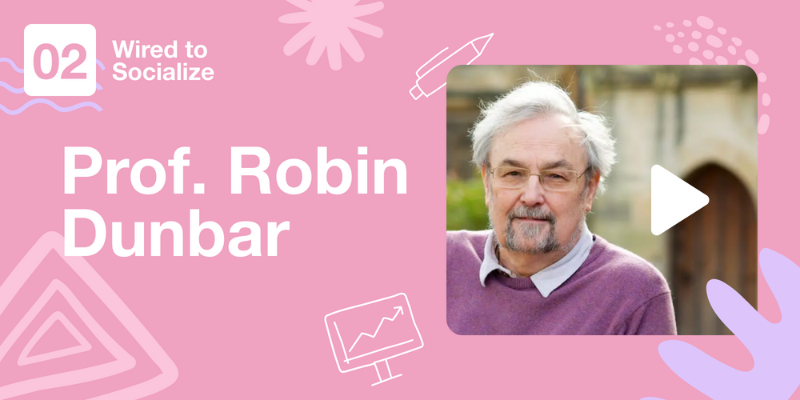
Renowned evolutionary psychologist, Professor Robin Dunbar, returns with a captivating second episode of Wired to Socialize. In this thought-provoking series, Dunbar, together with Covve’s CEO, Yiannis Gavrielides, explores the science behind networking, the art of socializing, and dive deeper into the concept known as Dunbar’s Number. With over 25 years of research, Professor Dunbar highlights how singing, dancing, and laughter can foster deep connections and create a sense of community.

In the previous episode, Yiannis Gavrielides and Professor Dunbar delved into the remarkable story of SABMiller, where a pub was ingeniously employed to facilitate employee socialization, trust-building, and relationship forging. However, Professor Dunbar acknowledges that one solution cannot fit all situations. Suppose you find yourself in a country where alcohol consumption is prohibited. In that case, an alternative option awaits –  the humble coffee house. The key is to create a space where people can come together and socialize openly, transcending barriers and fostering a sense of community.

According to Professor Dunbar, the theater, particularly comedy shows, serves as an incredible example of how individuals arrive as individuals and depart as a united community, having shared a delightful experience together. Laughter unites us and breaks down the walls that often separate us. Similarly, singing holds tremendous potential in forging a deep sense of belonging. As long as you have a voice, you can sing, and just an hour of community singing can create an unshakeable bond among participants.

In a compelling anecdote, Professor Dunbar shares the story of his South African co-author, who, in the aftermath of apartheid, faced a daunting challenge. Half of their government department consisted of employees who had previously enforced apartheid, while the other half hailed from the revolutionary party. To bridge the divide and foster collaboration, they initiated a choir. The transformation was extraordinary as uniforms, and choir competitions worked as catalysts, breaking the ice and dissolving tensions. Singing together nurtured a genuine sense of community and enabled cooperation to flourish.

Professor Dunbar emphasizes the importance of having an individual who willingly and enthusiastically takes the lead in bringing people together. The key lies in finding simple, low-barrier activities that appeal to the majority. By identifying the right communal activity, tailored to your organization’s needs, and engineering it to fit modern busy lives, you can unleash the power of social bonding and combat the pandemic of loneliness that plagues young professionals who have landed their first job in a big city.

The consequences of loneliness and disengagement in the workplace can be devastating, leading to a spiral of depression and reduced productivity. Professor Dunbar shares that engaging in activities that trigger endorphin release, such as laughter, singing, dancing, and watching plays, stimulates the immune system. This not only benefits mental health but also provides physical advantages, guarding against diseases and granting individuals more time to be productive. It’s a win-win scenario for businesses – an engaged workforce translates to increased productivity and a thriving community.
Continue reading…

10 Advantages of Digital Business Cards Over Their Physical Counterparts

Forming relationships and staying in touch with your contacts is much easier with supportive technological tools such as digital business cards, or e-cards. Rummaging through your desk to find that one contact’s business card, forgetting yours on the way to an event, and having to print a new card as your credentials change are troubles that belong in the past, along with paper business cards.

Since Covid-19, a great portion of business is done online, as well as interactions with colleagues, clients, and prospects. To be more specific, in 2022, 30% of business in the US took place online. When you are in an online meeting, or exchanging contact information virtually, sending multiple links to social media profiles and websites can be bothersome. With an ecard, however, all of your profiles, websites, and portfolios are consolidated into one location, ready to share.

Digital Business Cards’ 10 Powerful Upgrades

If you’re not yet convinced that digital business cards are worth it, we’ve prepared a list of ten advantages that they have over their traditional counterparts:

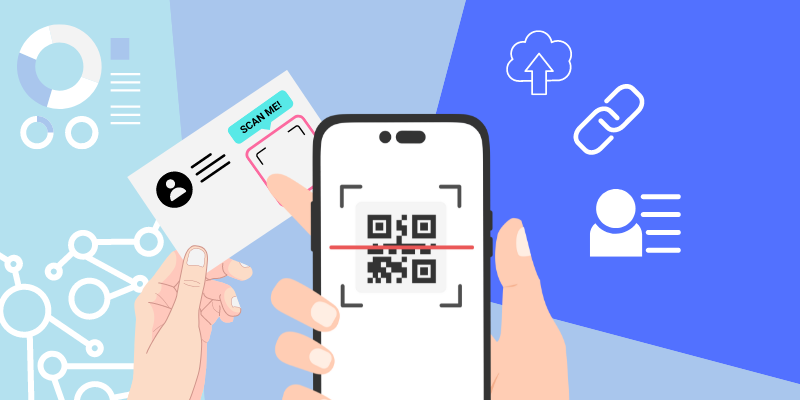
  1. Easily shareable: Digital business cards can be shared instantly via email, messaging apps, social media, or QR codes, making it convenient to distribute your contact information to a wider audience. Say you are in a Zoom meeting and would like to instantly connect with people you have met, you can add a scannable QR code in your email signature or your background, which directs them to your ecard.
  2. Cost-effective: Traditional business cards can be expensive to print in large quantities and require reprints when details change. Ecards eliminate printing costs and can be updated easily, saving you money in the long run. With Covve, you can create your ecard for free, gaining access to faster exchange of information. A single card with all of your profiles and links, and you are equipped with a “wow” factor at all times.
  3. Eco-friendly: Rather than a paper business card, their digital counterparts reduce environmental impact by eliminating the need for paper production and waste. For reference, research in 2018 indicated that 10 billion business cards were printed in the US annually, and an estimated 88% of paper cards were thrown out in under seven days of acquiring them. The eco-friendly nature of ecards reflects consumers’ growing demands for sustainable products.
  4. Multimedia support: With an ecard, you can consolidate all of your social media profiles, your website, and multimedia elements like images and videos and share them with a contact with just one click. They enable you to showcase your portfolio, products, and services more efficiently and directly.
  5. Enhanced design options: Contrary to traditional business cards, digital versions offer more design flexibility. Here at Covve, we take pride in our in-house design team that offers various design iterations for you to choose from. You can incorporate interactive elements and personalized branding to create a visually appealing and memorable impression. In a recent case study comparing some of the leading digital business card solutions, Covve won in several categories, including design for its extensive and comprehensive iterations tailored to a business’ needs or those of an individual.
  6. Personalization and customization: Ecards can be personalized to cater to different clients and occasions, and can include your logo and an appropriate color palette that is on-brand. You may have a more business-purposed ecard, and another that is for your personal life, allowing you to represent yourself as you choose to without a hassle.
  7. Analytics and tracking: With ecards, you can track the number of views, clicks, and interactions to gain insights into how effectively your card is being utilized and to measure its impact on your networking efforts. By analyzing and tracking your progress, you can gain a better understanding of the value you gain and create from your networking endeavors, enabling you to visualize your journey.
  8. Easy updates: Whenever your contact information or business details change, updating an ecard is quick and simple. There’s no need for reprinting and redistributing new cards, ensuring accurate information is always available to your contacts.
  9. Greater organization: Ecards allow you to store and organize contact information conveniently on your phone, tablet, or computer without the need for physical cardholders or manual data entry. Pairing Covve’s personal contact relationship management (pCRM) tool with your ecard helps to create a habit of staying in touch through personalized reminders, notes, and better organization of contacts.
  10. Improved accessibility: Unlike paper business cards, their digital counterparts can be accessed from anywhere as long as there’s an internet connection, ensuring that your contact information is readily available to friends, colleagues, and clients, even if you don’t have physical cards on hand.

Create Your Own Digital Business Card Today

Digital business cards streamline contact sharing, eliminate printing costs, and provide easy updates. Their sustainable nature aligns with the eco-friendly direction that the world is shifting towards and favoring. With multimedia support and customizable designs, they make a memorable impression. 

Explore Covve’s digital business card today found in both Android and iOS, entirely free, and experience more intuitive and dynamic networking.

Continue reading…

Qr Code vs Bluetooth vs NFC: Digital Business Card Technologies Explained

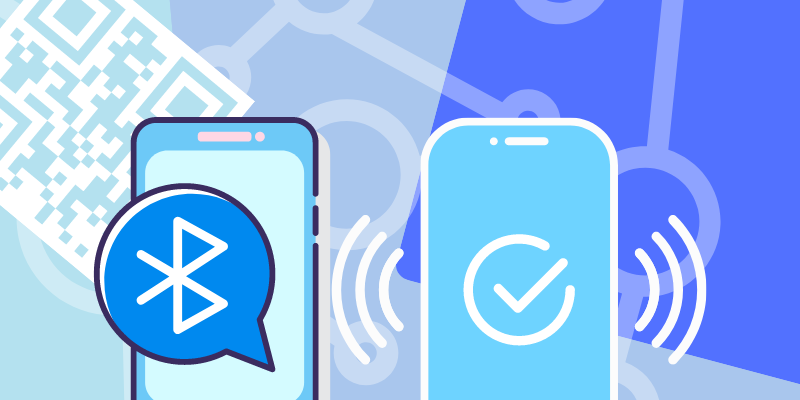
The way we exchange information and connect with each other has evolved significantly. The emergence of digital business cards is a testament not only to the empowerment and sustainability of modern information exchange mediums, but also of their versatility. Digital business cards leverage various technologies, including QR codes, Bluetooth, and NFC (Near Field Communication), to enable seamless information sharing.

QR Codes

Though QR codes have become increasingly popular in the past decade, they are actually a relatively old technology. In 1994, a company known as DENSO WAVE ran a survey across supermarkets and the limitations of barcodes. Masahiro Hara, the company’s lead developer at the time discovered that condensing a barcode into a square shape, and having it be two dimensional (two directions of coding), allowed for faster exchange of information. The company elected to not maintain patent rights, enabling the use of QR codes to spread across the world and industries.

The reason for their popularity is due to their ease of use and compatibility with a wide range of devices. QR stands for Quick Response, and they store data horizontally and vertically, enabling them to hold substantial amounts of information. To read a QR code, you need a scanner app on your smartphone or a built-in QR code reader on newer devices.

Today, this form of exchanging information is widely used for various applications, including digital business cards, product information, and promotional campaigns. Your QR code is the bridge to your digital business card, allowing you to instantly share all of your relevant profiles, website links, and payment platforms to facilitate more efficient and practical networking practices.

Bluetooth

Bluetooth is a wireless technology that allows data transfer between devices over short distances. It operates on the 2.4 GHz frequency and is commonly found in smartphones, tablets, laptops, and other portable devices. Bluetooth-enabled digital cards leverage this technology to establish a connection between devices for information exchange.

To share a digital card using Bluetooth, both devices need to have Bluetooth enabled and be within close proximity. Once the devices are paired, the cardholder can transfer their digital card directly to another device, typically using a dedicated app or the device’s built-in sharing feature. While bluetooth is an easy and highly compatible option, there are also severe risks that come with exchanging information via this method. 

One risk includes “Bluesnarfing”, a ruthless cyberattack that steals information from devices. Another risk is that of “Bluebugging”, where cybercriminals acquire access to devices allowing hackers to spy on and gain access to sensitive information. Bluetooth is convenient for sharing digital cards in person, but it requires devices to be within a limited range and may require additional setup steps for pairing.

NFC

NFC digital cards function by tapping or bringing the card close to an NFC-enabled device. The cardholder’s information is then transferred securely and instantly to the recipient’s device. While the technology is widely used for contactless payments, public transportation systems, and access control applications, it is also the go-to method of exchanging information through smart business cards, which is then saved onto the recipient’s address book in their respective device. Its short-range nature makes it ideal for quick and secure information sharing during face-to-face interactions.

It is much more secure than a bluetooth method of transacting information, and can be a great alternative to scanning QR-codes. Rather than having the recipient scan a code, they simply tap your card on their device. The challenges in security with NFC enabled devices is that someone may tap their device on yours and receive information and data, however avoiding such an incident is relatively simple: keep it in a wallet or a sleeve of its own.

Differences and Applications of Digital Business Card Technologies

Each of these digital card technologies offers distinct advantages and applications:

  • QR codes are widely compatible, easy to generate and scan, and can hold extensive information. They are an excellent medium for sharing information in various scenarios, both online and offline.
  • Bluetooth-enabled digital business cards are a convenient option in face-to-face interactions where devices can be paired and information can be transferred wirelessly. However, they come with inherent risks, making NFC embedded cards a better option for in-person meetings.
  • NFC digital cards provide quick and secure information sharing by tapping or bringing the card close to an NFC-enabled device.

QR codes, Bluetooth, and NFC are three distinct digital card technologies that enable seamless information sharing in our increasingly digital world. Understanding their differences and applications allows us to make informed decisions about which technology best suits our needs. For instance, QR codes are excellent for widespread distribution and compatibility, Bluetooth works well for face-to-face interactions, however it comes with an extent of risks, and NFC is ideal for quick and secure exchanges in-person. The choice between the three options ultimately depends on factors such as compatibility, convenience, and the context of use.

At Covve, we offer smart business cards that are both NFC embedded and equipped with QR codes, and are paired with your digital business card that can be shared with a QR code via your smartphone, tablet, and even in the background of your online meetings. 

Create your own digital business card today with Covve – ready to share in a single tap or scan.

Continue reading…

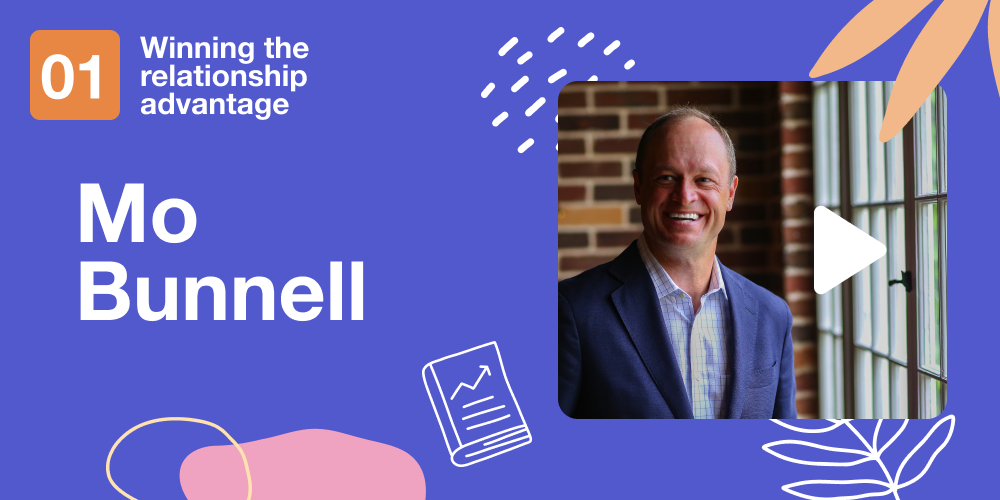
Mo Bunnell: Building Relationships Drives Business Growth

Covve’s collaboration with Mo Bunnell, business growth expert and best-selling author including, The Snowball System, brings you a five-part masterclass series on creating a reliable and resourceful network that can give your business the boost it needs. In this exciting journey, Mo explores the impact of relationships on fostering business growth and provides you with practical insights to enhance your business endeavors.

Commencing the series, Mo expresses, “A great deal might make your year, but a great relationship can make your entire career.” When you prioritize building meaningful connections, you create a powerful network of support, collaboration, and opportunity. Strong bonds pave the way for partnerships, referrals, and valuable insights that can catapult your business forward.

To begin networking, it is paramount for you to overcome your complacency to meet others and build a knack for relationship building. As Mo highlights, it is not an innate talent but a learnable skill. He cites Dr. K Anders Ericsson, the renowned expert on expertise, who demonstrated that any complex skill can be learned and earned. In this sense, anyone can become proficient in building strong and meaningful connections, all it takes is a nudge in the right direction.

Further supporting this notion, Mo references Adam Grant’s book “Give and Take,” where Grant found that mutually beneficial relationships are the most successful. His research revealed that extroverts aren’t necessarily the best at relationship building, but have a great capacity to excel in networking skills. Whether you are extroverted or not, each personality type has its strengths and weaknesses when it comes to forging lasting connections. 

Whether you are experienced or new to the benefits of networking, Mo introduces a framework to guide you on your relationship-building journey, comprising three distinct approaches – sporadic, sprint, and systems thinking. 

Sporadic thinking involves haphazardly remembering to catch up with people without a systematic approach. While it may seem better than leaving relationships to chance, Mo stresses that sporadic thinking is better than nothing, but it is far from optimal.

The next approach is sprint thinking, which involves setting short-term goals, such as attending conferences or seeking referrals within a specific period. While sprinting demonstrates more intentionality, it falls short due to its time-limited nature. The key lies in embracing systems thinking.

Systems thinking, as Mo asserts, is the path to victory in relationship building. It entails adopting a long-term, consistent, and proactive approach. This mindset involves committing to attending a set number of conferences each year or regularly reaching out to contacts through emails or other means. By implementing systems thinking, you can create a structure that ensures continuous relationship nurturing, regardless of external circumstances.

Making an effort to get out and connect is just the beginning of a relationship-building journey. To enhance the results and processes of this lifelong journey, Mo suggests embracing the transformative impact of technology in supporting, maintaining, and building a network. Utilizing tools like the Covve app can serve as a powerful ally by setting reminders, organizing contacts, and taking notes on important interactions.

For those who exercise sporadic networking habits, prepare to abandon this approach. As Mo suggests, there are more efficient systems to boost your relationship-building habits. For those currently sprinting, challenge yourselves further by embracing a systems mindset. The subsequent installments will provide practical strategies for implementing systems thinking in relationship building, ensuring both personal and client success.

Watch the first episode to find out more. Additionally, you can join Mo’s free course, The Relationship Advantage, for a deeper dive into forging fruitful relationships.

Continue reading…

Robin Dunbar on Forging Relationships at the Workplace

When considering methods of optimizing efficiencies at the workplace, people may think of automation software or a general improvement to the technology used. However, there is one factor right under everyone’s nose, and it’s the quality of relationships at the workplace.

Robin Dunbar, a leading anthropologist and evolutionary psychologist at the University of Oxford with more than 25 years of research, was invited for a discussion with Covve’s CEO, Yiannis Gavrielides, on how humans form relationships and their impact at the office. He shares valuable insights on how humans assess the quality of a relationship, and how we form and maintain our important social relationships.

Professor Dunbar discusses his famous ‘Dunbar’s number’ and how it applies to human behavior at work, as well as the 7 pillars of friendship. He highlights that meaningful relationships are founded on trust. Dunbar’s number suggests that when it comes to maintaining stable relationships, the maximum number of relationships is around 150.

The reason being that the more social relationships we pursue, the more diluted our time becomes, and the less effort we can give to cultivating meaningful relationships. Professor Dunbar observed that, when we first meet someone new, we devote about one month’s time getting to know them, and assessing them based on how many ‘boxes’ they tick in relation to the 7 Pillars of Friendship.

Dunbar refers to these 7 pillars as the seven dynamics of friendship. They consist of the following:

  1. Speaking the same language
  2. Where you were raised
  3. Career trajectory
  4. Common interests
  5. World views
  6. Music interests
  7. Humor

Consider your relationships with your colleagues. They lie within the “career trajectory” pillar. When there are off-site events, or work dinners, we will make an effort to go with those we are closest with. Professor Dunbar states that our work ties persist as long as we have common projects and common interests with our colleagues. Moving on to different projects will likely erode those ties.

Essentially, the more commonalities we have with one another, the better the quality of our relationships. We explore these commonalities by meeting new people, exchanging ideas and doing favors for one another to know them better, and to allow others to get to know us, too.

Professor Dunbar discusses how large, successful companies can create “happy, integrated” work environments. He shares the example of how SABMiller, a brewing company that produces the famous Miller Lite lager, installed pubs at the entrance of each factory, so that the employees across departments could intermingle and connect, growing their networks and helping them cultivate strong relationships with each other.

It is important that as we seek ways to improve the way we work, we prioritize creating a sense of community and bonding at our workplace. It doesn’t mean that we must invite our colleagues to our home, rather, it’s about making the effort to interact with them during, or after work.

When we engage in conversations with our colleagues to get a feel of their proximity to Dunbar’s 7 pillars, we contribute to the improvement of the collective workplace. We can achieve that by participating in social events with our colleagues, or making the time to get lunch with them. Professor Dunbar refers to these interactions as “little windows of opportunity to meet new people”. Let’s capitalize on these windows of opportunity, and create workplaces that resemble close-knit communities focused on nurturing long-lasting relationships.

Watch the first episode of the podcast “Wired to Socialize: The Science of Networking” in the following video

Continue reading…

Making a Habit of Nurturing Your Relationships

MAKE NETWORKING AND NURTURING RELATIONSHIPS A HABBIT

Networking is more than just exchanging business cards and hoping for the best. In a world where 85% of jobs are filled through networking, it’s crucial to build and nurture relationships. Mo Bunnell, founder and CEO of Bunnell Idea Group (BIG), and Yiannis Gavrielides, CEO of Covve, discuss the habits that can take your networking game to the next level with valuable insights and engaging personal anecdotes.

Yiannis and his team created Covve which hosts cutting-edge networking solutions that help people nurture their networks, because they were frustrated with the lack of tools available for relationship building. Today, they are taking Covve a step further by incorporating artificial intelligence (AI) for more efficient networking practices, and will host their own series of discussions with experts from various fields to share knowledge and insights on networking.

Getting into their discussion, let’s explore some key parts while keeping it as “spoiler-free” as possible.

The key to successful networking habits is building trust through reciprocity. Mo believes that reciprocity is essential in building trust and nurturing relationships. People are more likely to say yes to those they can relate to. He recommends focusing on building long-lasting relationships, rather than just selling yourself.

If you are curious to find some of the best methods of boosting touch-points with your contacts, the two suggest that being the “link” is the best way to go about it. By connecting two people together, a good networker not only expands their network, but helps others build theirs up as well. This is what good networking is all about, building relationships based on trust and helping people make the right connections.

One of the most exciting highlights of their podcast is the intuitive examples Mo and Yiannis offer on introducing someone to a new contact and exploiting commonalities between contacts to stay connected and empower relationships. For example, Mo and Yiannis have a mutual passion for barbecues, a topic on which they share their best practices as pitmasters and give each other advice and recommendations for those perfect, crispy “burnt ends.” Through a mutual interest, Mo and Yiannis can keep their relationship fresh and relevant over time.

Networking has many benefits, including finding the next step in your career and having a positive impact on mental health. However, implementing these benefits is a matter of practice and habit. By practicing the habits outlined by Mo and Yiannis, you can take your networking game to the next level and create long-lasting relationships based on trust. 

Don’t miss out on discovering the best networking habits practiced by networking experts. Watch their discussion in the video that follows.

Continue reading…

AI Powered Networking

AI POWERED NETWORKING

The Fourth Industrial Revolution is transforming the world of work, with artificial intelligence (AI) leading the way. Already, 65% of workplace recruiters use AI to speed up their hiring processes, thanks to tools like ChatGPT and matchmaking algorithms. However, the potential of AI isn’t limited to hiring; it can also leverage career networking relationships.

AI is no exception. It can optimize networking communications by analyzing big data to identify trends and patterns, enabling users to create personalized messages, identify common interests, and engage with their contacts on a deeper level.

In this sense, AI can also automate relationship building. There is a notable rise in AI applications that automate many aspects of relationship building, such as staying informed on our connections’ interests and activities. Salesforce’s Einstein is one example of a relationship insight software tool powered by AI, which helps professionals gather critical information about their clients from various data sources for improved interactions. Similarly, Hubspot’s ChatSpot combines a large language model with the company’s client relationship management (CRM) platform. ChatSpot enables users to speak with their AI CRM to organize their contacts, generate reports, and much more.

However, it’s essential to recognize that AI cannot replace genuine human connection in networking. While AI-generated content can assist in crafting tailored messages, it still requires human input and fact-checking to ensure the content is accurate and unbiased. Face-to-face interactions remain vital in networking, as more than 80% of professionals believe that meeting in person helps build stronger, longer-lasting professional relationships. Trust is a critical component of any relationship, and it’s best cultivated through empathy and ensuring that the person we are connecting with feels heard; all of which is best achieved in-person, where we can feel the other person’s presence better than through a screen.

Incorporating AI in career networking relationships is becoming a pivotal aspect. By analyzing vast amounts of data, AI can optimize networking communications and automate relationship building. However, it’s crucial to balance AI with human interaction, as face-to-face interactions are critical in networking. 

By adopting a hybrid approach, professionals can use AI to support and enhance their networking efforts, creating more fruitful relationships. When balancing AI and human intelligence in sales, for example, CEO and founder of SalesChoice Cindy Gordon found that “AI increases leads and appointments by more than 50% while at the same time reducing costs by up to 60%, with AI creating more value for sales reps by freeing up their time to spend more time on closing deals.” Although AI can find leads and accelerate processes, the human-touch remains as the catalyst in nurturing relationships.

Continue reading…

Doug Lester: Never Lose Networking Momentum

Navigating the evolving job market can at times feel like a daunting task. Sending multiple applications every week and not receiving positive feedback can feel like a dead end. So, you turn to your contacts but are unsure about where to start or how to go about it. If you’re feeling stuck and looking for a way to progress, we’ve got you covered. 

Doug Lester, renowned career strategist and executive coach to high achievers and highly ambitious professionals, returns for a third Covve Masterclass to offer guidance on creating and maintaining momentum when searching for a job. He suggests creating a habit out of asking a simple yet effective question when speaking with your contacts for your job search networking campaign:

Now that you know more about me, who else do you think I should speak with?

The purpose of this question is to help prevent a common problem — running out of people to reach out when you’re networking for a job. When you remember to ask the question Doug suggests, you expand your network and gain referrals to new contacts. They can then introduce you to opportunities that may have been previously unknown or inaccessible. Referrals are critical to maintaining momentum in your job search. 

Doug suggests that every time you conclude a networking conversation, it is paramount to ask the question so you can get the names of more people that you can reach out to. That way, your existing contacts will be prompted to refer you to another professional who can offer further insight, advice, and opportunities to aid you in your job search. And you will never run out of people to reach out to.

For example, you may have a former colleague or friend who is looking to help you overcome your job search challenges and refers you to one of their trusted contacts. You reach out to the contact they shared with you, discussing your job search. At the end of that conversation, you ask them who else you should speak with, leading you to gain another referral, and potentially a new contact.

A crucial part of this process is staying organized and appearing well-informed about the referrals you’ve gotten and the new contacts you’re making. Doug suggests that the most efficient way to achieve this is with a personal CRM, such as Covve. 

Even though Doug isn’t looking for a job, he still uses Covve to keep notes on his referrals and the interactions he has with his contacts, tracking important information about them such as their experience and interests. And he also uses Covve to set reminders to follow up with the people he has been referred to. As a result, he stays organized, grows his network, and keeps up with the contacts that are important to him, his life, and his business. 

For the latter half of Doug’s third Masterclass, he dives into the features of Covve’s personal CRM tool and how you can use it to optimize your job search networking campaign. It is all about creating efficiencies and automating some parts of networking, so that you can commit more time and energy to the part of networking that matters most: the people you are connecting with and making them feel valued and heard.

You can watch Doug Lester’s third Covve Masterclass for free, and receive a 15% discount for a Covve Pro account with Doug’s Masterclass coupon.


Continue reading…

Navigating the Metaverse: Covve’s Vision for Future Relationship Management

The ways in which we connect have drastically changed over the past few years. From the advancement of smartphones to video conferencing, social media, and now, the metaverse. The metaverse is a virtual space that enables people to interact with one another, regardless of their physical location. 

To better understand how the metaverse may impact forming relationships, Joseph Raczynski, who delivers technological intelligence on future trends, hosted Covve’s CEO, Yiannis Gavrielides for a discussion. 

The discussion primarily focused on the impact of online versus offline interaction, and the ability of each ‘realm’ to support and foster one’s ability to network effectively.

On one hand, networking relies on trust and interpersonal relationships, which are best achieved in person, where eye contact and body language are possible. According to Yiannis, in-person communication can be a catalyst for opportunities and new ideas; mentioning that creativity and innovation in professional settings are primarily born from spontaneous interactions; in the hallway, by the water cooler, or at events and meetings for example.

On the other hand, with today’s most frequently used technology (smartphones and PCs), we are able to connect across long distances, but the quality of the interaction is lacking. The barrier of screens hinders people’s ability to truly connect and understand each other, despite its convenience in long-distance communication. 

This begs the question, can these elements, such as eye contact and body language, that are the bedrock of communication be transferred to the metaverse? To a full digital frontier?

There’s a strong belief that the introduction of the metaverse may be able to supersede screens and their barriers to interaction, where people can interact with personalized avatars. According to Covve’s research team, 60% of consumers feel that the metaverse will improve the way in which we communicate, 46% believe that body language will be aptly simulated through avatars, and 38% feel that they will be able to trust people they meet on the metaverse. These indicators showcase people’s willingness to embrace this disruptive technology as a new plane for networking and interaction. 

Frankly speaking, forming relationships in digital worlds through avatars is not an entirely new concept. In their discussion, Yiannis expressed that we have already witnessed people’s capacity to interact, referring to Second Life, Massively Multiplayer Online Role-playing Games (MMORPGs), and VR Chat. However, the concurrent theme of these avatars is their anonymity, which raises questions about people’s ability to establish trust while networking.

The concern is, how will people trust that the person they are connecting with is genuine? In their discussion, Yiannis considered Soul Bound Tokens (SBTs) whitepaper, and how SBT holders may use their wallet as their “soul” within digital worlds. Through SBTs, people will be able to control the information viewed by others, as a means to verify their identity and establish trust, which is a key component to forging relationships. This gives a certain quality to people’s avatars, and how they interact.

He goes on to explain that a good balance would enable individuals to exercise sovereignty over themselves and their information. The goal is for people to be able to exist within digital worlds and move between them, retaining control over their data and how it’s used.

With the evolution of technology, it is paramount to continue to nurture relationships based on trust, and to learn to leverage technology to enhance the ways in which we connect. According to Gartner’s research, it is expected that in the near future, 25% of the world population will spend at least one hour on the metaverse.

Indeed, the future of relationships is unquestionably evolving at a rapid pace. However, we still have a long road ahead in terms of being able to simulate the qualities of physical social interactions. As pointed out in the podcast “we’re still far away from replicating what it takes to feel the social presence. If we break it down a bit, we are missing eye contact… we’re missing the touch, as well.” Therefore, in the absence of being able to replicate physical elements in a meta world, like in the film ‘Ready Player One’, we must continue to rely on real-world interaction.

Continue reading…

Tips from a finance professional: nurture your relationships with a personal CRM

covve nurturing relationships

Attaining success in your profession involves more than just being skilled and punctual with your tasks. Nurturing strong relationships is a key factor in realizing your professional objectives. 

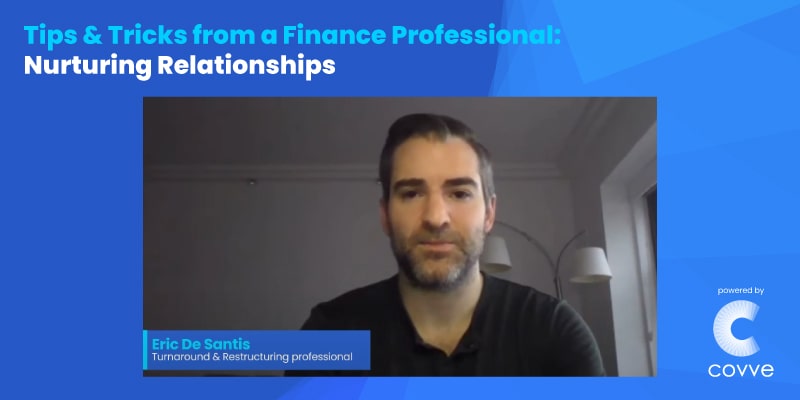
In our recent interview with Eric de Santis on networking insights for professionals, he highlights that “expanding your universe of relationships, listening to new ideas, and understanding what’s important to others” plays a crucial role in this regard.

As a finance professional specializing in Turnaround & Restructuring, Eric shares how he continually expands his network and nurtures long-standing relationships. The value of maintaining social connections can sometimes be overlooked when pursuing a demanding career. Eric faced this challenge and sought a solution that was meaningful to him, and not solely sales-driven. That’s when he discovered Covve, a cutting-edge personal CRM that helps him efficiently manage his network of contacts. 

“I use Covve, which is kind of my own personal way of maintaining my relationships, both professionally and personally, because it gives me an opportunity to help build those new relationships, as well as keep nurturing the current ones.”, he mentions.

With Covve, keeping track of important events like a cousin’s birthday or staying informed about a client’s interests and activities became effortless. By utilizing the power of a personal CRM to manage relationships, such a task becomes simplified, and the risk of losing touch with important connections is minimized.

“Getting a reminder on Covve, showing me progress of how I’m maintaining my relationships has been super helpful because it puts it out in front of you and lets you know ‘hey, you have to make an effort here’ and that’s a big part of relationship-building.”, Eric adds.

Watch the full interview below to discover why Covve is the preferred choice of busy professionals looking to establish meaningful and long-lasting relationships.

Download Covve here and get the exclusive offer from Eric saving 15% from the discounted annual price here: https://covve.com/buy/eric

Continue reading…