How Sports Create Powerful Networking Opportunities

In business, relationships often open doors that expertise alone cannot. While conferences and mixers are valuable, sports provide an overlooked yet highly effective platform for networking. They create a relaxed atmosphere, encourage extended interaction, and foster trust through shared experience. Unlike formal events that can feel transactional, sports allow connections to develop naturally over time. Take for instance Deloitte’s 2023 survey of women leaders, which  underscores: 91 percent said playing competitive sports helped them develop skills important to their professional success, with teamwork, leadership, and communication among the most cited.

The Role of Shared Experience

Sports excel at creating the conditions for meaningful conversation. 

  • Golf is perhaps the clearest example. A round can stretch over several hours, giving players space to discuss both business and personal matters in a natural flow. According to Headhunters media, golf not only offers extended interaction but also positions professionals within networks of senior decision makers. 
  • Tennis works in a similar way but appeals to a wider demographic. David Lloyd Clubs note that tennis attracts participants across all ages and skill levels and that its club and league structures create repeated opportunities for interaction, which deepens relationships over time.

Team sports add a further dimension. 

  • Soccer, ranked by Topend Sports as the world’s most popular sport, relies on collaboration and strategy, qualities that mirror the dynamics of professional life. 
  • Hockey, especially in cultures where it is deeply rooted, builds bonds through both play and community. Even activities like bowling or rock climbing, though less high profile, allow participants to socialize in informal settings and strengthen ties around shared goals.

Turning Encounters into Relationships

The effectiveness of sports in networking lies not only in the activity but in the communities they generate. Clubs, leagues, and ladders provide consistency and repetition, which are critical for building trust. 

SocialSelf observes that such structures transform initial encounters into lasting connections by ensuring regular interaction. Cycling groups, squash clubs, and climbing gyms all offer these frameworks, bringing together individuals who might otherwise never meet and allowing relationships to grow through repeated engagement.

Yet participation alone is not enough. To turn encounters on the field, course, or court into valuable professional relationships, intention matters. This does not mean treating every game as a business pitch, but rather knowing how to sustain connections in ways that feel natural. 

The Role of Technology in Relationship Building

Here, technology can make a difference. Instead of exchanging business cards that often get lost, tools like Covve allow professionals to capture contact details on the spot, add notes about the context of the interaction, and set reminders to follow up after the game. 

This ensures that the rapport built in the moment continues, without losing momentum. By using Personal CRMs to keep track of people met during a tennis ladder, a cycling group, or even a casual round of golf, professionals can maintain contact and steadily strengthen relationships.

Equally important is the mindset. Professionals who succeed in sports networking approach conversations with curiosity rather than agenda. They ask about interests, listen actively, and only gradually introduce business topics when it feels appropriate. Afterwards, they sustain the relationship by sharing relevant insights or inviting connections to other opportunities, ensuring that the bond is reinforced beyond the sporting context.

Sports are not a substitute for traditional networking, but they offer a setting where relationships form with greater authenticity. The slow pace of golf, the inclusivity of tennis, the teamwork of soccer and hockey, and the casual camaraderie of activities like bowling or climbing all demonstrate the potential of athletic pursuits to foster meaningful connections.

Start converting more leads to deals today, try Covve for free.

Continue reading…

Simple Moments, Shared Mediums, True Presence

Insights and activities from September’s Joyful Connection Masterclass

The Connection Masterclass community came together in September and reminded us that connection ignores perfection, and instead, it thrives in play, curiosity, and presence. It’s built in the small moments when we let go, listen closer, and choose to show up as we are.

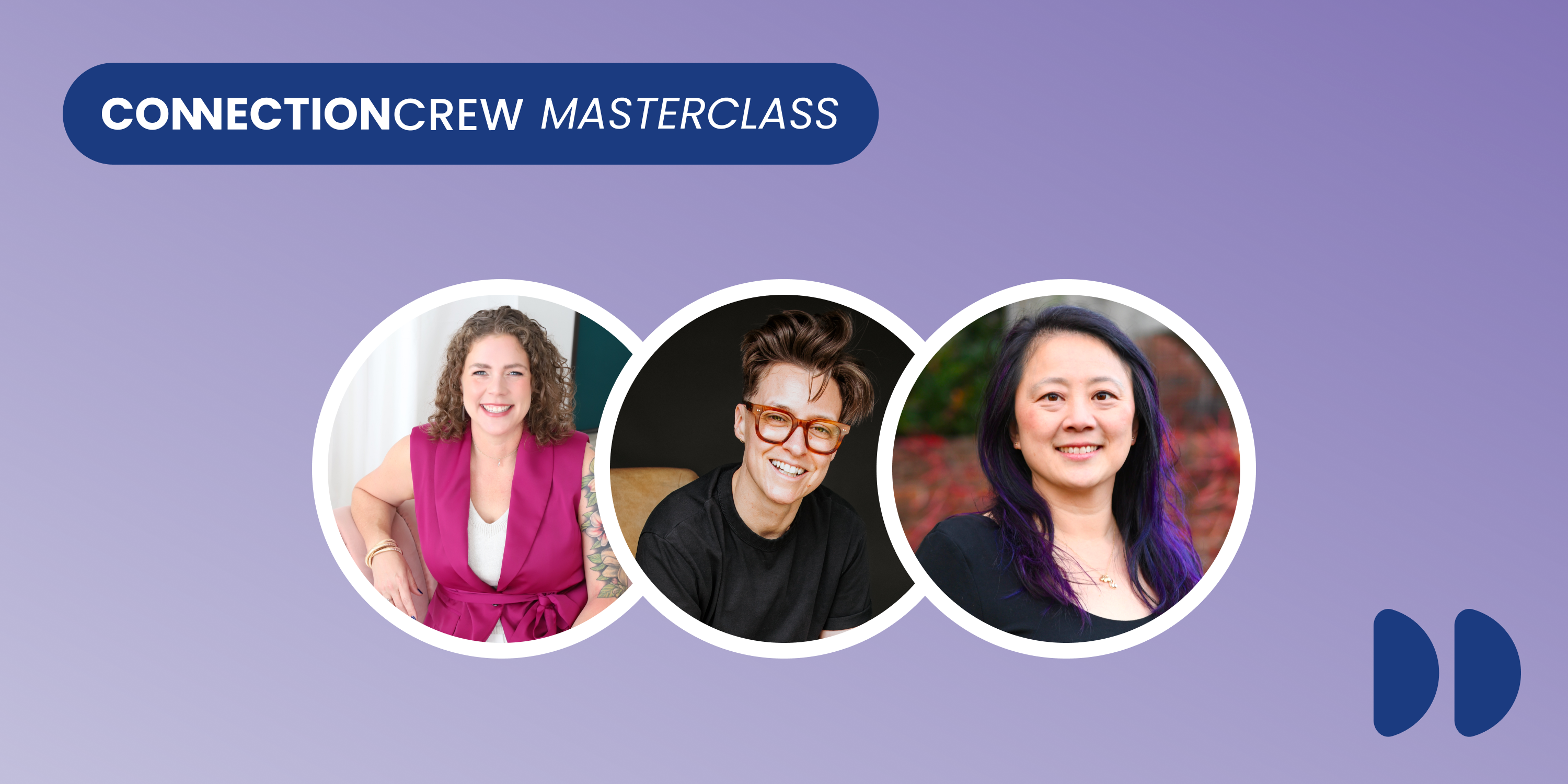
This month’s panellists, Ryan G, Sergio Santamaría, and Dr. Roxana Sufan each brought a different spark: the rhythm of play, the structure of belonging, and the calm of awareness. The exercises they introduced were made to be accessible, repeatable, and deeply human.

Curious about how you can practice these at home or with your colleagues? Read along for a better understanding.

Radio Ramp Mad Libs – Ryan G

The room lit up the moment Ryan G grabbed the mic. A lifelong broadcaster turned creator of Excitement Sessions, he knows how to make words feel alive. For him, joy is a decision rather than a peripheral experience, one we make every time we choose to connect with energy instead of hesitation.

His activity, Radio Ramp Mad Libs, captured that feeling perfectly. Participants filled in playful blanks using favorite songs, dream vacations, and causes close to their hearts, then performed their “radio intros” live, like DJs on air.

What began in laughter quickly turned into something deeper. A story about travel and a passion for ending homelessness sparked a wave of genuine curiosity across the room. Ryan showed how even lighthearted prompts can peel back layers and reveal what matters most.

How to try this yourself:

  1. Write your script. Fill in the blanks with personal, playful details.
  2. Perform it aloud. Deliver it with confidence and humor, don’t worry about it being perfect.
  3. Reflect together. Notice how quick stories often reveal the deepest truths.

Mediums of Connection – Sergio Santamaría

Every friendship starts somewhere, but staying connected takes intention. That’s what drives Sergio Santamaría, founder of People People, a nonprofit helping adults make and keep real friendships.

After a decade analyzing NBA data for teams like the Rockets and Pistons, Sergio turned his analytical mind to a more human problem: loneliness. His framework, Meet, Make, Maintain, maps how we form and sustain friendships, and this session focused on the middle step, the Make.

Through his concept of mediums, he showed how shared passions from music to movement to social causes become the bridges between people. Participants shared their own, discovering how common mediums spark comfort while uncommon ones invite curiosity.

When Sergio and Roxana connected over hiking and explored “Authentic Relating” as an uncommon medium, the message was clear: connection grows through both familiarity and discovery.

How to try this yourself:

  1. Identify your mediums, the 3-5 interests or values that define how you connect.
  2. Notice which are common and which are uncommon.
  3. Deepen both. Celebrate the shared and stay curious about the unfamiliar.

The Noticing Game – Dr. Roxana Sufan

When the world feels loud, presence can feel like rebellion. That’s what Dr. Roxana Sufan invited everyone to experience in The Noticing Game, a mindfulness-based Authentic Relating practice that turns awareness into connection.

With a background in molecular biology and years spent in the pharmaceutical industry, Roxana knows what pressure feels like. Her approach is rooted in something simple: noticing what’s happening right now, in the body, the mind, and in the heart, and naming it aloud.

The exercise began with one phrase: “Right now, I notice…” From there, participants spoke honestly, warmth in the cheeks, tightness in the chest, curiosity rising. In her demonstration with Ryan, the entire energy of the room softened. Vulnerability, it turned out, was contagious.

How to try this yourself:

  1. Begin with awareness. Pause, breathe, and tune in to what’s present.
  2. Speak it aloud. Start with “Right now, I notice…” and share without judgment.
  3. Listen with presence. Begin your response with “Hearing that, I notice…” and let the moment unfold.

A Masterclass That Stayed With Us

Ryan brought laughter and lightness. Sergio offered clarity and structure. Roxana opened space for stillness. Together, they showed that connection doesn’t need grand gestures, just intention, honesty, and a little play.

September’s Joyful Connection Masterclass proved that every conversation can be a doorway. Every shared laugh, a spark. Every moment of awareness, a bridge. We’re grateful to everyone who brought their energy and openness in September. The Connection Crew can’t wait to welcome you back for the next masterclass.

Continue reading…

How Trust and Emotion Shape the Hidden Relationship in Negotiation

Why emotions matter at the table

When people think about negotiation, they often picture logic, strategy, and numbers. But studies show that what we feel and express is just as influential. According to research by Mara Olekalns and Daniel Druckman (2014), emotions act as signals that tell the other side how we see the deal, how much we value the relationship, and where our limits may lie. Some emotions can create cooperation, while others can harden resistance.

This leads to a crucial question: which emotions actually change outcomes at the table, and under what conditions?

The two emotions that matter most

A landmark series of experiments by Gerben Van Kleef and colleagues (2006) provides the answer. They found two consistent patterns:

  • Disappointment or worry: When negotiators showed these emotions, their counterparts tended to give ground. The display of disappointment sent a signal of unmet expectations, motivating the other side to repair the relationship.

  • Guilt or regret: When negotiators showed these emotions, the opposite happened. Counterparts became tougher, holding back or even raising their demands, often interpreting guilt as weakness or a sign that more could be extracted.

In short, disappointment can unlock concessions. Guilt often invites pressure.

Why trust is the switch

Van Kleef’s work also revealed that trust is the key factor that determines whether these emotions matter at all. When trust is high, disappointment is persuasive. It feels genuine, and the other side adjusts. When trust is low, disappointment looks like a tactic and carries no weight.

With guilt, the stakes are higher. In high trust relationships, guilt can be forgiven if paired with clear corrective action. In low trust relationships, guilt is almost always damaging.

Olekalns and Druckman reinforce this point, showing that trust and authenticity set the boundaries of how emotions are received. Context decides whether emotions create progress or block it.

How to use this insight in practice

Before you negotiate

  • Gauge trust: Is the relationship cooperative or competitive? If trust is low, build it through small reliable actions first.

  • Pick your signal carefully: Use disappointment to highlight gaps when trust is strong. Use guilt only when you can immediately back it up with a tangible fix.

During the negotiation

  • Aim emotions at the issue, not the person: Saying “I’m disappointed we’re not closer on delivery times” is better than “I’m disappointed in you.”

  • Pair guilt with action: Do not just apologize. Add a concrete offer or solution.

  • Stay authentic: People detect scripted feelings. Authentic emotions persuade. Faked emotions erode credibility.

After the negotiation

  • Close the loop quickly: Deliver on promises fast. Reliability cements trust.

  • Track what works: Notice when disappointment moves the deal forward and when guilt backfires. Adjust your style accordingly.

The broader lesson

Negotiation is not only about exchanging offers. It is about managing the relationship that sits underneath those offers. Disappointment, when expressed in the context of trust, can draw people closer and create movement. Guilt, when expressed without corrective action, can drive them further away. Trust is the lens through which every emotion is judged.

For leaders and managers, the message is clear. Build relationships where trust runs deep. In those relationships, your emotions will not be dismissed as tactics. They will be read as signals of sincerity. And sincerity, backed by action, is what turns negotiation from a transactional exchange into a platform for long-term partnership.

Start converting more leads to deals today, try Covve for free. 

Continue reading…

When Growth Turns Into Connection

A 2025 study by researchers from the universities of Parthenope, Teramo, Naples Parthenope, and EDHEC Business School looked at how companies grow and what makes that growth last. It followed the journey of an online pharmacy that grew to more than 1.4 million regular customers, added over 430,000 new buyers in just two years, built a newsletter community of 400,000 people, and created a loyalty program with 240,000 members. In 2023, its revenue reached more than €51 million, an increase of 18 percent from the year before.

The study found that growth is not only about tools or clever marketing. It depends on how people learn together as the company expands. Two kinds of learning stood out:

  • One is about making current practices better, such as improving customer service, strengthening internal systems, and sharpening measures of success. 
  • The other is about creating what does not yet exist, including new services, new skills, and new structures that prepare the business for what comes next.

The most testing moments came when steady growth gave way to sudden momentum. As more customers, partners, and suppliers joined, the company needed to adapt quickly not just to keep pace but to maintain trust.

The human side of growth

Behind every figure,  are people. Leaders spoke about how sudden growth revealed weak spots. Systems were strained, measures no longer reflected reality, and customer care was stretched thin. Teams responded by learning and working across boundaries.

Pharmacists became trusted guides who reassured customers and strengthened loyalty. Suppliers turned into partners who shaped the offer together. Employees shared information more openly and used common insights to make better decisions. In this way, growth became less about numbers and more about relationships.

So, what were the lessons learned?

  • Prepare for the surge. Growth feels manageable until momentum accelerates. Anticipating this moment reduces stress when it arrives.
  • Balance two kinds of learning. One path is improving what already works. The other is building new skills and systems for the future. Both must move forward together.
  • Keep people at the center. Customers, partners, and staff are not just participants in growth. They are the reason it continues.
  • Make data useful for all. Information has power only when everyone can understand and act on it. Shared measures align the whole company.
  • Think beyond the next quarter. Rapid growth excites, but lasting progress comes from refining and focusing on what matters most to customers.

From Planning to Action

The study shows that growth depends on learning and relationships moving together. This is where a system like ours adds value. Covve’s tools focus on keeping professional relationships alive by helping people remember, reach out, and stay close to the people who matter most. 

  • For managers, this means better insight into the health of customer and partner relationships. 
  • For teams, it means practical nudges that ensure no client, supplier, or partner is forgotten during times of fast change. 
  • For the company as a whole, it means that the surge in growth does not overwhelm the human connections that make it possible.

Start converting more leads to deals today, try Covve for free. 

Continue reading…

Small Sparks, Steady Ground, True North

Insights and Activities from August’s Joyful Connection Masterclass

August’s Joyful Connection Masterclass reminded everyone of something simple but powerful: joy isn’t fluff, and connection doesn’t happen by accident. It’s the small practices we carry with us, the quick check-ins, the playful prompts, the reminders of what matters, that build the kind of trust and belonging people crave.

This month’s panelists each brought their own way of showing how that works. Together, they left participants with tools that were easy to try, personal to keep, and profound in effect.

Let’s look at what they shared.

Acey Holmes – Curiosity Sparks

Acey Holmes lives and breathes play. As CEO & Founder of BoredLess, she helps organizations reintroduce play into environments where it’s often forgotten.

In her activity, Curiosity Sparks, Acey guided participants through storytelling prompts that made space for recognition without pressure. No long speeches. No polished pitches. Just tiny stories that opened doors.

Her questions were delightfully specific: What’s a strangely specific thing you’re good at? What small joy are you savoring lately? What surprised you recently?

The result was a room buzzing with laughter and connection, proving again that curiosity, when invited, creates trust.

How to try this yourself:

  • Choose a lighthearted prompt.
  • Share a quick story, without overthinking.
  • Invite the other person to do the same.

Elaine Chung – Mind, Heart, Body

Elaine Chung, CEO of Beyond the Change, brought a reflective reset that cut through the noise of daily routines. Known for reframing leadership through neuroscience and presence, Elaine offered a simple practice: Mind – Heart – Body.

She asked participants to pause and name what was happening in three places at once, their thoughts, their emotions, and their physical sensations. Her own check-in was candid: a busy mind full of tasks, a heart balancing excitement and pressure, and a body tight in the shoulders.

By naming what’s present, she showed how quickly we can move from autopilot into intentional connection, with ourselves and with others.

How to try this yourself:

  • Mind: What thoughts are loud right now? Name them.
  • Heart: What emotions are alive beneath the surface?
  • Body: Where is tension or energy showing up?

MK Getler – Find Your Due North

MK Getler, CMO of Loop & Tie and founder of Branded Inferior, invited participants to draw their own compass, a tool for navigating life with authenticity.

Instead of an external “true north,” MK’s exercise turned inward, asking participants to map what keeps them grounded, curious, protected, and true to themselves.

The compass has four points:

  • North: Core truths you won’t abandon.
  • East: Paths of curiosity and growth.
  • West: Boundaries that protect alignment.
  • South: Anchors that bring safety and steadiness.

With colors, symbols, and words filling the page, the compasses became living reminders that authenticity is chosen and practiced daily.

How to try this yourself:

  • Sketch a simple compass.
  • Fill each direction with your truths, boundaries, anchors, and curiosities.
  • Keep it visible as a guide when things feel uncertain.

A Masterclass That Stayed With Us

Acey reminded us that trust grows through curiosity. Elaine showed that alignment begins with awareness. MK gave us a compass to return to authenticity.

August’s Joyful Connection Masterclass was a lesson in how small sparks, steady ground, and clear direction can carry into every part of life. Each activity was practical, each moment intentional, and each voice a reminder: connection thrives when we choose it.

We’re grateful to everyone who brought their energy and openness into the room this month.

The Connection Crew can’t wait to welcome you back for the next masterclass.

Continue reading…

You’re Not Too Busy to Connect. You’re Just Distracted.

It’s a familiar scene. The unread emails, the endless notifications, the half-written report waiting on the screen. In the middle of it all, your thumb hovers over the phone. A quick scroll feels easier than sending that message you’ve been meaning to write. Easier than checking in with the colleague who just closed a big deal. Easier than reaching out to a friend you haven’t spoken to in months.

We tell ourselves we’re too busy to connect. In reality, we’re often just distracted. And those distractions, multiplied across days and weeks, become missed opportunities to strengthen the relationships that matter most.

The Myth of Busyness

Modern work thrives on urgency. Deadlines are tighter, demands are constant, and attention feels like a scarce commodity. But busyness is rarely the true barrier to building relationships. After all, how often do we spend ten minutes here, fifteen minutes there, scrolling through feeds, reading headlines, or cycling through notifications, only to emerge no closer to the people who fuel our lives and careers?

The problem is that we allow ourselves to fill our time with things and activities that do not serve us or those we are connected to. Connection has slipped into the category of “optional,” pushed aside by tasks that feel louder and more immediate. Yet it’s precisely those quieter moments of intentional outreach, congratulating someone on a milestone, checking in after a tough week, following up on an introduction, that create the bonds that sustain us professionally and personally.

Covve exists to reframe that equation. By turning connection into a conscious act, supported by timely reminders and a space to organize relationships, it helps professionals reclaim the time they already have and channel it where it counts.

Procrastination Disguised as Productivity

Scrolling feels safe. It gives the illusion of productivity: of staying informed, of “keeping up.” But what it really offers is a distraction dressed up as diligence. It delays the things that matter more, the email of congratulations, the call of support, the thoughtful follow-up that could open a door.

The irony is that those outreach moments often take less time than the distraction itself. A message can be written in seconds, but its impact may last for months. A quick call can transform a relationship, while an endless scroll transforms nothing.

That’s where tools like Covve make a difference. Instead of another feed competing for your attention, it becomes a quiet ally in cutting through procrastination. It reminds you that a connection is waiting, nudges you when it’s time to follow up, and stores the small but meaningful details that make outreach feel personal. In doing so, it turns the false busyness of distraction into the true productivity of building relationships.

Building Relationships With Intention

Connection doesn’t demand hours. It asks for thoughtfulness, for consistency, and for the willingness to prioritize people over passive distraction. A minute spent on a genuine note is worth more than ten lost to another scroll.

But intention is fragile. Without structure, even the best of it fades. We think about reaching out, but the thought gets buried beneath the next notification. We mean to follow up, but the detail is lost in a sea of tasks.

Covve gives structure to intention. By providing a dedicated space for your relationships, it turns memory into a system. Reminders keep connections from slipping through the cracks, notes capture the context you’d otherwise forget, and real-time updates ensure your contact details are always current. Clearing away the noise so the effort goes further is the real technique here.

When connection is made easier, it stops feeling like an afterthought. It becomes part of the rhythm of your day.

A Gentle Reminder

None of us are immune to distraction. We all fall into the habit of mistaking scrolling for engagement, of thinking we’re too busy to send the message, of promising ourselves we’ll reach out later. But those small choices add up. They shape how we are remembered, and how many opportunities slip quietly past us.

The next time the urge to scroll arises, pause for a second. Ask yourself: could this moment be better spent reaching out? Could it be the difference between a missed opportunity and a meaningful connection?

Because you’re not too busy. You’re just distracted. And with the right tools, ones that simplify, organize, and gently remind, you can make connections not something you try to fit in, but something that fits naturally into the way you thrive.

Continue reading…

Nurture People, Not Just Prospects

Too often in business, relationships are treated as temporary assets. A name enters your system, moves through stages, and then disappears once a deal is done, or not. But behind every opportunity is a person who remembers how you made them feel, not just whether you sent a follow-up email on time.

Professionals today are responsible for more contacts than ever. In a typical week, it’s not unusual to meet a dozen new people, respond to three dozen more, and lose track of the details that made those conversations meaningful. That’s more of a gap in your system rather than a flaw in your character.

Relationships Fade Without Structure

We like to think we’ll remember what matters. The client who mentioned their daughter’s graduation. The investor who hinted at a new venture. But research tells a different story. According to social psychologist Marissa King, 80% of the sense of connection between two people disappears after three months without contact.

It happens quietly. One delayed message leads to another. Then weeks pass, and the familiarity fades. What was once a strong lead or promising introduction becomes a forgotten thread, buried beneath newer priorities. These lost moments aren’t caused by carelessness, but by lack of reinforcement.

Why a Personal CRM Is the Right Fit

Covve’s personal CRM (pCRM) doesn’t manage your network for you. Instead, it helps you stay in touch with what makes each relationship matter. From key milestones to small personal facts, it gives professionals a way to capture and return to the moments that form trust.

Rather than scanning spreadsheets or inboxes, you get context that helps you act with intention. Notes from past meetings stay visible. Reminders surface at the right time. Your attention becomes sharper, and your follow-ups stop feeling like chores. They become part of your relationship-building rhythm.

Conversation Notes Make a Difference

After a meeting, you might remember something personal, a shared book recommendation, an upcoming speaking engagement, a health update. These are small signals that reveal how someone moves through the world. Covve gives you a space to hold onto those details.

When it’s time to reconnect, you aren’t left guessing. You’re reminded of what mattered. That kind of presence changes the dynamic. It shows that you didn’t just hear what they said. You understood what mattered enough to remember it, and you showed up again with purpose.

Memory Needs a Support System

Even the most thoughtful professionals miss things. It’s a matter of volume of information and how you manage it. As your business grows, so do the number of relationships you maintain. Covve was designed with that in mind, not to replace your effort, but to reinforce it.

With smart nudges, contact history, and timely prompts, our platform gives your outreach a rhythm that fits your workflow. It removes the fear of forgetting. You move from reactive communication to proactive connection, with the peace of mind that nothing important is slipping through.

Building Consistency Without Pressure

Good follow-ups don’t require grand gestures. They just need to be thoughtful. Covve gives you the tools to check in at the right moment, with the right message. Then intention is to help you get grounded in reconnecting with people whose trust takes time and attention rather than to chase leads.

This is where small things become meaningful. A note about a product launch. A message on a birthday. A reminder to check in after an event. These actions make your presence felt. They create momentum without urgency, and build relationships that don’t rely on memory alone.

A Tool That Thinks Like You Do

Covve is designed for people who care about doing business well. Its features are rooted in behavioral research, shaped by how real professionals interact, and tested by thousands of users. Style of approach sometimes needs to be enhanced rather than simply adjusted.

If you want to explore how you naturally connect, try Covve’s Connection Compass. It’s a short self-assessment that creates clarity on your approach to staying in touch, giving you a clearer picture of where you’re strong and where you can improve.

Begin Thoughtfully

If you’re managing a growing network, Covve helps you shape your focus around the relationships you’ve already started. It’s not a popularity contest where you are reaching out to everyone. The real technique is in reaching the right person at the right time with a message that carries meaning.

Try Covve App for free and join 100,000+ professionals subscribed to The Networker – our bi-weekly newsletter packed with connection insights and tips.

Continue reading…

While Everyone Else Disconnects, Reconnect

Make the most of the summer slow-down

Time away offers clarity, restoration, and perspective. When the break ends, that clarity fades into a blur of emails, meetings, and task lists. While projects pile up, relationships quietly demand attention too.

Picking up where you left off means catching up on both work and people. Doing so with intention makes conversations easier and reconnecting smoother, even in one of the busiest seasons of the year.

The Value of Checking In

Thoughtful outreach matters. A 2024 summary by the Harvard School of Public Health highlights that meaningful social connections support better mental and physical health, reducing stress and enhancing resilience. Intentionally connecting after a break nurtures well-being and builds a foundation for collaborative flow.

Recent biological research reinforces this. A 2025 study analyzing over 42,000 participants in the UK Biobank found that social isolation and loneliness were associated with elevated levels of proteins involved in inflammation and immune response, about 90% of which were linked to increased mortality risk, and about 50% to specific diseases like cardiovascular disease, stroke, and type 2 diabetes. This underscores how even brief reconnecting gestures can be health‑affirming.

Why This Timing Works

Returning from a break is a universal rhythm, everyone resumes projects, calendars fill up, and stress resurfaces. A Gallup survey of more than 2,000 U.S. workers showed that actions reflecting recognition and peer connection during transitional periods, like post-holiday catch-up, significantly boost morale and workplace engagement 

With shared routines re-emerging, a quick note or encouraging message glides more naturally into conversations. Intentional outreach at this time aligns seamlessly with what people are already feeling and needing.

Practical Ways to Reconnect

Reconnection doesn’t need to be elaborate; small, intentional touches yield real impact:

  • Send a no‑agenda note: “Hope your first week back is settling in smoothly” creates openness without pressure.
  • Share something personal or relevant: An article, podcast, or memory tied to past interactions signals attention and warmth.
  • Set a follow-up reminder: Tools like Covve help gently nudge when responses aren’t immediate, helping to maintain momentum.
  • Reflect and focus: Covve’s Connection Compass allows focusing reconnection efforts where they will matter most, using your connection style.

These steps are simple but effective, they help relationships keep pace with work, rather than fall behind.

Building Relationships Alongside Work

Returning to work goes beyond tasks, it’s about resuming connection. The World Health Organization’s June 2025 report reminds us that 1 in 6 people worldwide experience loneliness, which correlates with as many as 871,000 deaths each year. Strong social ties extend lifespan and enhance well-being.

Beyond statistics, reconnecting after a break creates a familiar warmth in the bustle. It primes your network to be more responsive, collaborative, and attuned as you ramp back up, and it’s often sparked by a simple, intentional hello.

Continue reading…

Shared Goals, Small Risks, Big Moves

Insights and Activities from July’s Joyful Masterclass

What happens when you bring together a TEDx speaker, a DEI strategist, and a connection researcher under one (very sparkly) roof?

You get a masterclass that lets you feel connection in your body, your breath, and your bones.

Hosted by Charley “Sparkle” Lapomardo, July’s Joyful Connection Masterclass invited participants to reflect, move, and show up. But the real magic came from the panellists themselves, each one inviting us to practice connection in ways that felt human, meaningful, and real.

Let’s take a look at what they brought into the room.

Erin Shellington – Finding Synergies

Erin Shellington creates space for real alignment to happen. She’s spent years helping people across communities, research, and nonprofits figure out what connection looks like when you build it with intention.

During her session, Erin introduced a simple but effective practice: finding synergies. She asked participants to name a single goal and a single challenge they were facing. Then they shared them with a partner.

No pitches or problem-solving. Just two people learning what each they each care about.

How to try this yourself:

  • Write down one goal you’re currently focused on and one challenge that’s been showing up.
  • Share them with a colleague or peer.
  • Ask them to do the same.
  • Talk through where your efforts meet. See where you can synergize to overcome a challenge or amplify what works.

This moment of openness gave people the chance to see each other with more clarity and to build relationships from there.

Tony Esteves – Micro-Bravery in Action

Tony Esteves brings a sense of play and honesty to every room he enters. His focus on micro-bravery has helped thousands of people rethink how they connect, both professionally and personally.

Tony’s activity, Micro-Bravery in Action, started with a question: When’s the last time you took a small social risk? Then came another: What’s something you’ve always wanted to say to someone, but haven’t?

Participants shared their stories in pairs, often quietly, with moments of laughter and deeper thought.

How to try this yourself:

  • Think of a small moment where you spoke up, reached out, or showed up.
  • Share that moment with someone you trust.
  • Then reflect: What made it feel risky? What might be worth saying next time the chance comes up?

Tony showed that even the smallest act can help foster confidence to build deep and meaningful relationships

Sumayyah Emeh-Edu – Movement as Belonging

Sumayyah Emeh-Edu led the group through movement, but not in the way most people expected. Her approach centers the body as a site of memory, emotion, and connection.

In her activity, participants were invited to mirror one another’s movements, to dance, or simply sway together. The room was quiet at first, but movement brought a new kind of focus.

No explanation was needed, just attention and a willingness to be seen.

How to try this yourself:

  • Move alongside someone else. This could be walking, stretching, dancing, or even swaying.
  • Focus on what your body feels, without needing to perform or explain.
  • Afterward, write or record a short reflection: What did you feel? What surprised you? What stayed with you?

This session helped participants explore connection through rhythm, breath, and presence.

A Masterclass That Stuck With Us

July’s masterclass gave people a set of tools they could carry into daily life. Not advice or frameworks, but ways to pay attention and connect more fully.

Each panelist offered something practical, grounded, and generous. The activities were clear, the energy was warm, and the moments of reflection felt like they belonged. These activities worked because everyone involved showed up and stayed open, and sometimes, that is all we need to build connection and community.

We’re grateful to everyone who brought their energy with openness, curiosity, and courage to make themselves and others feel heard. Every masterclass is truly a joyful experience for the Connection Crew, and we’re excited to see familiar and new faces in August. Stay tuned!

Continue reading…

Your Team Can’t Afford a Forgotten Follow-Up

Scattered contacts = scattered opportunities

At events, your team is busy. They’re meeting people, making connections, collecting cards, scanning QR codes, and adding contact details to their phones. It all feels productive in the moment. But when the event ends and everyone returns to the office, the cracks start to show.

Leads are scattered across personal devices. Some are saved in notes apps, others live in screenshots or email drafts. Context fades quickly. That brilliant conversation from two days ago is harder to recall. And the question no one wants to ask quietly surfaces: who’s supposed to follow up?

This is where teams lose valuable momentum. A strong lead gets forgotten. Without the right system in place, it’s easy to lose track of what was promised, what was shared, and what should happen next. Even with the best intentions, it becomes harder to follow up with confidence.

That’s why Covve Lead Capture exists.

Capture Leads and Sync Context to Stay Aligned.

Covve gives your team one simple way to collect, organize, and act on new leads. Every card scan, QR code, or manual entry becomes a structured and shareable lead.

You can add notes and create groups on the spot. Filter your contacts by priority and share them with your team right away, whether they’re at the event with you or ready to start planning your follow ups from the office.

All of this syncs instantly with your existing tools and company CRM. Whether you’re using Salesforce, HubSpot, or a custom stack through Zapier, Covve fits into your workflow without any disruption.

There’s no more chasing people for updates. Everything captured is available to the team, from the first moment.

One Scan. One Workflow

Every time your team adds a new contact, Covve sets a process in motion.

  1. Contact is saved with clean, structured data
  2. Notes and groups are added for context
  3. The CRM is automatically updated
  4. Follow-ups are sent on time

Your team sees who captured the lead, what was discussed, and what needs to happen next. The information flows where it needs to go, so the entire team can move quickly and stay focused.

Follow Up With Confidence

When you’re missing details, it’s hard to act. A name without context doesn’t help. A vague memory of a conversation creates hesitation.

Covve helps eliminate that uncertainty. With contact details, event notes, and follow-up tasks all in one place, your team can respond quickly and clearly. Everyone has the information they need to follow up without second-guessing themselves or each other.

This gives your team a real sense of control by managing collected leads. They’re turning handshakes into scheduled meetings, and introductions into active conversations.

Built for Team Collaboration

Covve is designed to support teams at every stage of the process.

No one has to wait for handoffs or updates. Everything is already in motion. Everyone is connected to the same information, working together in sync.

From the first scan at the event to the final follow-up that closes the deal, Covve supports your team’s lead capture efforts, turning contacts into revenue.

Want to capture more leads and lose fewer opportunities? Reach us at [email protected]

Continue reading…