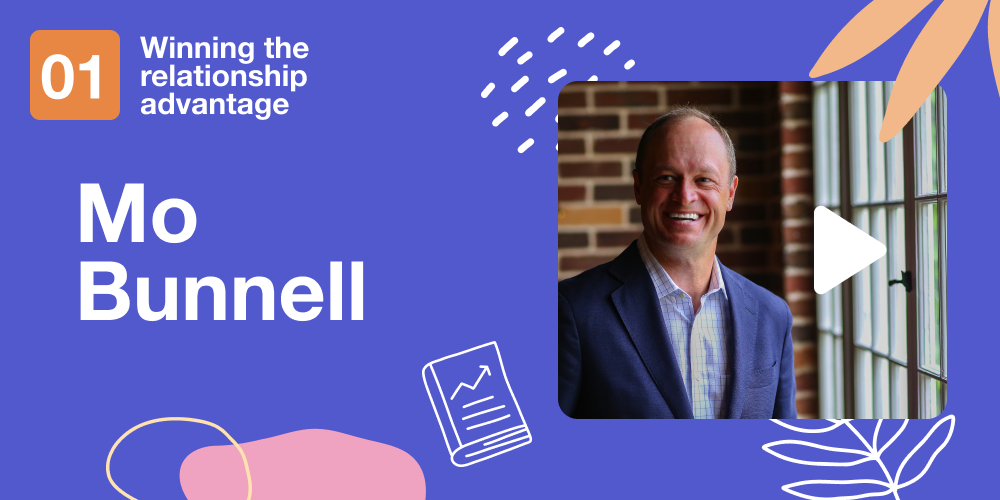
Welcome back to Covve and Mo Bunnell’s series on effective networking geared toward business growth. The second episode of the series focuses on understanding how to improve the chances of connecting with someone and how some simple methods of communicating with them enables a deeper connection. Mo’s experience as an actuary came in clutch as he continues to apply three key concepts to increasing the statistical probability of finding commonality with a contact.
While it’s natural for people to have unique perspectives and experiences, actively seeking commonality can foster understanding, empathy, and stronger relationships. One of the most effective ways of getting to know people better is to ask them questions tailored to their passions and beliefs. The more the questions are aligned with people’s interests, the more likely you are to unearth how they feel, think, and interact with the world around them, enabling you to find commonalities.
Whether you are engaging in a heated debate, navigating a new workplace, or simply trying to connect with someone from a different background, there are several key ways to enhance your chances of finding common ground. Mo lays them out as “dead time” and “alive time”, engaging questions, and following up with a simple phrase in mind, “tell me more”.
Take advantage of dead time. Dead time could be when you are waiting for people to join a virtual meeting or a dinner. You can use that time to ask questions to contacts to get to know them better. For example, you could ask them small questions to discover their passions, beliefs, and interests. This turns “dead time” into “alive time”. In this way, you are engaging with a contact, and deepening the connection.
Make the most of these questions by asking them about something that correlates with your contact’s expertise, something personal, or their thoughts on light matters such as Mark Zuckerberg’s potential upcoming brawl with Elon Musk. Mo highlights a study that accentuates the value of asking questions that beckon them to share their own perspective, or self-disclosing information (SDI), which can get people excited about a conversation.
Mo emphasizes that the true turning point of a connection, after diving into an engaging conversation, is to identify what excites them and ask follow-up questions on that matter. That is where the real spark ignites. Keep the phrase “tell me more” in mind to maintain an engaging conversation. An easy way to do this is to keep the famous “Summer Nights” song from the movie Grease in mind.
Ultimately, following these three principles will help you better understand what your contacts need, what they are passionate about, and what their priorities are.
Watch the full episode here for Mo’s expert breakdown of the three principles. Follow the series with Covve and Mo Bunnell to elevate your networking habits. Make the process and journey easier for you with expert advice.
In today’s hyper-connected world, maintaining strong professional relationships is crucial for personal and career success. Building and nurturing a robust network requires effective organization and management. That’s where a Personal Customer Relationship Management (pCRM) system comes in. In this comprehensive guide, we will explore how to leverage a Personal CRM to organize your network effectively.
A pCRM is a specialized tool designed to help individuals manage their contacts, interactions, and relationships in a centralized and structured manner. Unlike traditional CRMs used by businesses, pCRMs cater specifically to individuals and their personal networks.
Using a pCRM offers several benefits. First and foremost, it helps you stay organized by providing a central hub for all your contacts, notes, and interactions. By having all your network data in one place, you can easily access and update information as needed. A pCRM allows you to track and maintain regular contact with your connections, ensuring that no valuable relationships fall through the cracks.
Before diving into organizing your network, it’s crucial to choose the right personal CRM that aligns with your needs and preferences. Consider factors such as user interface, features, integrations, and pricing options. Covve delivers its promise to help build healthy networking habits for everyone, no matter their age and career stage. You can download Covve’s pCRM app and trial it for free across Windows and iOS platforms to get your networking efforts back on track.
Setting up Your Personal CRM
Once you’ve selected the ideal pCRM tool, it’s time to set it up to effectively manage your network. Start by importing your existing contact list, including both personal and professional connections. Ensure that all relevant details, such as names, email addresses, phone numbers, and social media profiles, are accurately entered.
Segmenting Your Network
An essential step in organizing your network is segmenting it into categories or groups. By categorizing your contacts based on shared characteristics or interests, you can tailor your interactions and communications accordingly. Consider creating groups such as colleagues, industry peers, mentors, or potential clients. This segmentation enables you to efficiently prioritize and engage with specific subsets of your network.
Adding Context and Notes
To foster meaningful relationships, it’s crucial to remember essential details about your contacts. A pCRM allows you to add context and notes to individual profiles. Use this feature to record important conversations, shared interests, or key facts about each person. By referring to these notes before reconnecting or engaging in conversations, you can personalize your interactions and demonstrate genuine interest.
Doug Lester, a leading business coach, and career strategist to executives in global leading firms and prestigious university alumni, suggests that using the right system and tools for networking make all the difference. He prefers Covve for its ease of use and the tools it offers to make an impact on your precious relationships, such as its note-taking feature, helping you stay informed on your contacts and interactions.
As soon as you start your networking journey with Covve’s pCRM, following a quick and seamless setup that integrates with your address books, you can begin making notes on your various contacts to make that next point of contact all the more meaningful.
Scheduling and Tracking Interactions
Maintaining regular contact with your network is vital. Leverage the scheduling and tracking features of your pCRM to set reminders for reaching out to specific contacts. Schedule periodic check-ins, meetings, or follow-ups to ensure that your relationships remain active. Additionally, track your interactions to monitor the frequency and quality of your engagements, helping you identify potential areas for improvement.
Here at Covve, we want to help you build more effective networking habits. Scheduling and tracking your interactions is one of the most profound habits to have when networking. This is especially true when looking to gain a referral for another role, or to reignite past relationships.
The key is to build a reputation as a person who can forge and maintain reciprocal relationships, rather than transactional ones. Doug Lester explains that tracking interactions and capturing important information from those interactions holds powerful value. Leverage Covve’s bespoke technology today to stay on track with your relationships, and schedule those important interactions to remind your contacts that they are important to you.
Leveraging Tags and Custom Fields
Tags and custom fields are powerful tools within a pCRM that can further enhance your organization’s efforts. Use tags to label contacts based on shared characteristics, skills, or interests. This allows you to filter and search your network more efficiently. Custom fields enable you to add additional data points specific to your needs. For instance, you might include fields for preferred communication channels or personal milestones like birthdays or anniversaries.
Follow-up and Stay Informed
Building a strong network requires consistency and persistence. Regularly update your pCRM by adding new contacts and keeping existing information up to date. Dedicate time each week to nurture your relationships through meaningful interactions, such as sending personalized messages or sharing relevant resources. By consistently investing in your network, you’ll create a foundation for long-term professional growth.
Organizing your network with a pCRM is a game-changer for anyone seeking to build and maintain meaningful relationships. By using this comprehensive guide to leverage a pCRM effectively, you can streamline your networking efforts, enhance your productivity, and unlock new opportunities for personal and professional development.
Start your free trial with Covve today, and transform your relationships from transactional, to warm and long-lasting.
While we have the technological means to manage various tasks in our lives, we may overlook some simple and unique features that help us be more efficient and effective. Leveraging technology in today’s highly digitized world is critical to nurturing and maintaining your network. We have created a list of useful app integrations and tips to use them effectively to help you expand your networking capacity.
There is no need to implement them all at once, but rather, take your time in adjusting to these new tools and methods to find ones that work best for you. However, you can truly optimize your calendar and contacts by consolidating all of the necessary information onto a single platform, such as Covve’s personal CRM tool, found in both the Google Play Store and the Apple Store.
Calendar Organization:
Mac:
Utilize the Calendar App: Mac offers a built-in Calendar app that seamlessly integrates with other applications and devices.
Create Multiple Calendars: Set up separate calendars for personal, work, and networking activities, enabling you to maintain a clear overview.
Color Code and Categorize: Assign different colors and categories to your events and appointments, making it easier to identify networking opportunities at a glance.
Set Reminders and Alerts: Ensure you never miss an important networking event by setting up reminders and alerts within the Calendar app. Forgetting to reach out to our contacts for special occasions can be a common occurrence. However, with the right tools and systems, the process of remembering can be automated for you, giving you a nudge to retain and build long-lasting relationships. Have a look at how Covve’s pCRM can help you build better networking habits and stay top-of-mind.
PC:
Microsoft Outlook: Outlook is a powerful tool for managing your calendar and contacts on a PC, offering features that enhance your networking endeavors.
Create Folders: Organize your events by creating folders based on different aspects of your networking activities, such as industry events, professional meetings, or social gatherings.
Utilize Categories and Labels: Assigning categories and labels to your events helps you quickly identify networking-related engagements and manage your time effectively.
Sync Across Devices: Ensure seamless access to your calendar by syncing it across multiple devices, enabling you to easily update contact information and stay connected and organized wherever you go.
Contacts Organization
Mac:
Contacts App: The built-in Contacts app on a Mac is a robust tool for managing your networking contacts efficiently.
Create Groups: Categorize your contacts into groups, such as colleagues, industry professionals, or potential collaborators, to streamline communication and maximize networking opportunities.
Add Relevant Information: Include detailed notes, preferences, and reminders for each contact to personalize your interactions and maintain meaningful connections. For a specially designed tool that enables detailed note-taking, download Covve’s pCRM and start your free trial today to take your contact organization to new heights.
Integration with Email: Mac’s Contacts app seamlessly integrates with the Mail app, enabling you to easily send emails to your networking contacts directly.
PC:
Microsoft Outlook: Outlook’s integrated People app allows you to manage and organize your contacts effortlessly.
Categorize and Tag: Assign categories and tags to your contacts based on networking relevance, enabling you to filter and search for specific individuals efficiently.
Use Contact Notes: Maintain detailed notes about your networking contacts, including past conversations, shared interests, or upcoming events, to facilitate more personalized and engaging interactions. Notes on your contacts can help you rise to the occasion in a pivotal situation. Enhance your contact notes and organization by downloading Covve’s pCRM, a specialized tool tailored for comprehensive relationship building.
Import and Export: Take advantage of Outlook’s ability to import and export contacts, allowing you to synchronize your networking contacts across various platforms and devices.
Effectively organizing your calendar and contacts is essential for successful networking. Whether you are using a Mac or PC, the built-in tools and applications offer powerful features to streamline your networking efforts.
By implementing the outlined strategies, you can stay organized, and manage your time effectively, helping you make meaningful connections that contribute to your personal and professional growth. Optimize your networking potential and unlock new opportunities on your journey to success.
Our lives today are filled with moving parts in a rapidly advancing and evolving world that we may sometimes forget that our cousin’s birthday is coming up and we do not make time to get them an appropriate gift. Or maybe you forget that your wedding anniversary is around the corner and you end up empty-handed and potentially leave your partner dismayed.
Whether it’s nurturing family bonds or maintaining friendships, managing personal relationships requires time, effort, and effective communication. Some of which we do not have enough of. This is where personal contact relationship management (pCRM) comes into play.
Borrowing from the realm of business, pCRM offers valuable tools and strategies that can significantly improve our ability to manage and strengthen our personal connections. The key difference is that rather than focusing on leveraging connections to hit sales quotas, pCRMs are focused on building lasting connections. At Covve, we help people build habits to enable a lifelong journey of nurturing valuable relationships.
PCRMs refer to the application of customer relationship management (CRM) principles to personal relationships. While CRM is commonly used in business settings to enhance customer interactions, pCRM extends these concepts to the realm of personal connections. It involves employing strategies and tools to better understand, engage, and nurture our relationships.
Building Strong Foundations
Like any successful endeavor, effective personal relationship management starts with understanding people’s needs and priorities. Take the time to reflect on what you value most in your relationships and identify areas that need attention.
Just as CRM systems organize customer data, pCRM utilizes contact management tools to streamline personal information. Digital platforms, such as address books, contact management apps, or even spreadsheet software, can help centralize contact details and keep them readily accessible.
Strengthening Communication
Communication is the lifeblood of any relationship. Develop active listening skills by being fully present and attentive during conversations. Doug Lester, career strategist, and executive coach to Fortune 100 company leaders and executives, stresses the impact of listening out for personal details about people’s lives they share in conversations with us. Show genuine interest, ask clarifying questions, and validate the speaker’s feelings to foster deeper connections.
Combine your active listening with habitual note-taking, a key feature of Covve’s pCRM that you can leverage to give more depth to your meaningful relationships.
Consistency is key in maintaining strong personal connections. Utilize pCRM tools, such as reminders and calendars, to schedule regular check-ins with loved ones. Whether it’s a phone call, video chat, or a simple message, these gestures demonstrate your commitment and dedication to the relationship.
Managing Expectations
Often, misunderstandings and conflicts arise from unmet expectations. Clearly express your needs, boundaries, and expectations to ensure mutual understanding. Encourage loved ones to share their expectations as well, fostering open dialogue.
Disagreements are inevitable in any relationship. Personal CRMs can help navigate these challenges by emphasizing active problem-solving. With pCRMs such as Covve, you are able to take notes and set reminders for special occasions or dates that are meaningful to your contacts, enabling you to be up-to-date and stay relevant.
Balancing Quality and Quantity
In our busy lives, finding time for personal relationships can be a challenge. Prioritize quality time by dedicating specific slots in your schedule solely for connecting with loved ones. Unplug from distractions and focus on being fully present during these moments.
Remember, maintaining healthy personal relationships requires nurturing oneself as well. Prioritize self-care and ensure that you have the energy and emotional well-being to invest in your connections.
PCRMs offer a valuable framework for individuals seeking to enhance both their personal and professional relationships. By adopting principles and strategies commonly used in business CRM systems, individuals can effectively manage their personal connections, cultivate stronger bonds, and ultimately lead more fulfilling lives.
By actively listening, maintaining open communication, managing expectations, and nurturing connections through meaningful gestures, pCRM empowers individuals to build lasting and meaningful relationships with their loved ones. So, let pCRM be your guiding light in navigating the realm of personal relationships, enriching your life with deeper connections and lasting happiness.
In the fast-paced world of investment banking, cultivating meaningful relationships is the linchpin of success. For Chris DeFalco, an investment banker at Oppenheimer and Co, this cultivation has become second nature. Specializing in raising capital for small-cap technology and consumer businesses, Chris dives into the immense value of connections.
Our team recently had the opportunity to learn how Chris approaches networking. He shared the importance of maintaining and deepening connections, not only in his professional life but with family and friends as well. From business development to family gatherings, every interaction is an opportunity to build and strengthen relationships.
In the world of investments, it is critical to keep in mind that numbers do not mean much without the value they create for people. Understanding what people want and need is a skill that is forged in the consistent efforts of cultivating lasting relationships.
Chris shares that in the professional sphere, networking is not just a means to an end. It is an opportunity to learn, grow, and add value. Similarly, on a personal level, robust networks of family and friends are invaluable and serve as the bedrock of support systems.
To make the most of every interaction, professionals require systems to make the process more fluid. Similarly, Chris felt the need for a tool that could assist him in this endeavor. That’s when he discovered Covve.
Covve stood out to Chris as a game-changer. Rather than insisting on aggressive outreach, he favored our application for providing proactive prompts, gently nudging DeFalco to stay engaged with his network. This approach resonated with his own relationship-centric perspective, enabling him to keep his interactions authentic and meaningful.
With group messaging, tagging, and note-taking capabilities, Covve seamlessly integrated into his daily life and workflow. Whether it was months since his last conversation with a contact, he could effortlessly pick up where they left off, making interactions feel more personal. He could move beyond a generic “happy birthday” or “congratulations,” infusing every communication with a personal touch.
Learn how a personal CRM such as Covve empowered Chris to bring intentionality into his networking efforts and focus on the quality of relationships. Ultimately, his experiences illuminate that in investment banking, as in life, it’s about making meaningful connections and adding value to others’ lives.
Renowned evolutionary psychologist, Professor Robin Dunbar, returns with a captivating second episode of Wired to Socialize. In this thought-provoking series, Dunbar, together with Covve’s CEO, Yiannis Gavrielides, explores the science behind networking, the art of socializing, and dive deeper into the concept known as Dunbar’s Number. With over 25 years of research, Professor Dunbar highlights how singing, dancing, and laughter can foster deep connections and create a sense of community.
In the previous episode, Yiannis Gavrielides and Professor Dunbar delved into the remarkable story of SABMiller, where a pub was ingeniously employed to facilitate employee socialization, trust-building, and relationship forging. However, Professor Dunbar acknowledges that one solution cannot fit all situations. Suppose you find yourself in a country where alcohol consumption is prohibited. In that case, an alternative option awaits – the humble coffee house. The key is to create a space where people can come together and socialize openly, transcending barriers and fostering a sense of community.
According to Professor Dunbar, the theater, particularly comedy shows, serves as an incredible example of how individuals arrive as individuals and depart as a united community, having shared a delightful experience together. Laughter unites us and breaks down the walls that often separate us. Similarly, singing holds tremendous potential in forging a deep sense of belonging. As long as you have a voice, you can sing, and just an hour of community singing can create an unshakeable bond among participants.
In a compelling anecdote, Professor Dunbar shares the story of his South African co-author, who, in the aftermath of apartheid, faced a daunting challenge. Half of their government department consisted of employees who had previously enforced apartheid, while the other half hailed from the revolutionary party. To bridge the divide and foster collaboration, they initiated a choir. The transformation was extraordinary as uniforms, and choir competitions worked as catalysts, breaking the ice and dissolving tensions. Singing together nurtured a genuine sense of community and enabled cooperation to flourish.
Professor Dunbar emphasizes the importance of having an individual who willingly and enthusiastically takes the lead in bringing people together. The key lies in finding simple, low-barrier activities that appeal to the majority. By identifying the right communal activity, tailored to your organization’s needs, and engineering it to fit modern busy lives, you can unleash the power of social bonding and combat the pandemic of loneliness that plagues young professionals who have landed their first job in a big city.
The consequences of loneliness and disengagement in the workplace can be devastating, leading to a spiral of depression and reduced productivity. Professor Dunbar shares that engaging in activities that trigger endorphin release, such as laughter, singing, dancing, and watching plays, stimulates the immune system. This not only benefits mental health but also provides physical advantages, guarding against diseases and granting individuals more time to be productive. It’s a win-win scenario for businesses – an engaged workforce translates to increased productivity and a thriving community.
Forming relationships and staying in touch with your contacts is much easier with supportive technological tools such as digital business cards, or e-cards. Rummaging through your desk to find that one contact’s business card, forgetting yours on the way to an event, and having to print a new card as your credentials change are troubles that belong in the past, along with paper business cards.
Since Covid-19, a great portion of business is done online, as well as interactions with colleagues, clients, and prospects. To be more specific, in 2022, 30% of business in the US took place online. When you are in an online meeting, or exchanging contact information virtually, sending multiple links to social media profiles and websites can be bothersome. With an ecard, however, all of your profiles, websites, and portfolios are consolidated into one location, ready to share.
Digital Business Cards’ 10 Powerful Upgrades
If you’re not yet convinced that digital business cards are worth it, we’ve prepared a list of ten advantages that they have over their traditional counterparts:
Easily shareable: Digital business cards can be shared instantly via email, messaging apps, social media, or QR codes, making it convenient to distribute your contact information to a wider audience. Say you are in a Zoom meeting and would like to instantly connect with people you have met, you can add a scannable QR code in your email signature or your background, which directs them to your ecard.
Cost-effective: Traditional business cards can be expensive to print in large quantities and require reprints when details change. Ecards eliminate printing costs and can be updated easily, saving you money in the long run. With Covve, you can create your ecard for free, gaining access to faster exchange of information. A single card with all of your profiles and links, and you are equipped with a “wow” factor at all times.
Eco-friendly: Rather than a paper business card, their digital counterparts reduce environmental impact by eliminating the need for paper production and waste. For reference, research in 2018 indicated that 10 billion business cards were printed in the US annually, and an estimated 88% of paper cards were thrown out in under seven days of acquiring them. The eco-friendly nature of ecards reflects consumers’ growing demands for sustainable products.
Multimedia support: With an ecard, you can consolidate all of your social media profiles, your website, and multimedia elements like images and videos and share them with a contact with just one click. They enable you to showcase your portfolio, products, and services more efficiently and directly.
Enhanced design options: Contrary to traditional business cards, digital versions offer more design flexibility. Here at Covve, we take pride in our in-house design team that offers various design iterations for you to choose from. You can incorporate interactive elements and personalized branding to create a visually appealing and memorable impression. In a recent case study comparing some of the leading digital business card solutions, Covve won in several categories, including design for its extensive and comprehensive iterations tailored to a business’ needs or those of an individual.
Personalization and customization: Ecards can be personalized to cater to different clients and occasions, and can include your logo and an appropriate color palette that is on-brand. You may have a more business-purposed ecard, and another that is for your personal life, allowing you to represent yourself as you choose to without a hassle.
Analytics and tracking: With ecards, you can track the number of views, clicks, and interactions to gain insights into how effectively your card is being utilized and to measure its impact on your networking efforts. By analyzing and tracking your progress, you can gain a better understanding of the value you gain and create from your networking endeavors, enabling you to visualize your journey.
Easy updates: Whenever your contact information or business details change, updating an ecard is quick and simple. There’s no need for reprinting and redistributing new cards, ensuring accurate information is always available to your contacts.
Greater organization: Ecards allow you to store and organize contact information conveniently on your phone, tablet, or computer without the need for physical cardholders or manual data entry. Pairing Covve’s personal contact relationship management (pCRM) tool with your ecard helps to create a habit of staying in touch through personalized reminders, notes, and better organization of contacts.
Improved accessibility: Unlike paper business cards, their digital counterparts can be accessed from anywhere as long as there’s an internet connection, ensuring that your contact information is readily available to friends, colleagues, and clients, even if you don’t have physical cards on hand.
Create Your Own Digital Business Card Today
Digital business cards streamline contact sharing, eliminate printing costs, and provide easy updates. Their sustainable nature aligns with the eco-friendly direction that the world is shifting towards and favoring. With multimedia support and customizable designs, they make a memorable impression.
Explore Covve’s digital business card today found in both Android and iOS, entirely free, and experience more intuitive and dynamic networking.
The way we exchange information and connect with each other has evolved significantly. The emergence of digital business cards is a testament not only to the empowerment and sustainability of modern information exchange mediums, but also of their versatility. Digital business cards leverage various technologies, including QR codes, Bluetooth, and NFC (Near Field Communication), to enable seamless information sharing.
QR Codes
Though QR codes have become increasingly popular in the past decade, they are actually a relatively old technology. In 1994, a company known as DENSO WAVE ran a survey across supermarkets and the limitations of barcodes. Masahiro Hara, the company’s lead developer at the time discovered that condensing a barcode into a square shape, and having it be two dimensional (two directions of coding), allowed for faster exchange of information. The company elected to not maintain patent rights, enabling the use of QR codes to spread across the world and industries.
The reason for their popularity is due to their ease of use and compatibility with a wide range of devices. QR stands for Quick Response, and they store data horizontally and vertically, enabling them to hold substantial amounts of information. To read a QR code, you need a scanner app on your smartphone or a built-in QR code reader on newer devices.
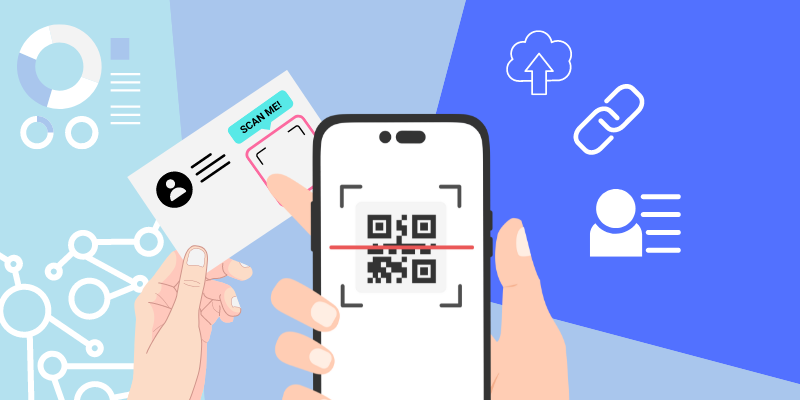
Today, this form of exchanging information is widely used for various applications, including digital business cards, product information, and promotional campaigns. Your QR code is the bridge to your digital business card, allowing you to instantly share all of your relevant profiles, website links, and payment platforms to facilitate more efficient and practical networking practices.
Bluetooth
Bluetooth is a wireless technology that allows data transfer between devices over short distances. It operates on the 2.4 GHz frequency and is commonly found in smartphones, tablets, laptops, and other portable devices. Bluetooth-enabled digital cards leverage this technology to establish a connection between devices for information exchange.
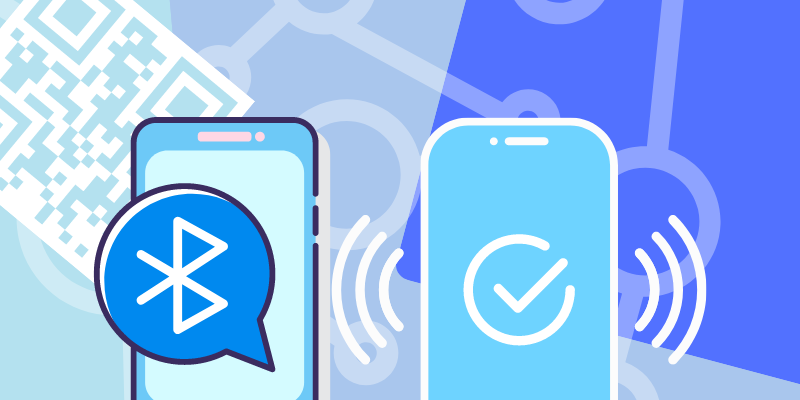
To share a digital card using Bluetooth, both devices need to have Bluetooth enabled and be within close proximity. Once the devices are paired, the cardholder can transfer their digital card directly to another device, typically using a dedicated app or the device’s built-in sharing feature. While bluetooth is an easy and highly compatible option, there are also severe risks that come with exchanging information via this method.
One risk includes “Bluesnarfing”, a ruthless cyberattack that steals information from devices. Another risk is that of “Bluebugging”, where cybercriminals acquire access to devices allowing hackers to spy on and gain access to sensitive information. Bluetooth is convenient for sharing digital cards in person, but it requires devices to be within a limited range and may require additional setup steps for pairing.
NFC
NFC digital cards function by tapping or bringing the card close to an NFC-enabled device. The cardholder’s information is then transferred securely and instantly to the recipient’s device. While the technology is widely used for contactless payments, public transportation systems, and access control applications, it is also the go-to method of exchanging information through smart business cards, which is then saved onto the recipient’s address book in their respective device. Its short-range nature makes it ideal for quick and secure information sharing during face-to-face interactions.
It is much more secure than a bluetooth method of transacting information, and can be a great alternative to scanning QR-codes. Rather than having the recipient scan a code, they simply tap your card on their device. The challenges in security with NFC enabled devices is that someone may tap their device on yours and receive information and data, however avoiding such an incident is relatively simple: keep it in a wallet or a sleeve of its own.
Differences and Applications of Digital Business Card Technologies
Each of these digital card technologies offers distinct advantages and applications:
QR codes are widely compatible, easy to generate and scan, and can hold extensive information. They are an excellent medium for sharing information in various scenarios, both online and offline.
Bluetooth-enabled digital business cards are a convenient option in face-to-face interactions where devices can be paired and information can be transferred wirelessly. However, they come with inherent risks, making NFC embedded cards a better option for in-person meetings.
NFC digital cards provide quick and secure information sharing by tapping or bringing the card close to an NFC-enabled device.
QR codes, Bluetooth, and NFC are three distinct digital card technologies that enable seamless information sharing in our increasingly digital world. Understanding their differences and applications allows us to make informed decisions about which technology best suits our needs. For instance, QR codes are excellent for widespread distribution and compatibility, Bluetooth works well for face-to-face interactions, however it comes with an extent of risks, and NFC is ideal for quick and secure exchanges in-person. The choice between the three options ultimately depends on factors such as compatibility, convenience, and the context of use.
At Covve, we offer smart business cards that are both NFC embedded and equipped with QR codes, and are paired with your digital business card that can be shared with a QR code via your smartphone, tablet, and even in the background of your online meetings.
Covve’s collaboration with Mo Bunnell, business growth expert and best-selling author including, The Snowball System, brings you a five-part masterclass series on creating a reliable and resourceful network that can give your business the boost it needs. In this exciting journey, Mo explores the impact of relationships on fostering business growth and provides you with practical insights to enhance your business endeavors.
Commencing the series, Mo expresses, “A great deal might make your year, but a great relationship can make your entire career.” When you prioritize building meaningful connections, you create a powerful network of support, collaboration, and opportunity. Strong bonds pave the way for partnerships, referrals, and valuable insights that can catapult your business forward.
To begin networking, it is paramount for you to overcome your complacency to meet others and build a knack for relationship building. As Mo highlights, it is not an innate talent but a learnable skill. He cites Dr. K Anders Ericsson, the renowned expert on expertise, who demonstrated that any complex skill can be learned and earned. In this sense, anyone can become proficient in building strong and meaningful connections, all it takes is a nudge in the right direction.
Further supporting this notion, Mo references Adam Grant’s book “Give and Take,” where Grant found that mutually beneficial relationships are the most successful. His research revealed that extroverts aren’t necessarily the best at relationship building, but have a great capacity to excel in networking skills. Whether you are extroverted or not, each personality type has its strengths and weaknesses when it comes to forging lasting connections.
Whether you are experienced or new to the benefits of networking, Mo introduces a framework to guide you on your relationship-building journey, comprising three distinct approaches – sporadic, sprint, and systems thinking.
Sporadic thinking involves haphazardly remembering to catch up with people without a systematic approach. While it may seem better than leaving relationships to chance, Mo stresses that sporadic thinking is better than nothing, but it is far from optimal.
The next approach is sprint thinking, which involves setting short-term goals, such as attending conferences or seeking referrals within a specific period. While sprinting demonstrates more intentionality, it falls short due to its time-limited nature. The key lies in embracing systems thinking.
Systems thinking, as Mo asserts, is the path to victory in relationship building. It entails adopting a long-term, consistent, and proactive approach. This mindset involves committing to attending a set number of conferences each year or regularly reaching out to contacts through emails or other means. By implementing systems thinking, you can create a structure that ensures continuous relationship nurturing, regardless of external circumstances.
Making an effort to get out and connect is just the beginning of a relationship-building journey. To enhance the results and processes of this lifelong journey, Mo suggests embracing the transformative impact of technology in supporting, maintaining, and building a network. Utilizing tools like the Covve app can serve as a powerful ally by setting reminders, organizing contacts, and taking notes on important interactions.
For those who exercise sporadic networking habits, prepare to abandon this approach. As Mo suggests, there are more efficient systems to boost your relationship-building habits. For those currently sprinting, challenge yourselves further by embracing a systems mindset. The subsequent installments will provide practical strategies for implementing systems thinking in relationship building, ensuring both personal and client success.
Watch the first episode to find out more. Additionally, you can join Mo’s free course, The Relationship Advantage, for a deeper dive into forging fruitful relationships.
When considering methods of optimizing efficiencies at the workplace, people may think of automation software or a general improvement to the technology used. However, there is one factor right under everyone’s nose, and it’s the quality of relationships at the workplace.
Robin Dunbar, a leading anthropologist and evolutionary psychologist at the University of Oxford with more than 25 years of research, was invited for a discussion with Covve’s CEO, Yiannis Gavrielides, on how humans form relationships and their impact at the office. He shares valuable insights on how humans assess the quality of a relationship, and how we form and maintain our important social relationships.
Professor Dunbar discusses his famous ‘Dunbar’s number’ and how it applies to human behavior at work, as well as the 7 pillars of friendship. He highlights that meaningful relationships are founded on trust. Dunbar’s number suggests that when it comes to maintaining stable relationships, the maximum number of relationships is around 150.
The reason being that the more social relationships we pursue, the more diluted our time becomes, and the less effort we can give to cultivating meaningful relationships. Professor Dunbar observed that, when we first meet someone new, we devote about one month’s time getting to know them, and assessing them based on how many ‘boxes’ they tick in relation to the 7 Pillars of Friendship.
Dunbar refers to these 7 pillars as the seven dynamics of friendship. They consist of the following:
Speaking the same language
Where you were raised
Career trajectory
Common interests
World views
Music interests
Humor
Consider your relationships with your colleagues. They lie within the “career trajectory” pillar. When there are off-site events, or work dinners, we will make an effort to go with those we are closest with. Professor Dunbar states that our work ties persist as long as we have common projects and common interests with our colleagues. Moving on to different projects will likely erode those ties.
Essentially, the more commonalities we have with one another, the better the quality of our relationships. We explore these commonalities by meeting new people, exchanging ideas and doing favors for one another to know them better, and to allow others to get to know us, too.
Professor Dunbar discusses how large, successful companies can create “happy, integrated” work environments. He shares the example of how SABMiller, a brewing company that produces the famous Miller Lite lager, installed pubs at the entrance of each factory, so that the employees across departments could intermingle and connect, growing their networks and helping them cultivate strong relationships with each other.
It is important that as we seek ways to improve the way we work, we prioritize creating a sense of community and bonding at our workplace. It doesn’t mean that we must invite our colleagues to our home, rather, it’s about making the effort to interact with them during, or after work.
When we engage in conversations with our colleagues to get a feel of their proximity to Dunbar’s 7 pillars, we contribute to the improvement of the collective workplace. We can achieve that by participating in social events with our colleagues, or making the time to get lunch with them. Professor Dunbar refers to these interactions as “little windows of opportunity to meet new people”. Let’s capitalize on these windows of opportunity, and create workplaces that resemble close-knit communities focused on nurturing long-lasting relationships.
Watch the first episode of the podcast “Wired to Socialize: The Science of Networking” in the following video