Networking is more than just exchanging business cards and hoping for the best. In a world where 85% of jobs are filled through networking, it’s crucial to build and nurture relationships. Mo Bunnell, founder and CEO of Bunnell Idea Group (BIG), and Yiannis Gavrielides, CEO of Covve, discuss the habits that can take your networking game to the next level with valuable insights and engaging personal anecdotes.
Yiannis and his team created Covve which hosts cutting-edge networking solutions that help people nurture their networks, because they were frustrated with the lack of tools available for relationship building. Today, they are taking Covve a step further by incorporating artificial intelligence (AI) for more efficient networking practices, and will host their own series of discussions with experts from various fields to share knowledge and insights on networking.
Getting into their discussion, let’s explore some key parts while keeping it as “spoiler-free” as possible.
The key to successful networking habits is building trust through reciprocity. Mo believes that reciprocity is essential in building trust and nurturing relationships. People are more likely to say yes to those they can relate to. He recommends focusing on building long-lasting relationships, rather than just selling yourself.
If you are curious to find some of the best methods of boosting touch-points with your contacts, the two suggest that being the “link” is the best way to go about it. By connecting two people together, a good networker not only expands their network, but helps others build theirs up as well. This is what good networking is all about, building relationships based on trust and helping people make the right connections.
One of the most exciting highlights of their podcast is the intuitive examples Mo and Yiannis offer on introducing someone to a new contact and exploiting commonalities between contacts to stay connected and empower relationships. For example, Mo and Yiannis have a mutual passion for barbecues, a topic on which they share their best practices as pitmasters and give each other advice and recommendations for those perfect, crispy “burnt ends.” Through a mutual interest, Mo and Yiannis can keep their relationship fresh and relevant over time.
Networking has many benefits, including finding the next step in your career and having a positive impact on mental health. However, implementing these benefits is a matter of practice and habit. By practicing the habits outlined by Mo and Yiannis, you can take your networking game to the next level and create long-lasting relationships based on trust.
Don’t miss out on discovering the best networking habits practiced by networking experts. Watch their discussion in the video that follows.
The Fourth Industrial Revolution is transforming the world of work, with artificial intelligence (AI) leading the way. Already, 65% of workplace recruiters use AI to speed up their hiring processes, thanks to tools like ChatGPT and matchmaking algorithms. However, the potential of AI isn’t limited to hiring; it can also leverage career networking relationships.
AI is no exception. It can optimize networking communications by analyzing big data to identify trends and patterns, enabling users to create personalized messages, identify common interests, and engage with their contacts on a deeper level.
In this sense, AI can also automate relationship building. There is a notable rise in AI applications that automate many aspects of relationship building, such as staying informed on our connections’ interests and activities. Salesforce’s Einstein is one example of a relationship insight software tool powered by AI, which helps professionals gather critical information about their clients from various data sources for improved interactions. Similarly, Hubspot’s ChatSpot combines a large language model with the company’s client relationship management (CRM) platform. ChatSpot enables users to speak with their AI CRM to organize their contacts, generate reports, and much more.
However, it’s essential to recognize that AI cannot replace genuine human connection in networking. While AI-generated content can assist in crafting tailored messages, it still requires human input and fact-checking to ensure the content is accurate and unbiased. Face-to-face interactions remain vital in networking, as more than 80% of professionals believe that meeting in person helps build stronger, longer-lasting professional relationships. Trust is a critical component of any relationship, and it’s best cultivated through empathy and ensuring that the person we are connecting with feels heard; all of which is best achieved in-person, where we can feel the other person’s presence better than through a screen.
Incorporating AI in career networking relationships is becoming a pivotal aspect. By analyzing vast amounts of data, AI can optimize networking communications and automate relationship building. However, it’s crucial to balance AI with human interaction, as face-to-face interactions are critical in networking.
By adopting a hybrid approach, professionals can use AI to support and enhance their networking efforts, creating more fruitful relationships. When balancing AI and human intelligence in sales, for example, CEO and founder of SalesChoice Cindy Gordon found that “AI increases leads and appointments by more than 50% while at the same time reducing costs by up to 60%, with AI creating more value for sales reps by freeing up their time to spend more time on closing deals.” Although AI can find leads and accelerate processes, the human-touch remains as the catalyst in nurturing relationships.
Navigating the evolving job market can at times feel like a daunting task. Sending multiple applications every week and not receiving positive feedback can feel like a dead end. So, you turn to your contacts but are unsure about where to start or how to go about it. If you’re feeling stuck and looking for a way to progress, we’ve got you covered.
Doug Lester, renowned career strategist and executive coach to high achievers and highly ambitious professionals, returns for a third Covve Masterclass to offer guidance on creating and maintaining momentum when searching for a job. He suggests creating a habit out of asking a simple yet effective question when speaking with your contacts for your job search networking campaign:
Now that you know more about me, who else do you think I should speak with?
The purpose of this question is to help prevent a common problem — running out of people to reach out when you’re networking for a job. When you remember to ask the question Doug suggests, you expand your network and gain referrals to new contacts. They can then introduce you to opportunities that may have been previously unknown or inaccessible. Referrals are critical to maintaining momentum in your job search.
Doug suggests that every time you conclude a networking conversation, it is paramount to ask the question so you can get the names of more people that you can reach out to. That way, your existing contacts will be prompted to refer you to another professional who can offer further insight, advice, and opportunities to aid you in your job search. And you will never run out of people to reach out to.
For example, you may have a former colleague or friend who is looking to help you overcome your job search challenges and refers you to one of their trusted contacts. You reach out to the contact they shared with you, discussing your job search. At the end of that conversation, you ask them who else you should speak with, leading you to gain another referral, and potentially a new contact.
A crucial part of this process is staying organized and appearing well-informed about the referrals you’ve gotten and the new contacts you’re making. Doug suggests that the most efficient way to achieve this is with a personal CRM, such as Covve.
Even though Doug isn’t looking for a job, he still uses Covve to keep notes on his referrals and the interactions he has with his contacts, tracking important information about them such as their experience and interests. And he also uses Covve to set reminders to follow up with the people he has been referred to. As a result, he stays organized, grows his network, and keeps up with the contacts that are important to him, his life, and his business.
For the latter half of Doug’s third Masterclass, he dives into the features of Covve’s personal CRM tool and how you can use it to optimize your job search networking campaign. It is all about creating efficiencies and automating some parts of networking, so that you can commit more time and energy to the part of networking that matters most: the people you are connecting with and making them feel valued and heard.
You can watch Doug Lester’s third Covve Masterclass for free, and receive a 15% discount for a Covve Pro account with Doug’s Masterclass coupon.
The ways in which we connect have drastically changed over the past few years. From the advancement of smartphones to video conferencing, social media, and now, the metaverse. The metaverse is a virtual space that enables people to interact with one another, regardless of their physical location.
To better understand how the metaverse may impact forming relationships, Joseph Raczynski, who delivers technological intelligence on future trends, hosted Covve’s CEO, Yiannis Gavrielides for a discussion.
The discussion primarily focused on the impact of online versus offline interaction, and the ability of each ‘realm’ to support and foster one’s ability to network effectively.
On one hand, networking relies on trust and interpersonal relationships, which are best achieved in person, where eye contact and body language are possible. According to Yiannis, in-person communication can be a catalyst for opportunities and new ideas; mentioning that creativity and innovation in professional settings are primarily born from spontaneous interactions; in the hallway, by the water cooler, or at events and meetings for example.
On the other hand, with today’s most frequently used technology (smartphones and PCs), we are able to connect across long distances, but the quality of the interaction is lacking. The barrier of screens hinders people’s ability to truly connect and understand each other, despite its convenience in long-distance communication.
This begs the question, can these elements, such as eye contact and body language, that are the bedrock of communication be transferred to the metaverse? To a full digital frontier?
There’s a strong belief that the introduction of the metaverse may be able to supersede screens and their barriers to interaction, where people can interact with personalized avatars. According to Covve’s research team, 60% of consumers feel that the metaverse will improve the way in which we communicate, 46% believe that body language will be aptly simulated through avatars, and 38% feel that they will be able to trust people they meet on the metaverse. These indicators showcase people’s willingness to embrace this disruptive technology as a new plane for networking and interaction.
Frankly speaking, forming relationships in digital worlds through avatars is not an entirely new concept. In their discussion, Yiannis expressed that we have already witnessed people’s capacity to interact, referring to Second Life, Massively Multiplayer Online Role-playing Games (MMORPGs), and VR Chat. However, the concurrent theme of these avatars is their anonymity, which raises questions about people’s ability to establish trust while networking.
The concern is, how will people trust that the person they are connecting with is genuine? In their discussion, Yiannis considered Soul Bound Tokens (SBTs) whitepaper, and how SBT holders may use their wallet as their “soul” within digital worlds. Through SBTs, people will be able to control the information viewed by others, as a means to verify their identity and establish trust, which is a key component to forging relationships. This gives a certain quality to people’s avatars, and how they interact.
He goes on to explain that a good balance would enable individuals to exercise sovereignty over themselves and their information. The goal is for people to be able to exist within digital worlds and move between them, retaining control over their data and how it’s used.
With the evolution of technology, it is paramount to continue to nurture relationships based on trust, and to learn to leverage technology to enhance the ways in which we connect. According to Gartner’s research, it is expected that in the near future, 25% of the world population will spend at least one hour on the metaverse.
Indeed, the future of relationships is unquestionably evolving at a rapid pace. However, we still have a long road ahead in terms of being able to simulate the qualities of physical social interactions. As pointed out in the podcast “we’re still far away from replicating what it takes to feel the social presence. If we break it down a bit, we are missing eye contact… we’re missing the touch, as well.” Therefore, in the absence of being able to replicate physical elements in a meta world, like in the film ‘Ready Player One’, we must continue to rely on real-world interaction.
Attaining success in your profession involves more than just being skilled and punctual with your tasks. Nurturing strong relationships is a key factor in realizing your professional objectives.
In our recent interview with Eric de Santis on networking insights for professionals, he highlights that “expanding your universe of relationships, listening to new ideas, and understanding what’s important to others” plays a crucial role in this regard.
As a finance professional specializing in Turnaround & Restructuring, Eric shares how he continually expands his network and nurtures long-standing relationships. The value of maintaining social connections can sometimes be overlooked when pursuing a demanding career. Eric faced this challenge and sought a solution that was meaningful to him, and not solely sales-driven. That’s when he discovered Covve, a cutting-edge personal CRM that helps him efficiently manage his network of contacts.
“I use Covve, which is kind of my own personal way of maintaining my relationships, both professionally and personally, because it gives me an opportunity to help build those new relationships, as well as keep nurturing the current ones.”, he mentions.
With Covve, keeping track of important events like a cousin’s birthday or staying informed about a client’s interests and activities became effortless. By utilizing the power of a personal CRM to manage relationships, such a task becomes simplified, and the risk of losing touch with important connections is minimized.
“Getting a reminder on Covve, showing me progress of how I’m maintaining my relationships has been super helpful because it puts it out in front of you and lets you know ‘hey, you have to make an effort here’ and that’s a big part of relationship-building.”, Eric adds.
Watch the full interview below to discover why Covve is the preferred choice of busy professionals looking to establish meaningful and long-lasting relationships.
Download Covve here and get the exclusive offer from Eric saving 15% from the discounted annual price here:https://covve.com/buy/eric
Many Americans today want to be their own boss and create value through their own business. In fact, according to a USSBA report, small to medium-sized enterprises (SMEs) make up 99.9% of businesses in the United States. With such a high saturation of SMEs, it’s important for brands to stand out and to establish integrity and authenticity. The obstacles that SMEs face in raising funds, recruiting quality talent, and maintaining and increasing client portfolios, have proven to be areas that most often lead to a SMEs failure.
There are several methods and strategies to employ when looking to raise funds, recruiting the right people, and managing client portfolios. One of the most powerful strategies is a strong networking system where contacts and their details are organized, up-to-date, and easily accessible. Every job requires specific tools, and a personal CRM is one for SME growth. There are no “best CRMs”, but rather, CRM’s for specific purposes. As opposed to sales CRM’s that are focused on sales funnels and deliverables, a personal CRM is focused on building trust and nurturing strong relationships.
Finding the Right People
Leveraging a network to recruit quality talent and get the best market deals is something that many SMEs often overlook. In an article discussing why SMEs fail, Tom Eisenmann, an American economist notes that “without industry connections, they couldn’t leverage their professional networks to recruit team members or count on past relationships with factory managers to ensure prompt delivery.”
Business owners meet multiple people every day, some of whom could potentially join their team. A personal CRM tool enables business owners to efficiently organize their contacts’ details and notes about the contact, in a manner that encourages them to stay connected. Keeping notes about contacts’ interests, career journeys, and information about their personal life that they share creates opportunities to connect and re-warm past relationships which could lead to mutually beneficial outcomes.
Building Trust
Match-making VC’s with SMEs can prove to be a challenge, but by nurturing relationships based on trust, the process can be made easier for the entrepreneur. Identifying the right contacts in a business owners’ network and nurturing that relationship can grant access to high-value introductions, where a contact can make a referral on behalf of the SME.
Meeting people face-to-face and building relationships founded on trust are critical when looking to receive funding for an SME. A report from the OECD discussing the factors that influence financing for SMEs highlights that, “although these platforms can reduce information search costs for both the investors and entrepreneurs, they do not replace personal contact and face-to-face interaction, which are mostly needed in a financing model largely based on confidence and trust”.
A personal CRM tool is the medium through which a business owner can develop trust with their contacts by staying engaged with their interests. Features such as tagging specific interests on contacts grant insights that can be used to stay connected, making a contact feel that there is genuine care and diligence in every interaction.
It is not so much about the overall best CRM, but about the tools a business employs to achieve its goals. Sure, logging and tracking sales targets through a CRM is great, but what about the fundamentals of generating leads offline? This is where a personal CRM thrives, enhancing relationships by keeping interactions and contacts engaged, present, and consistent.
Get started with your personal CRM tool today to optimize and expand your business’ growth and network. A personal CRM tool such as Covve is free-to-test and easy to navigate and integrate into your professional and personal life.
Leveraging your network to advance your career or grow your business can seem transactional. Say you have a contact that you’ve spoken to in the past and you’d like to pick their brain again, how would you reach out to them in a way that seems more personal?
Doug Lester, a career strategist and executive coach for MBA students and alumni at a top business school and executives at Fortune 100 companies, has returned in a second Covve masterclass to highlight the impact of taking good notes about your contacts, and how those notes can help turn a potentially awkward conversation into a friendlier, warmer catch-up with a personal connection.
In this video, Doug describes an anecdotal experience of reconnecting with someone he had already spoken with before to ask them for help, again. It could have been awkward and cold, but it ended up being the opposite.
Spoiler alert: The trick is listening carefully for personal details about a networking contact and capturing that information in your notes so you can recall that information in future conversations.
In business, we tend to focus on information that seems directly related to the task at hand. But when we do that, it’s easy to neglect personal details about our contacts that can help change the tone of future conversations for the better. The notes about personal details you gather today may not help you immediately, but recalling them in a few months’ time can prove to be invaluable when you reach out to a networking contact a second, third or even a fourth time.
In Doug’s story, he shares how by recalling something his networking contact had mentioned in a previous conversation, he was able to make his contact feel heard and valued as a person. As a result, what could have been a fairly; transactional and cold conversation ended up being more personal and warm; And Doug’s contact was more open to listening to him and helping him by sharing her knowledge and advice.
To keep track of notes that help facilitate relationship building while networking, Doug has abandoned post-it notes and paper and prefers to use Covve, a personal CRM. Covve’s note-taking features help him keep key information about the contacts in his network organized and easy to reference when he reconnects.
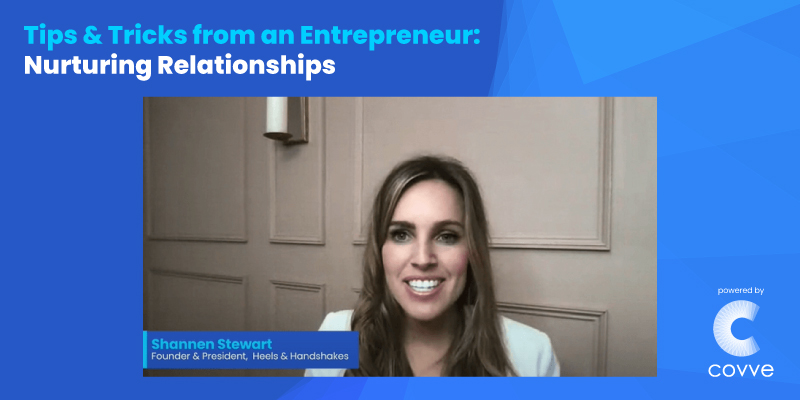
Shannen Stewart, Founder and President of Heels and Handshakes, a 3000+ membership network dedicated to helping women in business and entrepreneurs, talks about how Covve Personal CRM has been a game-changer for her as a business owner.
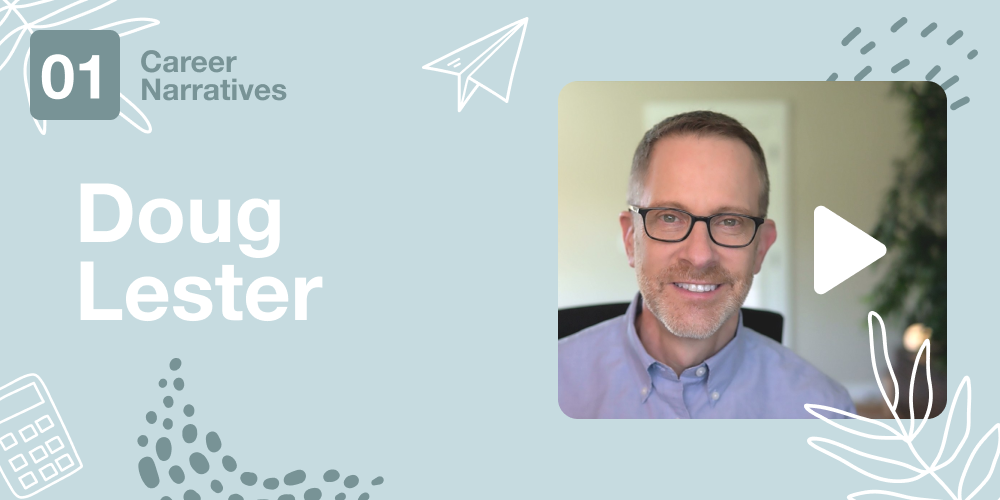
In his first masterclass for Covve, Doug Lester, a world-class career strategist and executive coach for MBA students and alumni at a top-tier business school and executives at Fortune 100 companies, shares the importance of abandoning the spreadsheet to take a more sophisticated approach to manage your contacts. The approach he recommends enables professionals to focus on the important things: building relationships and advancing their careers through the strength of their connections.
In the video, Doug shares his personal experience adopting a robust system to keep track of his professional contacts, one that reminds him to stay in touch with them, and helps him effectively capture important information from each conversation and exchange.
He discusses the complexity involved in trying to build a contact tracking system in a spreadsheet and the hard work required to maintain it. Doug then shares some tips and insights into automating this process, better managing your contacts, and keeping your relationships active and warm through a personal CRM (client relationship management software). Most importantly, he underlines the significance of setting realistic goals and expectations when managing your network of contacts.
As Doug points out, “It will likely vary by the type of contact we’re talking about. Be honest with yourself about this one. Sure, it can feel good to say, ‘I’m going to reach out to this person every month or every quarter.’ But the demands of your work and life may only allow you to make that kind of decision for so many people in your network.”
It goes without saying that even master networkers balance the amount of time they commit to networking and value the depth of their relationships over the number of contacts they manage.
Ever heard of NFC and wondering what is? NFC stands for Near Field Communications. It is a proximity-based wireless communication technology that is limited to an extremely short range. Therefore, it requires devices to be in close proximity for it to work. This technology allows users to have secure transactions and connect electronic devices with a touch. It also makes possible the exchange of digital information.