Understanding the subtle social signals embedded in one of the oldest forms of human interaction
In a world increasingly dominated by digital interactions, the simple act of shaking hands remains one of the most potent forms of nonverbal communication. A handshake conveys trust, establishes rapport, and helps balance the power dynamic between two individuals. Whether at a critical business negotiation, a job interview, or an informal networking event, this seemingly small gesture profoundly influences our relationships and interactions.
Although the handshake feels second nature today, its roots trace back thousands of years. Exploring how this gesture evolved provides important context for understanding its continuing role in human relationships and communication today.
Historical Origins of the Handshake
Ancient Assyria, 9th Century BC
One of the earliest documented handshakes appears on a relief depicting Assyrian King Shalmaneser III clasping hands with Babylonian King Marduk zakir shumi I, signaling the establishment of a political alliance and mutual trust.
Ancient Greece, 5th Century BC
Greek artwork frequently portrayed handshakes among equals, emphasizing respect and unity, particularly among warriors and statesmen.
Roman Empire
Romans adopted the handshake as a significant ritual, known as dextrarum iunctio or “joining of right hands”. Used extensively in wedding ceremonies and official agreements, it symbolized fidelity, harmony, and trust.
Medieval Europe
During the medieval era, knights would grasp each other’s hands or forearms as a gesture of goodwill and as a practical check for concealed weapons. This gesture reinforced the handshake’s association with trustworthiness.
17th Century Quaker Communities
Rejecting hierarchical traditions like bowing or hat tipping, Quakers adopted the handshake as an expression of equality, respect, and sincerity among peers.
Modern Global Norm
Today, the handshake remains embedded deeply in social and professional etiquette worldwide. Its universality underscores its continuing significance as a gesture that fosters trust, mutual understanding, and cooperation.
Interpreting Handshake Styles and Their Implications
Handshake styles subtly communicate aspects of personality, intention, and power dynamics. Here are ten common variations, each revealing distinct social cues and relational intentions:
1. The Wet Fish
Characterized by a limp, cold grip, this handshake tends to convey uncertainty, nervousness, or a lack of self confidence. It often unintentionally weakens initial trust.
2. The Vice Grip
Delivered with excessive force, this handshake can project dominance or assertiveness. While intended to express confidence, it may instead create discomfort or tension.
3. The Bone Crusher
An extreme form of the Vice Grip, this handshake can unintentionally signal aggression or excessive competitiveness. It typically undermines, rather than fosters, connection.
4. The Fingertip Fumble
When only fingertips are grasped instead of the full hand, this handshake often indicates social hesitation or discomfort. It may unintentionally communicate uncertainty or a reluctance to fully engage.
5. The Stiff Arm Block
This handshake, characterized by an extended arm maintaining physical distance, communicates boundaries or emotional reserve. While useful in maintaining space, it can be interpreted as guarded or overly formal.
6. The Socket Wrench
This handshake begins normally but is accompanied by pulling the other person closer. This maneuver often signals a desire to control the interaction or assert authority, potentially creating an imbalance of power.
7. The Pump Handle
Characterized by vigorous or prolonged vertical shaking, this style conveys enthusiasm but can also unintentionally overwhelm the recipient, particularly in more reserved professional settings.
8. The Dutch Treat
A loose, barely gripping handshake that may signal indifference, formality, or emotional detachment. It could unintentionally imply a lack of sincere engagement in contexts expecting firmer handshakes.
9. The Hand Hug
Using both hands to enclose the other person’s hand, this handshake typically conveys warmth, sincerity, and a genuine desire to connect. When authentic, it strengthens trust significantly; if forced, it can feel artificial.
10. The Hand Wrestler
Characterized by twisting or tilting the handshake into a dominant position, this handshake projects competitiveness or a subtle assertion of authority. While asserting power, it risks introducing tension into the interaction.
Contemporary Alternatives to Traditional Handshakes
In recent years, alternative gestures have gained popularity, often reflecting changing social contexts or health concerns:
Fist Bump
Casual, friendly, and hygienic, it communicates camaraderie and ease.
Double Hander
Employing both hands, it conveys warmth and emotional connection, though reserved for closer relationships or contexts requiring empathy.
Palm Up Shake
Offering the palm upward can reflect openness, humility, or willingness to collaborate. However, in certain professional contexts, it might unintentionally convey submissiveness.
Secret Handshake
Reserved for close groups or teams, this handshake symbolizes shared identity, trust, and belonging.
Why Understanding Handshakes Matters
The handshake remains far more than a conventional greeting. It sets the tone for an interaction, shapes the perception of trust, and signals intention and status. Especially in professional contexts, the handshake can profoundly impact first impressions, establish rapport, and determine the trajectory of relationships.
Being mindful of one’s handshake style and aware of how others might interpret it can significantly improve interpersonal connections. Ultimately, this understanding supports not just etiquette but genuine relationship building, mutual respect, and productive communication.
As you extend your hand, consider not only how you grip but also what subtle message you send about trust, collaboration, and openness.
Insights & activities from June’s Joyful Masterclass
The best conversations don’t always come from the loudest voices or the longest meetings. Sometimes, the smallest moments, when someone pauses to really listen, or when a group leans in to share, are the ones we carry with us the longest.
Great habits begin with intentional conversations. In partnership with CultureCon, this Connection Crew masterclass invited participants to practice four simple activities that deepen trust, energise teams and spark personal reflection.
Below, you’ll meet each panelist, discover what they brought to the room, and learn how to keep their practices alive in your own work and relationships.
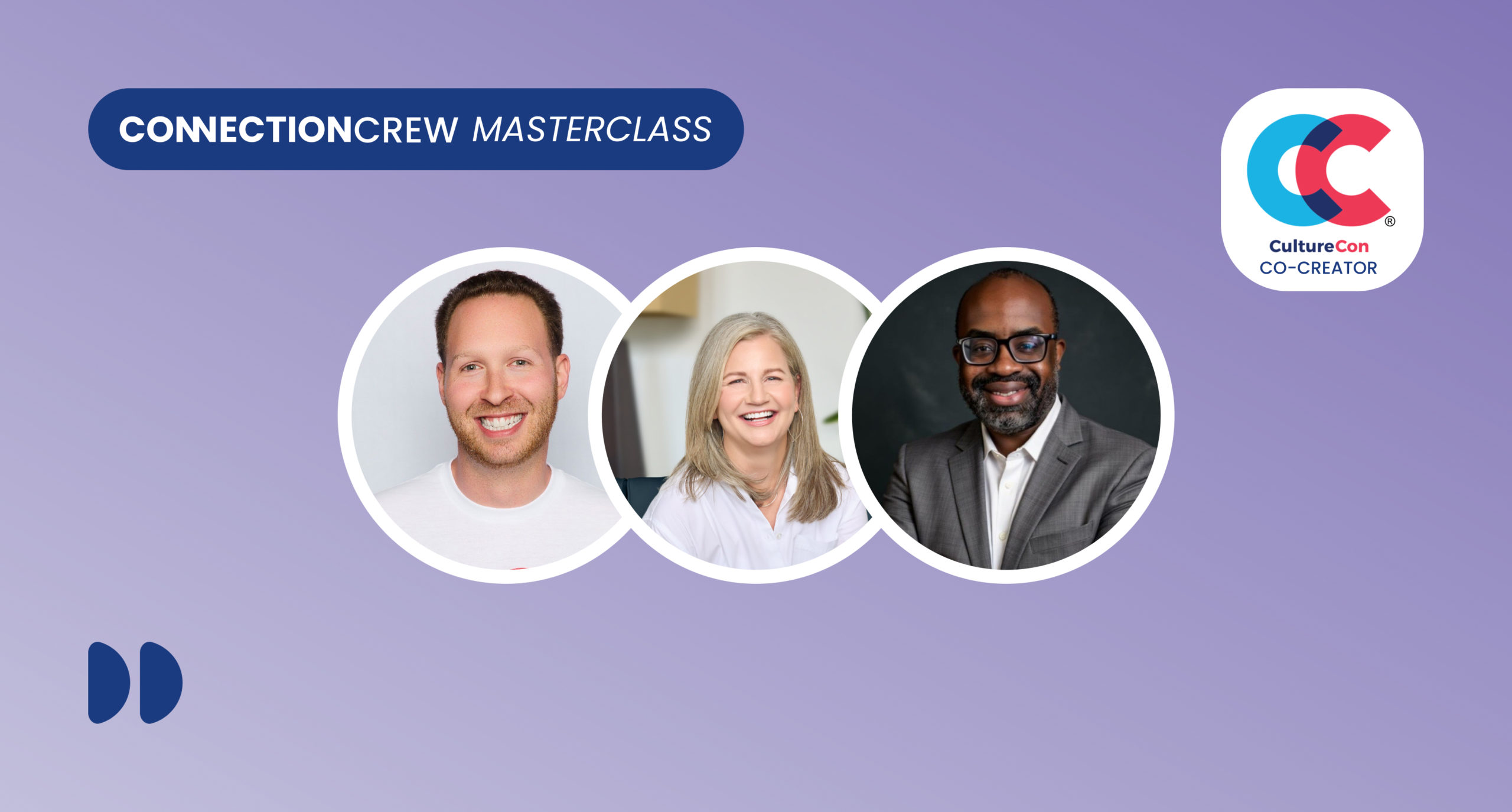
Zach Blumenfeld – What If You Reach Out?
Zach Blumenfeld is the co-founder of CultureCon, an organisation that brings together professionals, creatives, and changemakers to design better workplace cultures. He’s also an entrepreneur who’s built and scaled businesses across industries, each one rooted in the belief that people do their best work when they feel seen and connected.
Zach’s approach to leadership is built around intention, emotional intelligence, and those small moments that build real culture over time.
We’ve all had that moment, someone crosses your mind, but you don’t reach out. Zach’s activity gently challenged that hesitation. It asked: What if you just… did? What if that passing thought became a real nudge toward connection?
How to practice it:
Name a person you’ve thought about recently (old colleague, friend, mentor).
Send a short message, a simple “thinking of you, how are things?” is enough if you’re feeling shy or intimidated.
Notice the feeling that surfaces while you write or after they reply; jot it down for later reflection.
This is connection at its simplest: quiet, thoughtful, and rooted in the belief that someone else matters enough to be remembered.
Liz Otteson – Elastigirl Energy
Founder of co:lab, a facilitation and learning design studio that works with organisations experiencing disconnection, silos, or burnout, Liz Otteson’s work is grounded in creativity, reflection, and restorative dialogue. Known for her humour and warmth, Liz helps teams see themselves, and each other, more clearly, often through storytelling and intentional pause.
Her activity was both playful and profound. Inspired by the character Elastigirl from The Incredibles, she invited participants to consider the strengths that stretch them across roles, spaces, and responsibilities, and the people in their lives who help them expand or refine those strengths.
How to practice it:
Pair up with a teammate or friend.
Share one super power you bring to your work.
Name the “stretch-partner” who helps refine or expand that super power, and explain how.
Swap roles and mirror back something you heard that felt powerful.
This kind of mutual storytelling builds gratitude, humility, and connection, all within a few minutes.
Colin H. Mincy – From Their Lips to Our Leadership
Colin H. Mincy is the Co-CEO of the Centering Healthcare Institute and a celebrated voice in global HR and DEI leadership. He’s led strategy for human rights organisations, philanthropic foundations, and healthcare innovators. Colin’s leadership is marked by care, clarity, and a strong sense of lineage, understanding how our families, communities, and lived experiences shape how we show up for others.
This was a reflective exercise grounded in personal wisdom. Colin asked participants to recall the sayings, mantras, or phrases that have stuck with them, often passed down from grandparents, mentors, or teachers. These are the quiet rules we carry into boardrooms and Zoom calls without always noticing.
How to practice it:
Recall a mantra or piece of advice that guides your work.
Trace its origin, who said it, and in what context?
Connect the dots to your current behaviour: where does it show up?
Share and compare with a partner; discuss what surprised or resonated.
By naming these guiding phrases, we become more conscious of how we lead and more capable of choosing which legacies to carry forward.
Icebreaker Activity – High/Low Check-In
In rooms where people don’t know each other, or worse, think they do but haven’t connected deeply in a while, starting with honesty matters. The High/Low check-In is simple but powerful. It gives every voice a moment in the spotlight, equal time to be heard, and an invitation to drop the small talk and speak with truth.At the start of the masterclass, everyone gathered in small groups.
How to practice it:
Share one “high” from the past week. Something that brought you joy, energy, or meaning.
Share one “low.” Something that challenged you, made you pause, or just felt off.
Listen silently. No advice, no jumping in, just presence.
As a tool for building trust and setting the tone, High/Low is disarmingly effective. Because once you know what’s lifted someone, and what’s weighed them down, you’re more likely to treat them with care.
A Closing Nudge
Sharing this space with people who join with the intention to learn and connect is always something magical. Our June Connection Crew masterclass offered the kind of activities that help people take initiative in professional settings and cultivate meaningful relationships.
We are grateful to Zach, Liz, and Colin for guiding this masterclass, and to everyone who showed up, shared a story, or sat in silence with someone else’s truth: those small conversations stay with us.
It started with a checkmark. Someone finished a report ahead of schedule, posted the update in Slack, and got a response: ✅. No follow-up or words. Just a symbol. For the person who shared the update, it felt dismissive, like the work had gone unnoticed. But for the colleague who sent the emoji, it was a clear sign of acknowledgment and appreciation.
This kind of moment plays out every day. The tools we use to communicate have evolved faster than our understanding of each other. Between email threads, comment sections, and team chat platforms, meaning is often filtered through generational habits that go unspoken. And when those habits don’t line up, it’s easy to feel unheard or misunderstood.
Reading Between the Lines (and Reactions)
Take a closer look at your team’s style. Some colleagues are economical with words, favouring punchy sentences and emojis to get their message across. Others type out full sentences with care, sometimes even including a sign-off like “Cheers” or “Kind regards” in an informal chat. These aren’t simply quirks, but they’re the product of decades of different communication norms, shaped by how each generation learned to connect, first offline, and now online.
But we rarely talk about it. We adapt silently, often assuming that everyone shares the same understanding of a thumbs-up or a period at the end of a sentence. When expectations don’t match the delivery, misalignment follows. One person sees reassurance. Another sees a brush-off.
Updates, Status Checks, and Subtle Misunderstandings
In task updates, this can become especially tricky. You might leave a detailed note in a task management platform explaining what was done and what’s pending, only to get a response like “All good” with no questions asked. Did they really read it? Should you follow up? Is something missing? The answer often depends more on who replied than what was said.
Clients aren’t immune to this either. Deliver a major project, and the response might be a simple, “Thanks. Looks great.” If you’re used to long-form feedback or expressive language, this might feel like a red flag. But maybe it’s just someone who believes that brevity is respectful. No fuss, just acknowledgement.
Making Understanding the Starting Point
One way to bridge these communication habits is to openly acknowledge them. Creating team norms or simple shared preferences for feedback can go a long way. When people agree on what a 👍 means or when a short reply signals next steps, misinterpretation becomes less likely.
Creating the space to clarify what is meant is key here, not forcing everyone to adopt the same style. That might look like responding with “Got it, do you want me to move forward now or wait for feedback?” or offering a bit more detail when it’s a teammate who prefers context. These small actions build clarity without requiring a big change in behavior.
Better Habits Build Better Relationships
Clarity doesn’t need to come at the expense of personality. The goal is fluency in connection rather than uniformity. Learning how your team members express themselves helps you decode meaning faster, with less second-guessing. That saves time, energy, and more than a few unnecessary follow-ups.
It also creates an environment where people feel seen. When someone realizes their natural way of communicating is understood and respected, they’re more likely to stay engaged.
And when the work picks up pace, that mutual understanding becomes the backbone of real collaboration.
Forgotten fruit in the fridge tells a simple story. Left alone, it rots. Relationships often follow the same path. No one means to neglect the people they know, but it happens quietly. Busy days, shifting priorities, and life’s relentless pace take over. Before long, names fade, conversations stall, and bonds that once felt solid start to dissolve.
How Connections Slip Away
Professional relationships used to, sort of, build themselves. Office corridors, coffee runs, and chance encounters made it easy to stay close. Work has changed. Remote and hybrid models have reduced spontaneous interactions. Without them, ties between colleagues and industry peers become looser. There’s less room for the unplanned, and more chance for distance to creep in.
Workloads have grown heavier. To-do lists stretch longer. Every urgent task pushes intentional outreach further down the priority list. The connections that matter most get buried under deadlines and daily demands. They don’t disappear overnight. They just cool, slowly.
Technology offers endless ways to connect, but ease does not always equal depth. Forbes notes that without deliberate effort, digital conversations can lack substance. Quick texts and scattered emails replace meaningful dialogue. Over time, even strong connections settle into the background, rarely tended, rarely refreshed.
Professionals without close workplace relationships experience higher levels of loneliness and burnout. These feelings affect morale, but even worse, they push people to reconsider their roles. Colleagues who feel disconnected are more likely to leave, taking valuable talent and knowledge with them.
The Power of Sustained Connections
A vibrant network shapes careers. Many people find their best opportunities not through job boards or cold applications, but through steady, trusted relationships. A referral, a recommendation, or even a simple nudge in the right direction often comes from someone kept close over time.
Professional networks carry knowledge. Industry insights, best practices, and fresh ideas pass more freely among trusted peers. Learning from a strong network helps professionals and organizations stay sharp and competitive.
Relationships also act as a buffer against work-related stress. Supportive colleagues provide a sounding board. Friendly contacts create a sense of belonging. Forbes highlights that people with strong connections report higher engagement and greater job satisfaction.
Time deepens the value of a network. A brief catch-up today can lead to surprising opportunities years down the line. Relationships that are nurtured, not rushed, often yield the most lasting rewards.
Practical Ways to Stay Connected
Maintaining relationships requires steady care. Start with the people who shaped your path: mentors, colleagues, industry peers. Think about those who offer insight, advice, or perspective worth preserving.
Small habits build strong connections. A quick note to say congratulations. Sharing an interesting article. Checking in without an agenda. Research from Harvard Business Review suggests that even when relationships have gone quiet, a simple, thoughtful outreach can reopen doors.
Consistency matters more than frequency. Regular check-ins feel genuine. They send the message that the relationship holds value. Authenticity is the foundation. Connecting with real interest, not just in moments of need, lays groundwork for trust. Genuine goodwill leaves a lasting impression.
Keeping Relationships Alive with Less Effort
Juggling priorities leaves little room for one more task. Even with the best intentions, people forget to reach out. Covve’s personal CRM offers a solution. It gently reminds users when to check in, helps keep contacts organized, and makes maintaining relationships feel less like a chore and more like a natural part of life.
Rather than scrambling to remember important dates or struggling to revive cooled connections, users find it easier to keep their connections active and meaningful. Covve’s tools provide structure for relationship care, quietly, efficiently, and without fuss.
Because relationships deserve more than good intentions.
Try the Covve App for free and join 100,000+ professionals subscribed to The Networker – our bi-weekly newsletter packed with connection insights and tips.
Insights and activities from May’s Joyful Masterclass
We often hear that connection happens naturally. But how often do we make space for it to unfold without rushing?
Covve’s May Joyful Masterclass created that space. Focused on deeper connection, it invited the Connection Crew to slow down and explore one activity in depth, guided by a single guest panelist.
In this Masterclass, we welcomed Becky Brunner, consultant with the Team Culture & Connection, known for helping teams build belonging from within. Becky led the group through a simple yet powerful exercise, inviting everyone to recall a childhood memory tied to a cookie. It wasn’t just about nostalgia, which can be a powerful tool of connection, it was about grounding in moments of warmth, comfort, and shared humanity.
From there, the conversation deepened. In small Mastermind circles, participants shifted to listening, reflecting, and sharing experiences without rushing to offer advice. In these quieter moments, the heart of connection, being seen and heard, came to life.
The foundation was set, and the conversations that followed grew naturally from there.
Guest Panellist
Becky Brunner, Team Culture & Connection Consultant
Becky Brunner helps teams create belonging from within. With her background in project management and focus on cultivating culture, she works with women-led organizations to design workplaces where people feel connected and choose to stay.
Her work is centered on improving communication, easing onboarding, and nurturing collaboration. Becky’s approach is simple yet powerful: “Be a good human.” It’s a belief that comes through in her work and the way she engaged with the group.
The Cookie Memory
Becky guided the group through a reflection exercise, inviting everyone to think back to a childhood cookie, the smell, the taste, the texture. She asked us to remember where we were and who shared that moment.
What followed were stories full of warmth and quiet reflection. Some brought laughter. Others stirred a gentle hush. These memories lingered not because of the cookie itself, but because of what it symbolized: connection, comfort, and belonging.
You can try this on your own or with a group:
Recall a favorite childhood cookie.
Focus on the taste, smell, and texture.
Picture the setting and the people around you.
Share your memory, and listen carefully when others share theirs.
Let the moment unfold naturally, focusing on connection rather than performance.
The Mastermind Circle
The second half of the session shifted into structured breakout rooms for a Mastermind-style exercise. Each small group offered one person the floor to share a current challenge, professional or personal. One by one, others responded, not with advice, but with their own reflections or experiences.
The conversations had a quiet rhythm. Each story opened a window into a different world. As always, solutions weren’t the goal. Instead, it was about being heard and hearing others with care.
You can recreate this format:
Form groups of 4-7 people.
One person shares a challenge they’re facing.
Each group member responds in turn with a similar experience, no advice, just reflection.
Keep the structure clear and the atmosphere respectful.
Focus on listening. Understanding grows from the exchange.
This session left a lasting impression. The stories, the quiet moments, and the genuine listening created something that didn’t need a rigid structure to feel meaningful.
Thank you to everyone who participated, with openness, with presence, and with the kind of attention that makes others feel seen. Small moments like a childhood cookie or an honest conversation, can spark something far greater than we expect.
We’re thrilled to gather with our Connection Crew community again in June with both new and familiar faces!
A business card, passed from hand to hand, can feel almost ceremonial, an exchange that says, this moment matters. Yet what happens after that moment is often vague. A card ends up in a coat pocket, a handbag, a drawer. The intention behind it fades.
But in the right hands, that card isn’t forgotten. It becomes the start of something that lasts.
In 2025, the professionals getting ahead are those who treat these fleeting exchanges as seeds, something to nurture, track, and eventually grow into something substantial. A growing number of them are using card scanners like Covve’s to preserve these moments, enabling them to better choose what they do with the attention they give.
The Moment is Short. The Memory Shouldn’t Be
Every day, you meet people who might shape your career, introduce you to someone game-changing, or simply become a valuable point of contact. But none of that potential sticks if the conversation dissolves into memory without an anchor.
After a busy conference or back-to-back meetings, details blur. Was it his startup that’s launching next quarter? Was she the one hiring data engineers? Did someone mention expanding to Barcelona? Even the sharpest minds can’t hold it all, which isn’t a reflection of failed attention, but of failed systems.
And yet, it only takes a few seconds after a conversation to jot down a key point. A shared interest, a project timeline, a personal detail they let slip. These are both facts and reminders that a real exchange took place, and that it’s worth continuing.
What You Remember Shapes How You’re Remembered
When someone follows up and references a specific part of your conversation, something personal, timely, or reflective, it leaves an impression. You know they were present. You know they listened.
Research indicates that note-taking significantly increases the amount of information individuals remember from interactions. This suggests that professionals who take notes are better able to recall specific details, making their follow-ups more relevant and likely to build trust.
Strong Relationships are Maintained
The best connections in your network didn’t appear out of nowhere. They became meaningful over time through thoughtful check-ins, shared updates, and consistent effort.
What keeps these relationships active is rarely dramatic. It’s not monthly dinners or marathon calls. It’s the email that follows up on a shared topic. The message that circles back to an idea. The timing that feels unforced but intentional.
Each action adds weight. Each recall of detail tells the other person they weren’t just a blip in your week. These interactions might feel small individually, but over time, they build something reliable. Something that earns you trust, and keeps you top of mind when decisions are being made or opportunities are being shared.
How Covve’s Card Scanner Helps You Build What Matters
Covve’s card scanner is built for the professionals who still take meetings seriously. It digitizes traditional cards and beyond, it turns a first encounter into something you can act on, build from, and return to.
Scan and add notes immediately, capturing the tone and topics of the conversation while they’re still fresh.
Use AI-powered research to gain background context about your new contact, their company, recent news, or work focus, giving you richer ground for follow-up.
Sync directly to your CRM, so new contacts don’t get lost in the shuffle or buried in your inbox.
Share your own digital business card, instantly and professionally, with people you meet in-person or online.
It’s a small act, scanning a card, but it sets off a chain of smarter, more considered decisions. And those decisions lead to better relationships.
These small efforts help you treat the right relationships with the care they deserve. A business card, properly captured, becomes more than a name and a phone number. It becomes a map back to a meaningful conversation, and a reminder that this person, and what they said, mattered.
In 2025, that might be the most underrated power move of all.
Insights & activities from April’s Joyful Masterclass
In April 2025, Covve hosted another edition of the Joyful Masterclass for Connection Professionals, a space designed to explore how we show up, speak up, and build relationships that last.
This workshop brought together three expert facilitators, each offering a distinct lens on connection through stories, strategies, and hands-on exercises. The goal is always to apply insight to practice, and to learn together in a space that is conducive to growth in building relationships, both with ourselves and those around us.
Meet the Panellists
Connection Questions with Andrea Diaz
Andrea Diaz started her career in investment banking, living in seven cities in seven years. Along the way, she experienced both the power of community and the ache of disconnection. Today, she’s the co-founder of Casa Cinco, a home for curated experiences that reimagine how we connect to ourselves, each other, and the planet. She also fundraises for the Belong Center, a nonprofit working to end loneliness and foster belonging across the U.S.
Inspired by the Belong Center’s “Drop Off Connection” series, this activity invites people to share something meaningful – beyond titles, roles, or routines.
How to try it:
Pair up
Ask: “What’s something you’re proud of but don’t get to talk about much?”
While listening:
Be intentional by going beyond surface-level wins.
Be actively curious and ask follow-up questions that explore their world outside of work.
Exercise being joyful through celebrating their story, however small it may seem.
Disrupting for Good with Christy Tonge
As a leadership coach, speaker, and community leader, Christy Tonge helps teams and individuals show up with clarity and courage. She leads Culture First San Francisco, hosts the Leaders Get Real podcast, and produces DisruptHR, each a space for authentic conversations and bold thinking.
This activity reframes disruption, not as chaos, but as a force for clarity and change. It invites reflection on personal moments of courage and the values that drove them.
How to try it:
Partner up and ask: “What’s a moment when you disrupted for good, and what was the value behind it?”
As a listening partner:
Ask thoughtful questions that get to the value or emotion behind the action.
Acknowledge their courage, conviction, or insight.
The Double-Edged Dream with Kamilla Pinel
Kamilla Pinel supports high-achieving professionals and teams in creating sustainable success that’s aligned with what really matters. With over a decade of experience in both corporate and startup settings, she brings a clear understanding of what drives, and drains, people at work. Her DREAM framework helps individuals move through fear, burnout, and disconnection toward real alignment.
Every dream comes with a cost. This exercise explores the tension between our biggest goals and the fears that often hold them back.
How to try it:
Reflect on a meaningful goal.
Ask yourself or a partner:
“What fear or internal conflict does this goal bring up?”
“How has this fear affected your progress?”
“What’s one small step you can take to move forward anyway?”
A Closing Note
Covve’s workshops are all about honesty with ourselves and each other, and exercising meaningful ways to forge connections. The kind that comes from sitting with discomfort, listening with intention, and showing up with a little less armor.
To everyone who joined this masterclass, thank you. For asking better questions, for holding space, and for reminding us that connection isn’t soft work. It’s the real work.
We look forward to seeing you again soon, and to embracing newcomers who are seeking a space to learn how to build relationships with intention, meaningfully.
There’s a quiet kind of power in small gestures. A note scribbled after a conversation. A quick message months later that says, “How’s your mom doing?” The kind of check-in that takes ten seconds but lingers for weeks. These are the touches that rarely make headlines or fill your calendar, but they are the touches that matter. Not because they’re loud, but because they’re consistent. And in a world oversaturated with noise, consistency is what gets remembered.
Relationship-building is about creating resonance. You don’t need to be constantly present in someone’s life to matter. You just need to show up in ways that feel timely, specific, and real. A birthday message is nice. A birthday message that mentions the gift they were hoping to get, or the vacation they mentioned three months ago, lands differently. In this way, you’re stepping out of the generic “happy birthday” messages, instead you’re saying “I remembered.”
Covve’s personal CRM was designed to help you do exactly that: remember. But more on that later.
Because first, we need to reframe how we think about relationships altogether.
The Myth of the Grand Gesture
Popular culture has sold us on the idea that connection requires scale. Big wins. Long lunches. Monumental effort. But the truth is, relationships don’t grow in leaps. They grow in inches. And the people who tend to them steadily are the ones who end up with the strongest ties.
Think about the people you trust most. It’s rarely the ones who made a single heroic effort to show up once. It’s the ones who made ten small ones without fanfare. A friend who sends a quick article when it reminds them of something you said. A colleague who remembers that your child was sick last week and asks how they’re doing. Setting up systems to be consistent in showing that you care and give attention is key.
And attention is the real currency of modern relationships.
The Psychology of Micro-Interactions
Strong bonds often grow from the smallest gestures. A short “thinking of you” message. A quick hello in the hallway. These moments might seem insignificant, but over time, they build something lasting.
Micro-interactions work because they’re easy. They don’t require scheduling or long conversations. But they still say: I thought of you. I see you. That’s often enough to make someone feel valued.
When repeated, these gestures shift from casual to intentional. A passing greeting becomes a pattern. Familiarity builds. And with it, comfort. Later conversations feel natural because the groundwork is already there.
This matters even more in professional circles. The person who checks in six months after your launch often leaves a stronger impression than the one who was in every meeting. Most people are too caught up in their own lives to remember the small stuff. So when someone does, it lands.
Micro-interactions maintain relationships and set the stage for deeper ones.
Small Notes, Long Memory
Of course, no one expects you to remember every detail about every person you’ve met. But relationships are made of these details. The names of children. The last city someone traveled to. The reason they left their last job. You don’t have to be a genius to remember these things, you just have to build a habit of capturing what matters, and listening.
And that habit is easier to build when the right tool is in your corner.
How Covve’s Personal CRM Helps You Stay Close Without Losing Track
Here’s how it helps you turn tiny interactions into lasting relationships:
General Notes: Capture thoughts after each interaction including what they said, how they felt, what you promised to follow up on.
Family Notes: Keep track of personal milestones, family updates, and the people behind the professional role.
Interaction Logs: Track how often you’re in touch and what your last touchpoint was, so no one goes cold unintentionally.
Reminders: Set nudges for meaningful dates or quiet intervals, so you stay consistent without hovering.
Contact Prioritization: Know who matters most and focus your energy where it counts.
None of this automates relationships. That’s the point. You’re still the one reaching out.
You’re still the one remembering. Covve just helps make sure you don’t forget what matters in the first place.
Build What Lasts
We tend to underestimate the compound effect of being intentional. But just like interest builds wealth, thoughtful micro-interactions build trust. Over time, they create relationships that aren’t dependent on calendar invites or chance meetings. They’re rooted in memory, shaped by effort, and built to last.
Covve’s personal CRM was designed to support exactly that kind of meaningful, human connection, without turning you into a robot or forcing you to juggle every contact in your head. Covve reminds you when and who to reach out to, and what you can actually build on.to pour.
Try Covve App for free and join 100,000+ professionals subscribed to The Networker – our bi-weekly newsletter packed with connection insights and tips.
Sustainability is becoming a measure of credibility. Companies are no longer judged solely by the size of their portfolios or the strength of their profits. How they act, build relationships, and even connect with others matters just as much. Investors, partners, and customers now expect a commitment to ESG principles that feels real, not rehearsed.
According to PwC’s 2024 Global Investor Survey, 71% of investors place ESG considerations at the heart of their investment decision-making. This expectation stretches beyond obvious areas like environmental policies. It touches on the small, daily interactions that shape a company’s, and professional’s reputation.
The challenge lies in translating these principles into action at every level. It’s easy to write a policy; it’s harder to live it out in thousands of interactions across teams, events, and partnerships. Business cards may seem insignificant by comparison, but they represent a wider culture. A company that still relies on printing thousands of cards for conferences sends a subtle but clear message about how seriously it takes innovation and sustainability.
In small choices, reputations are made or broken.
Building Relationships Without Leaving a Trace
Many organizations have adapted to reduce emissions, eliminate waste, and optimize resource use. Fewer have considered how relationship-building itself can become more sustainable. Traditional practices such as mass printing, redundant shipping, physical storage often carry hidden environmental costs that scale rapidly as a company grows.
Of all business cards printed each year, 88%, roughly 8 billion cards, are thrown away within a week of being handed out. The downsides are two-fold: the practice quietly adds to environmental waste, while the opportunity to stay relevant and maintain a meaningful point of contact with new connections is lost just as quickly. Every printed card, every batch of unused collateral, feeds into a wider footprint that could otherwise be avoided.
A more thoughtful approach modernizes how companies connect without sacrificing quality or authenticity. Using a digital business card app eliminates the waste tied to traditional printing and logistics. They offer a living, real-time way of maintaining professional relationships. No lost cards. No waste bins full of outdated contacts. When every touchpoint becomes intentional, companies build relationships that feel current, personal, and aligned with the future.
A Smarter Way to Build Sustainable Connections
Covve’s Digital Business Card App brings sustainability into the fold of relationship-building in a way that feels natural. By removing the need for reprints and reducing everything to a digital business card with real-time updates, interaction-tracking, and more, the digital business card app offers companies and professionals a paperless, waste-free alternative without losing the personal touch that business interactions rely on. It shows that sustainability and efficiency can move together, reinforcing better habits with every interaction.
The digital business card app embeds innovation at every step of the process. Contacts can exchange details instantly, add each other to their phones with a tap, and update information in real time. An integrated AI assistant helps professionals deepen connections by providing public insights about new contacts, turning introductions into smarter conversations.
Key features include:
Fully virtual and waste-free
Instant detail exchange and real-time updates
Add to Apple and Google Wallet for quick exchange
Unique link to your card for your email signature, enabling people to connect with you instantly
Customizable landing pages, cards, and profiles with custom branding
GDPR compliance and full data privacy
Real-time analytics to track and optimize usage
Hybrid relationship-building support across digital and in-person channels
Covve’s digital business card app provides a sustainable, modern system for building professional relationships, one that companies and professionals can carry confidently into the future.
Try the Covve Digital Business Card App for free and join 100,000 professionals subscribed to The Networker – our bi-weekly newsletter packed with connection insights and tips.
In boardrooms, on investor calls, and in industry think tanks, one truth keeps cutting through the noise: you can have the best strategy in the world, but it won’t save you if the right people aren’t behind it.
At the highest levels of leadership, it is a biblical truth that relationships are the invisible force that shape how strategies are ideated and executed. They decide whether your next big move hits the mark or falls flat before it ever gets off the ground. Strong relationships don’t merely sit on the sidelines of business strategy. They help shape and materialize the strategy into something with weight and something of value.
Not every leader has a strong foundation in building and nurturing relationships, and that is fine, as long as they are willing to accept the value of meaningful connections and to learn how to foster them. At Covve, it is our mission to create and provide tools that act like co-pilots for people to build healthy and impactful relationship-building habits.
The Leadership Skills That Forge Professional Relationships
At the C-suite level, leadership is measured by how well a team is led in order to execute tasks and projects effectively and be true to the company’s vision and mission. Leadership is entrusted with ensuring that the proverbial ship is managed effectively, which requires the ship’s captain to know the various crew mates deeply, and understand their strengths and weaknesses.
As “captains”, leaders are responsible for the assembly of the crew and the efficacy of their teamwork. There are four key pillars for leaders to follow when leading a team:
Active listening sits at the heart of this. It’s how leaders unlock better ideas, spot risks early, and build loyalty that holds firm when plans inevitably shift.
Communication ensures those ideas travel clearly, without distortion or delay. It’s the difference between a strategy that dies in a boardroom and one that mobilizes an entire company.
Delegation transforms strong relationships into action. Trusting others with ownership strengthens bonds and expands a leader’s reach when it matters most.
Problem solving draws heavily from a leader’s network. Challenges rarely fall neatly into one person’s domain anymore; they demand collaboration across skills, sectors, and expertise.
When these relationship-driven skills are neglected, even the most elegant strategy cracks under pressure. When they are cultivated, strategy becomes stronger, sharper, and more resilient.
Relationships As More Than Support Systems
A powerful connection can refine an idea before it’s fully formed. A trusted advisor can catch a blind spot before it torpedoes a project. A resilient team can pivot faster than any blueprint could predict.
Relationships don’t exist outside of strategy. They exist inside it, shaping its success at every stage: ideation, refinement, execution, and iteration. Fostering strong relationships is one of the most compelling leadership strategies.
How Covve Helps Leaders Strengthen Strategic Relationships
Covve was built for professionals who understand that success includes who you build and create alongside.
Covve’s personal CRM gives professionals and leaders the tools to stay close to the relationships that matter most. It keeps key conversations visible, captures critical context, and prompts timely, thoughtful outreach, turning passive contact lists into active strategic assets.
With our features, leaders are able to maintain high-quality communication, prioritize meaningful follow-ups, and build stronger, smarter relationships without sacrificing time or focus. The result? Stronger relationships, sharper strategy, and a distinct advantage in a business environment where trust and timing are everything.
Try Covve App for free and join 100,000 professionals subscribed to The Networker – our bi-weekly newsletter packed with connection insights and tips.